
Indian floods devastate Ganesh idol production ahead of major festival—what Ghana's artisans can learn
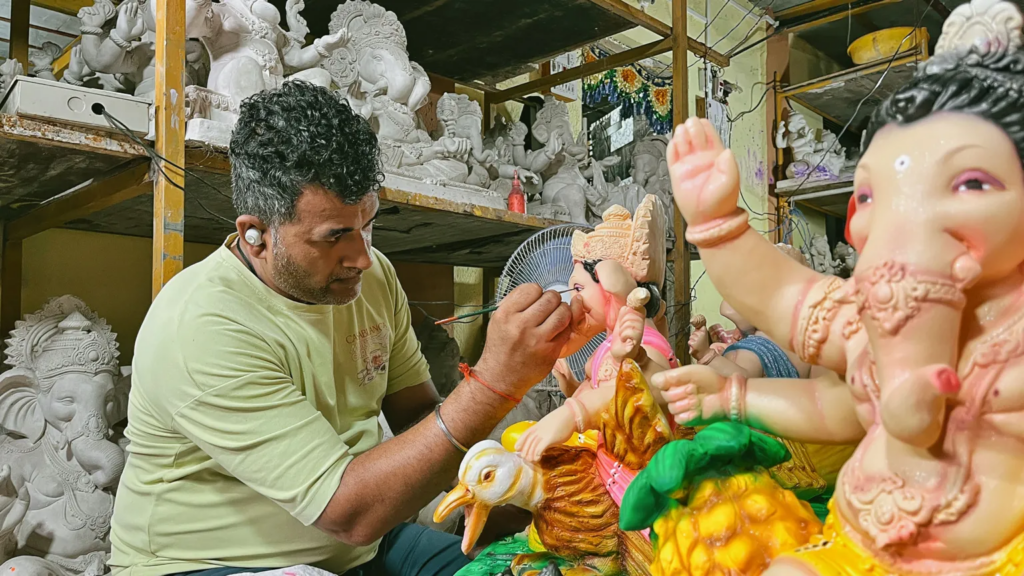

A humanitarian crisis is unfolding in western India as unprecedented monsoon floods have wiped out months of work for thousands of artisans who handcraft Ganesh idols, the centrepiece of one of Hinduism's most significant annual celebrations. The disaster offers a stark warning for Ghana's own seasonal artisan communities about climate resilience and economic vulnerability.
In Raigad district, Maharashtra, sculptors faced devastating losses when extraordinary rainfall—548mm in just three days in July—overwhelmed traditional flood defences that have protected workshops for generations. The deluge destroyed approximately one million finished idols, damaged around 3,000 workshops, and obliterated raw materials and moulds that represent months of preparation for Ganesh Chaturthi, the festival honouring the elephant-headed Hindu deity.
The scale of the economic impact is staggering. The idol-making industry typically generates 3.5 billion Indian rupees (roughly GHS 200 million) annually and provides seasonal employment to around 150,000 people. Individual artisans face catastrophic personal losses—one sculptor reported losses exceeding 1.2 million rupees, equivalent to nearly three years of household income for many families in the region.
The fragility of artisan-dependent economies
What makes this crisis particularly instructive for Ghana is the revelation that even established, organised craft industries built over centuries remain dangerously vulnerable to climate shocks. These are not informal, disorganised workers—the idol-making sector in Raigad is sophisticated, with trade associations, regional coordination across thousands of workshops, and international export networks. Yet a single extreme weather event has threatened the survival of the entire system.
Artisans in Raigad typically invest six months of intensive labour into their annual production cycle, with individual small idols requiring up to two weeks to complete. Once soaked by floodwaters, these clay pieces become unsaleable. Insurance—held by only some workshop owners—provides minimal coverage; one widow reported an anticipated payout of just 10,000 rupees against actual losses of 1 million rupees.
Many Ghanaian craft sectors—textile weaving, pottery, jewellery-making, and wood carving—share similar characteristics: seasonal production cycles, family-based operations, reliance on raw materials vulnerable to weather disruption, and limited access to meaningful insurance. Communities in Ashanti, Northern, and Upper West regions that depend on artisanal production face comparable risks.
Why it matters for Ghana
Ghana's own rainy seasons have become increasingly unpredictable and severe. The flooding that struck Accra, Kumasi, and other regions in recent years demonstrated that extreme weather is no longer a rare event but an emerging pattern. As climate variability increases, artisan communities—which contribute significantly to Ghana's informal economy, export revenue, and cultural heritage—require urgent attention from government and development partners.
The Raigad crisis illustrates three critical vulnerabilities that Ghana should address:
- Production cycle exposure: Seasonal artisans concentrate inventory during specific periods, creating massive concentrated risk. A single weather event can destroy months of work and income simultaneously.
- Insurance inadequacy: Standard commercial insurance rarely covers the true losses faced by traditional craftspeople, leaving them unprotected despite paying premiums.
- Supply chain fragility: When raw materials (clay, dyes, timber) are destroyed alongside finished goods, artisans cannot quickly restart production even if they secure emergency credit.
Indian authorities have announced financial assistance assessments, but recovery is expected to take months or years for affected workshops. Some artisans are resorting to taking loans to repay customer advances they cannot fulfil, deepening their debt burden.
What recovery requires
For Ghana's artisan communities to build genuine resilience, policymakers should consider: targeted microfinance products designed for craft enterprises with seasonal cash flows; subsidised, tailored insurance covering both finished goods and raw materials; supported investment in climate-adapted workshop infrastructure; and diversified production strategies that reduce dependency on single annual peaks.
The Raigad disaster is a stark reminder that cultural heritage and livelihoods built over centuries can evaporate in days without adequate protection. Ghana has time to learn from India's experience and act.
Source: MyJoyOnline




Comments (0)
Be the first to comment.