
Beyond Sandbags: Why Ghana's Coastal Crisis Needs a People-First Strategy, Says German Envoy

Coastal erosion in Ghana's Volta Region demands far more than sea walls and engineering solutions. According to German Ambassador Frederik Landshoeft, protecting communities from the advancing Atlantic requires a fundamental shift in how Ghana approaches the crisis—one that places residents' economic survival, food security and dignity at the centre of all intervention efforts.
Speaking at a Climate Talks 2026 dialogue in Keta, Mr Landshoeft outlined why traditional coastal protection measures fall short if they ignore the human cost of erosion. When the sea advances on Keta, Anloga and other vulnerable settlements, it does not merely threaten structures; it erases fishing grounds, displaces families, undermines food systems and destabilises entire communities. Without addressing these dimensions, he argued, infrastructure alone cannot solve the crisis.
The Hidden Cost of Erosion in Ghana's Coastal Belt
Ghana's coastal communities have faced accelerating erosion for decades, driven by a combination of climate change, rising sea levels, sand mining and ocean dynamics. Keta, once a thriving trading hub, has seen dramatic land loss that has forced relocations and destroyed livelihoods. Residents—many of whom depend entirely on fishing or small-scale agriculture—face uncertainty about whether their homes, farms and businesses will exist in five years' time.
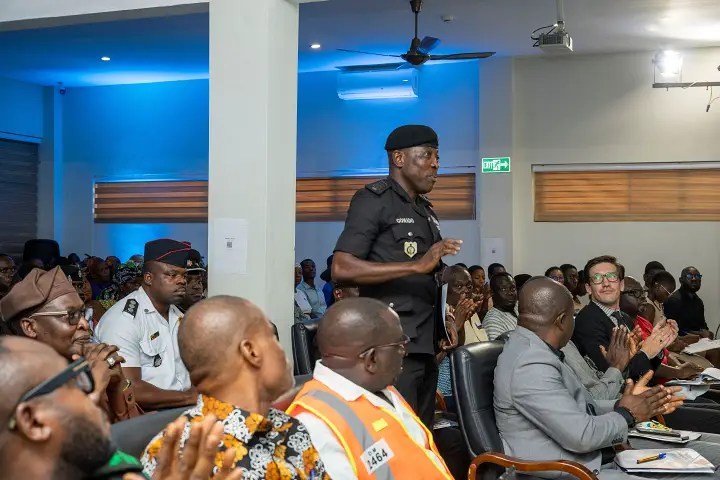
The dialogue, hosted by the German Embassy, brought together government agencies including the Environmental Protection Authority and National Disaster Management Organisation, alongside traditional leaders, security personnel, academics and affected residents. This multi-stakeholder approach reflected a key insight: erosion is not merely a technical or environmental issue, but a security, livelihood and governance challenge that requires coordinated action across sectors.
Participants highlighted the cascading impacts: income loss, food insecurity, disruption of schools and health facilities, and the psychological trauma of potential displacement. These consequences threaten not only individual households but community cohesion and peace.
Why It Matters for Ghana: Building Resilience From Below
Germany's advocacy for a people-centred approach aligns with Ghana's own climate commitments and development priorities. The country faces rising climate vulnerability across multiple fronts—flooding in urban centres, drought in the north and coastal degradation in the south—yet coastal communities often lack the resources and institutional support to adapt effectively.
Landshoeft's emphasis on early intervention, community preparedness and sustainable livelihoods reflects lessons from global climate adaptation work. Communities that participate in designing their own protection strategies, that receive livelihood alternatives before displacement becomes inevitable, and that combine traditional knowledge with scientific expertise tend to adapt more successfully. Conversely, top-down solutions imposed without community input often fail or breed resentment.
The call for integrating coastal protection with public health, social protection and livelihood programmes signals that the solution cannot be siloed. A family relocated from erosion but offered no economic alternative faces destitution. Young people who see no future in coastal settlements migrate to cities, weakening community structures. Fragmented interventions may slow erosion but leave residents impoverished.
Germany committed to supporting Ghana's climate objectives through technical cooperation and institutional capacity-building. Such partnerships are crucial; Ghana's government and development agencies lack sufficient resources to mount comprehensive coastal protection across all vulnerable areas.
The Path Forward: Integration and Local Ownership
Participants stressed that effective solutions must combine multiple elements: scientific and technical expertise, community knowledge, government coordination, and sustained funding. Traditional authorities, researchers, security agencies and residents each bring essential perspectives that must inform strategy.
The immediate challenge is moving from dialogue to action. Ghana's coastal communities need emergency support now—temporary protections, livelihood diversification schemes, relocation assistance where necessary—whilst longer-term adaptation strategies are developed. Without this urgency, erosion will continue displacing families and destroying livelihoods faster than policy can respond.
As climate impacts intensify globally, Ghana's coastal crisis offers a critical test: whether the nation can protect its most vulnerable citizens not merely by holding back the sea, but by ensuring they retain dignity, economic opportunity and hope for the future.
Source: The Ghanaian Times


Comments (0)
Be the first to comment.