
Ghana's Banking Sector Splits on Rate Pass-Through: Universal Banks Outpace Community Lenders


A comprehensive survey presented at the Chartered Institute of Bankers Ghana's latest policy seminar has exposed a troubling divide in how monetary policy benefits are distributed across Ghana's financial sector. While universal banks are rapidly passing interest rate cuts to borrowers—charging between 10 and 15 percent—community and microfinance banks are lagging significantly, with rates at 21-25 percent and 31-40 percent respectively.
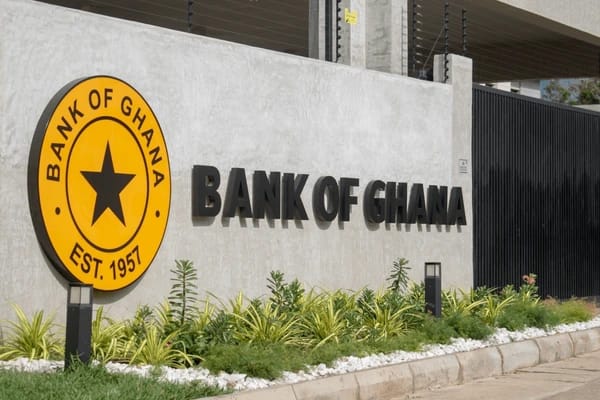
The findings, presented at CIB Ghana's third Post-Monetary Policy Committee (Post-MPC) Policy Seminar, shed light on the unequal transmission of the Bank of Ghana's September decision to hold the policy rate at 14.0 percent. The seminar brought together key stakeholders including BoG officials, the Ministry of Finance, industry bodies and financial institutions to examine why rate cuts are not reaching all borrowers equally.
The Transmission Problem
Bank of Ghana Governor Dr. Johnson P. Asiama, speaking through the Director of Research Dr. Simon Harvey, emphasised that monetary policy transmission is neither automatic nor instantaneous. Banks must factor in funding costs, credit risk, operating expenses and expected losses when setting lending rates. This reality means that policy rate changes do not immediately translate to lower borrowing costs for all customers.
CIB Ghana's research team, which conducts pre-MPC surveys to gather industry sentiment, found that whilst banks show strong appetite to lend, the practical impact of monetary policy varies dramatically across market segments. According to CIB Ghana CEO Robert Dzato, the divergence is stark: most universal banks charged 10-15 percent in September, whilst 46 percent of community banks reported rates of 21-25 percent (up from 36 percent in July), and microfinance institutions charged roughly 31-40 percent.
Why It Matters for Ghana
This unequal transmission has significant implications for Ghana's economic development and financial inclusion. Small and medium enterprises (SMEs) and individuals without access to universal banks face substantially higher borrowing costs, limiting their ability to invest, expand operations or access credit. The gap between universal bank rates and microfinance rates—potentially exceeding 25 percentage points—effectively prices out less creditworthy borrowers from cheaper capital.
CIB Ghana President Dr. Ellen Ohene-Afoakwa highlighted that Ghana needs a banking sector capable of providing adequate credit to productive sectors whilst maintaining sound risk management. The survey showed encouraging signs: 65 percent of respondents expressed high confidence in the macroeconomic environment, and 71 percent are confident of meeting the 10 percent Non-Performing Loan (NPL) directive by end-2026. However, this optimism must be tempered by concerns about rapid credit growth outpacing risk management capacity.
Credit Growth Versus Asset Quality
The seminar emphasised that credit growth and credit quality must advance together. Whilst 80 percent of surveyed banks consider the current policy stance effective in containing inflation, faster lending expansion requires equally robust monitoring and recovery mechanisms. Mr. Dzato warned that loans not repaid on time could create systemic problems for the sector, particularly if banks prioritise growth over prudent lending standards.
The Bank of Ghana's focus on prevention rather than recovery of NPLs reflects growing recognition that managing credit quality proactively is more efficient than dealing with deteriorated loans after the fact. With 86 percent of survey respondents expecting the MPC to hold rates (as occurred), and 70 percent anticipating inflation to rise over the next three months, the central bank faces pressure to balance growth support with inflation containment.
The findings underline a persistent challenge in Ghana's financial system: ensuring that monetary policy benefits are distributed equitably across all segments of society, not just customers of the largest universal banks.
Source: Ameyaw Debrah



Comments (0)
Be the first to comment.