
Ghana must boost transparency on debt repayment fund as massive DDEP bills loom in 2027-2028
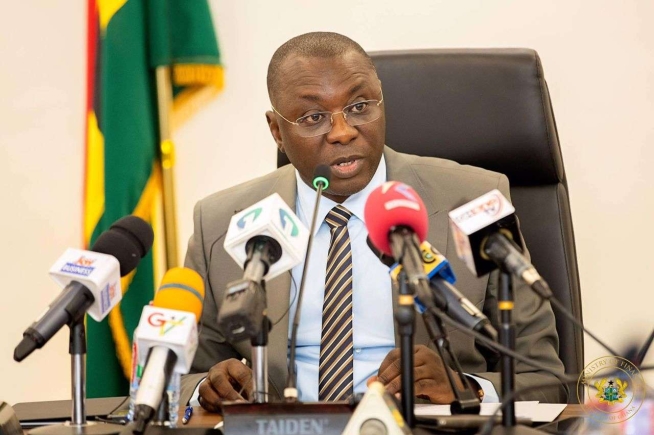
Ghana faces a critical accountability test as it prepares for a wave of debt repayments under the Domestic Debt Exchange Programme, with former Finance Minister Dr Mohammed Amin Adam warning that greater transparency on the country's Sinking Fund is essential to ensure Ghanaians can track whether government is adequately preparing for the challenge.
Dr Adam's call for monthly disclosure of the fund's activities comes as analysis shows the Sinking Fund held a balance of GH¢15.6 billion as of July 22, 2026, against a year-end projection of GH¢30 billion. The government must navigate principal repayments of GH¢58 billion in 2027 and GH¢53 billion in 2028—a combined GH¢111 billion burden that will test the country's fiscal capacity and require careful planning.
Prefunding strategy carries risks
Dr Adam acknowledged that prefunding the Sinking Fund in advance—building cash reserves now to meet future obligations—is prudent policy in theory. However, he cautioned that this approach creates a genuine dilemma: if government borrows money to accumulate cash reserves that then sit idle or earn lower returns than the interest cost on the debt used to finance them, Ghana would effectively be losing money on the transaction.
"Prefunding is prudent, but it means part of the 2026 increase in debt may be cash held for future redemptions rather than deficit financing," Dr Adam wrote, highlighting the tension between building buffers and managing debt costs efficiently.
The fund receives inflows from an allocation of 7% of non-oil tax revenue—a dedicated stream designed to build capacity for redemptions. Any additional borrowing used to accelerate prefunding would add to Ghana's overall debt stock and increase annual interest payments, a cost that must be weighed against the benefit of smoother repayment flows.
What transparency could reveal
Dr Adam recommended that monthly reports should disclose:
- Monthly inflows from the 7% non-oil tax revenue allocation and any bond proceeds dedicated to the fund
- Investment holdings and returns earned on fund assets
- The proportion of the fund financed through new borrowing versus dedicated revenue
- Planned drawdown schedules aligned with repayment obligations
Such granular reporting would allow civil society, Parliament, creditors and ordinary Ghanaians to assess whether the government is genuinely preparing for the repayment cliff or simply accumulating debt without a credible plan to service it. It would also expose whether fund management is cost-effective—for instance, whether returns on investments justify the cost of the debt used to finance prefunding.
Why this matters for Ghana
The 2027-2028 repayment surge represents one of the most acute fiscal pressures Ghana will face in the coming years. The DDEP, agreed after the country's 2022-2023 debt crisis, restructured domestic debt held by banks and other creditors, but it also compressed repayment timelines into a sharp peak rather than spreading obligations evenly. Without credible prefunding and transparent management, Ghana risks repeating cycles of fiscal stress that have repeatedly undermined economic stability and forced austerity on public services.
Transparency on the Sinking Fund is also a signal to international creditors and investors about Ghana's commitment to debt sustainability. After the country's recent default and restructuring, confidence is fragile; demonstrating disciplined, transparent fund management can help stabilise Ghana's credit profile and borrowing costs. Conversely, opaque fund management or evidence that borrowed money is being misallocated would deepen investor scepticism.
For Ghanaians, the stakes are equally high. If government must sharply raise taxes, cut spending or borrow at punitive rates in 2027-2028 because prefunding was inadequate or mismanaged, the cost will be borne by citizens through reduced public investment, weaker services or inflation. Monthly transparency on the Sinking Fund is therefore not just a technocratic requirement—it is a safeguard for fiscal responsibility and a foundation for informed democratic debate about Ghana's economic priorities.
Source: MyJoyOnline

Comments (0)
Be the first to comment.