Ghana pitches economic stability to global investors as IMF bailout ends
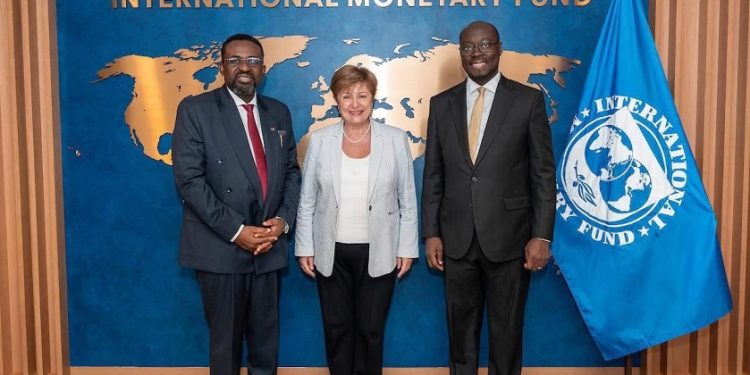
Ghana is making a strategic push to reassure international investors about its economic prospects and reform commitment as government officials participate in the October IMF-World Bank meetings in Bangkok, Thailand. The engagement marks a significant milestone: Ghana's transition from direct IMF financial support to a non-financing Policy Coordination Instrument (PCI), ending its US$3 billion Extended Credit Facility bailout programme.
The shift represents a vote of confidence in Ghana's economic recovery, but it also places fresh pressure on the government to demonstrate that it can maintain fiscal discipline and macroeconomic stability without the safety net of IMF disbursements. Ministry of Finance and Bank of Ghana officials are scheduled to hold multiple meetings with international investor groups to discuss economic conditions, outline government policy direction and identify areas for expanded cooperation.
What the transition means
Unlike the bailout arrangement, the PCI focuses on policy monitoring and reform implementation rather than providing fresh financing. This fundamentally changes Ghana's engagement with the Fund: the country must now prove it can manage its financing needs independently while upholding the economic gains achieved during the bailout period.
The government faces a critical test. Sustaining investor confidence depends on delivering results in several key areas: maintaining fiscal discipline, managing public debt effectively, mobilising revenue and continuing reforms across the economy. International investors will scrutinise Ghana's track record on meeting fiscal targets, controlling government expenditure and ensuring debt sustainability.
An IMF staff team visited Accra in mid-September to discuss the new PCI framework, with further technical engagements expected to clarify how policy implementation will be monitored and benchmarks assessed. These discussions will shape the nature of Ghana's ongoing relationship with the Fund and influence how international markets perceive the country's economic credibility.
Why it matters for Ghana
Ghana's ability to maintain investor confidence has direct implications for the country's access to international capital markets and the cost of future borrowing. A successful transition signals that Ghana's economy is on a sustainable footing and can attract private investment. Conversely, any perception of wavering commitment to reforms or fiscal discipline could make external financing more expensive and harder to secure.
The Bangkok meetings are an opportunity for Ghana to tell its economic story on a global stage. Officials must demonstrate not only political will but also concrete evidence that recent progress is real and durable. Investors will be looking for proof that the government can maintain discipline after the IMF programme ends and that economic fundamentals remain sound.
Beyond investor relations, the transition underscores Ghana's evolution from crisis management to economic consolidation. The country faced severe fiscal and debt challenges in recent years, and the IMF programme provided a framework for stabilising the economy. Now Ghana must prove it can walk that path independently, managing competing pressures—including public service demands, infrastructure investment and social needs—while protecting macroeconomic stability.
The road ahead
Success will depend on implementation. Reforms must take root at government agencies, revenue authorities and public institutions. The government must demonstrate discipline in budget execution and show that spending is aligned with fiscal targets. Debt management must be active and strategic, not merely reactive.
The Bangkok meetings represent both an opportunity and a test. International investors will be watching closely to assess whether Ghana can sustain the progress made under IMF support and deliver on the policies necessary for long-term economic stability and growth.
Source: MyJoyOnline


Comments (0)
Be the first to comment.