
Afenyo-Markin defends GoldBod criticism as institutional, not personal

Alexander Afenyo-Markin, the Minority Leader in Parliament, has moved to clarify that criticism from his caucus regarding Ghana's GoldBod and the Domestic Gold Purchase Programme targets institutional weaknesses and implementation failures rather than personal attacks on any individual.
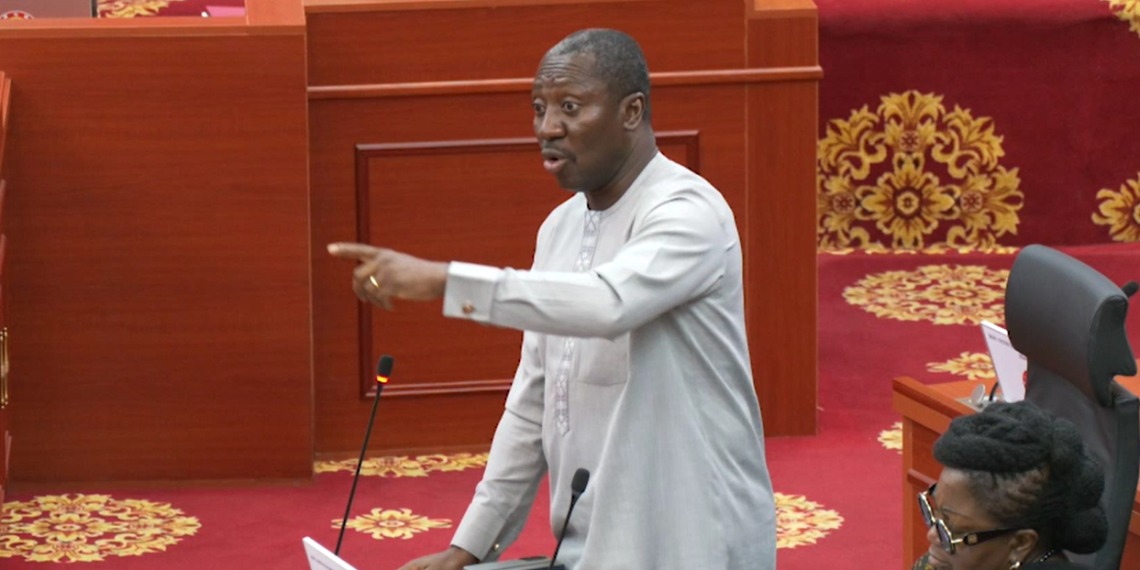
Speaking at a press briefing on 31 August 2026, Mr Afenyo-Markin emphasised that throughout parliamentary debates on the scheme, he has consistently focused on the GoldBod institution itself and how the programme is being executed, not on attacking people involved in its management.
"I have never, on any occasion, mentioned anyone's name. I have always been talking about the GoldBod institution," he stated, seeking to reframe what has become a contentious political discussion into a policy-focused examination.
The Programme and the Concerns
The Domestic Gold Purchase Programme was introduced under former Vice President Dr Mahamudu Bawumia as a strategic initiative designed to leverage Ghana's gold resources for economic stabilisation. Whilst the Minority acknowledges the initiative's sound conceptual foundation, Mr Afenyo-Markin argues that significant concerns have emerged around how it operates in practice.
The Minority's key grievance centres on reported losses from the programme's implementation. Mr Afenyo-Markin pointed to observations raised by the International Monetary Fund (IMF) regarding these losses, suggesting that such discrepancies warrant proper investigation and parliamentary scrutiny rather than dismissal.
When confronted with counterarguments that the reported losses may represent exchange rate fluctuations affecting the Bank of Ghana's own accounts, or that the central bank is simply adhering to international best practices, Mr Afenyo-Markin called for a measured approach.
Why it matters for Ghana
This debate reflects a broader tension in Ghanaian governance: balancing support for policy initiatives with accountability over their execution. The GoldBod controversy illustrates how even well-intentioned programmes can attract legitimate scrutiny when implementation outcomes diverge from expectations.
For ordinary Ghanaians, the stakes are direct. A gold-backed economic stabilisation programme touches currency stability, inflation control and overall macroeconomic health. If losses are occurring—whether through exchange rate movements, operational inefficiencies or other factors—taxpayers deserve transparent explanation and remedial action.
The planned parliamentary probe, expected to commence in October, represents a critical institutional moment. Mr Afenyo-Markin framed this investigation as an opportunity for all stakeholders to present evidence and establish factual clarity: "When October comes and we start the discussion, wherever the truth is, we will all get to know."
This approach suggests the Minority is seeking to elevate discussion above political point-scoring toward genuine policy analysis. Mr Afenyo-Markin's insistence that the conversation must not become "a personality contest" signals recognition that public confidence in Ghana's gold management depends on impartial technical assessment rather than partisan blame.
Whether the October parliamentary examination will satisfy this aspiration remains to be seen, but the framework it establishes—institutional accountability rather than personal culpability—may shape how Ghanaians evaluate similar programmes in future.
Source: The Ghanaian Times



Comments (0)
Be the first to comment.