Afenyo-Markin readies court action over GoldBod dispute as parliamentary scrutiny row escalates

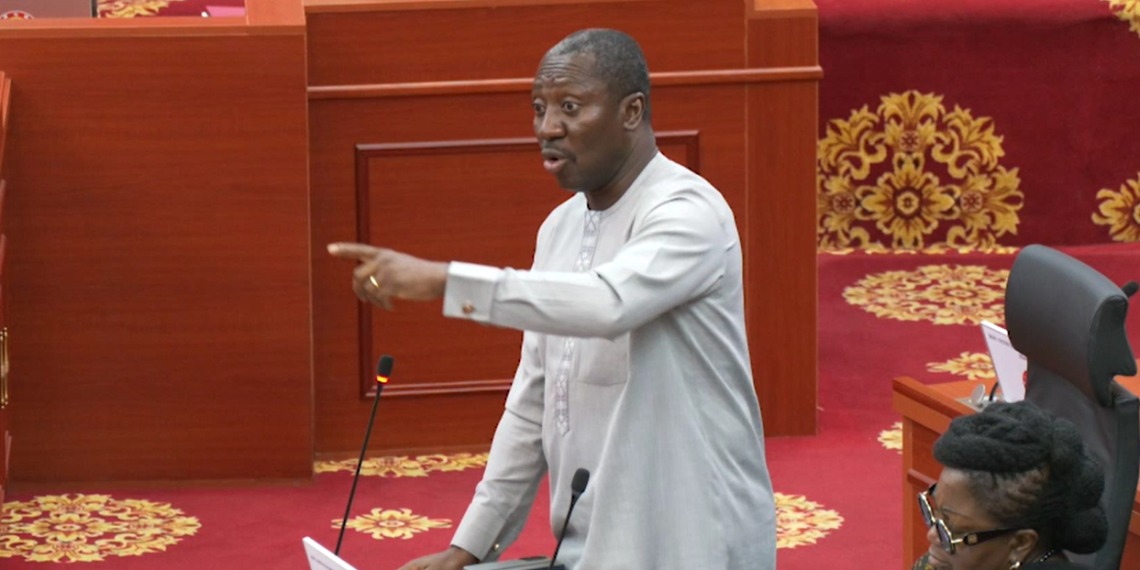
Alexander Afenyo-Markin, Minority Leader in Parliament and Effutu MP, has resolved to pursue legal action against GoldBod Chief Executive Officer Sammy Gyamfi over comments the CEO made in their public disagreement regarding parliamentary oversight of Ghana's gold sector operations.
The dispute centres on Gyamfi's description of Afenyo-Markin as an "extortionist" — a characterisation the Minority Leader considers defamatory and actionable in court. Afenyo-Markin confirmed his intention to "pursue the appropriate legal remedies" in a Facebook statement on Saturday, August 22, signalling he will not let the allegation pass unchallenged.
The underlying tension stems from the Minority's scrutiny of the Ghana Gold Board (GoldBod) and the Bank of Ghana's Domestic Gold Purchase Programme. When Gyamfi publicly challenged Afenyo-Markin to take the matter to court if he truly believed it was defamatory, the CEO simultaneously signalled willingness to defend his statements before a judge. Afenyo-Markin has now accepted that invitation, setting the stage for formal legal proceedings.
Parliamentary scrutiny versus personal attacks
Afenyo-Markin has framed his oversight activities as a constitutional duty rather than a personal vendetta. He emphasised that his examination of GoldBod and the Domestic Gold Purchase Programme reflects Parliament's responsibility to hold public institutions accountable and ensure transparent management of state resources.
In his statement, he rejected suggestions that his concerns are driven by improper or personal interests. Instead, he characterised the CEO's counter-attack as a deflection tactic designed to shift public focus away from substantive questions about the gold programme's governance and fiscal management.
The Minority Leader indicated that such personal attacks are a pattern among officials uncomfortable with parliamentary scrutiny, and he pledged that legal threats or defamatory language will not deter the Minority Caucus from continuing its examination of GoldBod's operations and related decisions.
Why it matters for Ghana
This dispute highlights the tension between parliamentary oversight and executive resistance in Ghana's governance framework. The Domestic Gold Purchase Programme is a significant policy initiative involving public funds, and Parliament's constitutional role is to scrutinise such programmes on behalf of taxpayers and citizens.
The escalation to defamation litigation raises questions about the boundaries of parliamentary criticism and institutional accountability. If such legal actions become a tool to silence or intimidate lawmakers conducting oversight, it could weaken Parliament's capacity to function as an effective check on government and state-owned enterprises.
Additionally, the row underscores the importance of robust public debate around resource management in Ghana's mining and financial sectors. Public funds directed toward gold purchasing and related programmes warrant transparent examination, and the legal outcome of this case may set precedent for how such conflicts between Parliament and public officials are resolved in future.
The case will likely be closely watched by parliamentary observers, civil society organisations, and citizens concerned with maintaining institutional checks and balances in Ghana's governance system.
Source: The Ghana Report



Comments (0)
Be the first to comment.