
Young Ghanaians Learn to Balance Climate Activism with Mental Wellbeing at New Festival
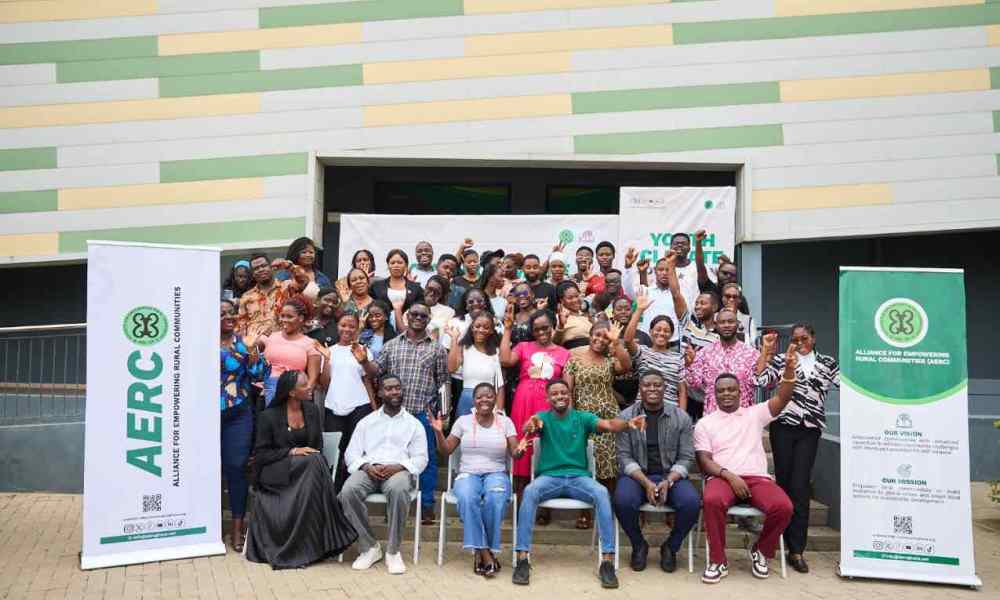

A groundbreaking two-day festival in Ghana's Eastern Region is challenging the way young people approach climate activism by placing mental health and personal wellbeing at the centre of environmental action. The Youth Climate Joy and Healing Festival, organised by the Alliance for Empowering Rural Communities (AERC) Ghana, brought together 50 young people in August at the University of Environment and Sustainable Development in Somanya to explore a question often overlooked in climate conversations: how can young activists sustain their own wellbeing whilst responding to environmental crises?
Reframing Climate Action Beyond Crisis
Whilst climate discussions typically emphasise urgency, rising temperatures and environmental degradation, the festival took a different approach. Rather than focusing solely on problems and responsibilities, organisers created space for participants to explore how community, rest, personal connection and self-care can actually strengthen long-term climate engagement. Sessions facilitated by experts including Afrifa Smith Charles, Nii Noi Omaboe and Patricia Odeibea Bekoe explored climate justice, storytelling, wellbeing and youth participation through interactive discussions and reflective activities.
A central theme emerged: young people do not need to sacrifice their own health to contribute meaningfully to climate action. The festival challenged the notion that commitment to environmental causes must mean constant activity, arguing instead that rest, support systems and moments of recharge are essential for sustained engagement. This perspective recognises that caring for oneself does not diminish care for the planet—it can actually make long-term action possible.
Connecting Climate Stories to Everyday Life
Participants also explored climate storytelling as a tool for environmental awareness. Rather than relying on statistics and technical language, the festival encouraged young people to frame climate challenges—such as water pollution, deforestation and unsustainable farming—through human experiences and community impacts. By connecting environmental issues to familiar realities like health, food security, homes and livelihoods, climate change becomes more relatable and motivating for broader audiences.
Discussions also reinforced that meaningful climate action does not require large budgets, formal positions or expert credentials. Young people can start conversations in schools, workplaces and neighbourhoods, share knowledge, support existing initiatives or work collectively to address local environmental problems. This democratisation of climate action is particularly relevant as Ghana faces mounting pressures from extreme heat, flooding and other climate-related challenges.
Why It Matters for Ghana
Ghana is increasingly vulnerable to climate impacts. The country experiences recurring flooding in urban centres, prolonged droughts affecting agriculture, rising temperatures and environmental degradation that threaten public health, food production and livelihoods. Young Ghanaians will bear the consequences of these shifts and are already expected to lead adaptation and mitigation efforts. However, without attention to their mental and physical wellbeing, activist burnout can undermine the sustained engagement climate solutions demand.
The AERC Ghana festival model offers a valuable framework for the country's climate movement. By integrating wellbeing, community care and accessible entry points for action, it acknowledges that young people need support systems and rest periods to remain effective advocates. As Ghana develops its climate and environmental policies, incorporating youth voices—and protecting their wellbeing in the process—will be critical to building resilient, durable climate action that does not extract a human cost from those driving change.
Source: Ameyaw Debrah




Comments (0)
Be the first to comment.