
State of emergency won't fix galamsey overnight, Lands Ministry warns

Ghana's Ministry of Lands and Natural Resources has pushed back against growing calls for a state of emergency to tackle illegal mining, arguing that such a declaration would not automatically solve the country's deep-rooted galamsey problem.
Speaking through spokesperson Paa Kwesi Schandorf, the Ministry cautioned the public and policymakers against treating a state of emergency as a panacea. While acknowledging that such a measure could bring tighter mining restrictions and enhanced security operations in affected communities, Schandorf stressed that these steps alone would not address the underlying economic and social drivers that fuel illegal mining across Ghana.
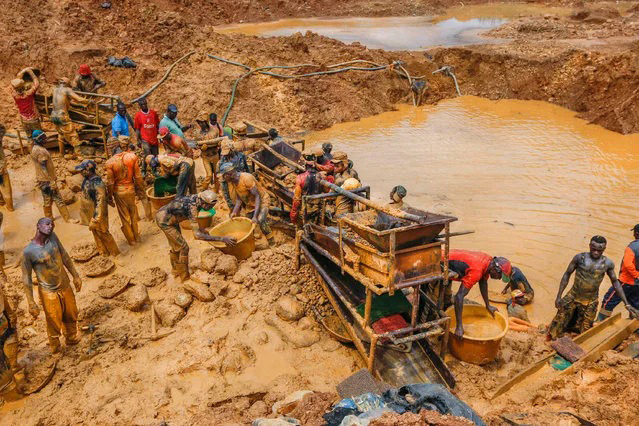
The Ministry's position comes as the country grapples with the environmental devastation and public health risks posed by galamsey operations. Mercury poisoning, water contamination, and the destruction of agricultural land have made illegal mining a pressing national concern, prompting renewed debate over whether emergency measures are justified.
What a state of emergency would—and wouldn't—achieve
Schandorf argued that the government must first conduct a thorough assessment of what tangible additional impact a state of emergency declaration would deliver before implementing it. He noted that many of the security-intensive interventions typically associated with such declarations are already being deployed in galamsey hotspots through ongoing anti-illegal mining operations.
"We should be careful not to consistently indicate or project a state of emergency as a certain magic wand, if once implemented, would automatically transform our fortunes," Schandorf said.
He further warned that a state of emergency carries broader consequences for affected communities, including restrictions on legitimate economic activities and the imposition of security measures that could disrupt daily life. Any such declaration, he insisted, must be grounded in a clear assessment of necessity and realistic expectations about outcomes.
The Ministry pointed to the work of the National Anti-Illegal Mining Operations Secretariat (NAIMOS), which has been coordinating government efforts to disrupt illegal mining and protect Ghana's natural resources. Multiple interventions are already underway through this body and collaborating security agencies, suggesting that the policy arsenal is already being deployed.
Why it matters for Ghana
The debate over whether to declare a state of emergency reflects the urgency Ghanaians feel about galamsey but also exposes tensions over strategy. For ordinary citizens—particularly in mining-affected regions like the Ashanti Region, where water bodies have become unsafe—the desperation for visible action is real. Young people drawn to galamsey by economic hardship, contaminated water supplies threatening public health, and the loss of farmland all underscore why calls for drastic measures persist.
However, the Ministry's caution highlights an important reality: emergency powers alone cannot cure poverty, create jobs, or rebuild trust in institutions. If galamsey thrives, it is partly because it offers income to economically marginalised communities where formal employment is scarce. Simply declaring an emergency and increasing military or police presence, without addressing these structural factors, risks pushing the problem underground rather than solving it.
President John Dramani Mahama has indicated that any state of emergency decision would be informed by security assessments and implemented only when circumstances truly justify it. Schandorf's message suggests that the current government believes those circumstances do not yet exist, provided existing interventions continue to be resourced and executed effectively.
The Ministry's call is for a more nuanced debate: one that focuses on identifying what specific, measurable gains a state of emergency would yield beyond current operations, and whether the disruption to communities would be justified by improved outcomes in the fight against illegal mining.
Source: MyJoyOnline


Comments (0)
Be the first to comment.