
NAIMOS 'Just Window-Dressing': IMANI Africa Slams Government's Galamsey Fight Strategy


Ghana's battle against illegal mining has drawn sharp criticism from leading policy analysts, with IMANI Africa's Vice President Kofi Bentil dismissing the government's anti-galamsey secretariat as little more than a public relations exercise masking deeper failures in tackling the crisis.
Bentil's critique of the National Anti-Illegal Mining Operations Secretariat (NAIMOS) points to a growing frustration among civil society organisations that the government's institutional response to galamsey has failed to translate into meaningful action on the ground. Rather than representing genuine policy progress, he argues, NAIMOS functions primarily as a mechanism to suggest government activity where little substantive progress exists.
The Galamsey Crisis in Ghana
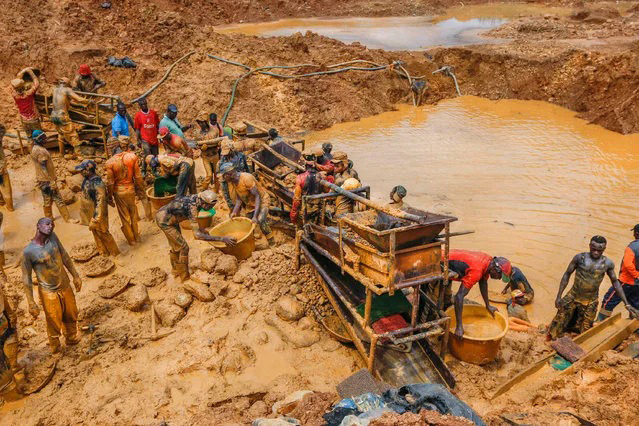
Illegal mining has ravaged Ghana's environment for years, poisoning water bodies, destroying arable land, and threatening public health across multiple regions. Communities downstream from mining sites have reported contaminated water supplies, whilst farmland has been rendered unusable. The practice has also fuelled concerns about mercury poisoning and its effects on vulnerable populations, particularly in mining-affected areas.
The problem cuts across political administrations, with successive governments committing resources to enforcement without stemming the tide. Galamsey operators have proven adept at evading authorities, moving operations when pressure mounts and exploiting gaps in regulatory oversight.
Why This Criticism Matters for Ghana
IMANI Africa's assessment reflects broader concerns about Ghana's institutional capacity to implement policy effectively. The think tank, respected for independent analysis, is not merely criticising the Secretariat itself but questioning whether government's approach addresses root causes of illegal mining or simply creates the appearance of action to satisfy public and donor expectations.
For ordinary Ghanaians, particularly those in mining communities and agricultural areas, the distinction matters enormously. Cosmetic interventions leave them vulnerable to ongoing environmental degradation, health risks, and economic loss. If NAIMOS is genuinely ineffective, then the government remains without a functional strategy against one of the nation's most pressing environmental threats.
The critique also raises questions about resource allocation. If institutions designed to combat galamsey lack either the mandate, funding, or political will to succeed, Ghana risks continuing to treat symptoms rather than addressing why illegal mining remains so profitable and persistent.
The Broader Context
Bentil's comments arrive amid ongoing debate about Ghana's environmental governance. The country has experienced significant deforestation alongside illegal mining, with both issues linked to weak enforcement and competing economic pressures. Artisanal and small-scale miners often argue they lack legitimate alternatives, whilst large-scale operators exploit regulatory gaps.
IMANI Africa's intervention suggests that policy makers cannot simply announce new institutions and expect results. Effective galamsey control requires sustained political commitment, adequate resourcing, community engagement, and addressing the economic drivers that make illegal mining attractive in the first place.
The government's response to such criticism will be closely watched by environmental campaigners, development partners, and affected communities seeking evidence that Ghana's leadership takes the galamsey crisis seriously.
Source: 3News



Comments (0)
Be the first to comment.