Ghana's anti-galamsey battle in crisis: activist warns of exponential surge despite enforcement blitz
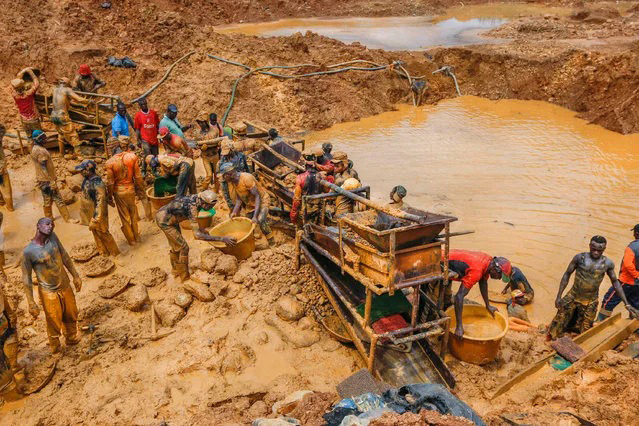
Ghana's battle against illegal small-scale mining, or galamsey, is fundamentally failing despite years of enforcement operations and government intervention, according to Senyo Hosi, Convener of the OneGhana Movement and Trustee of the Ghana Coalition Against Galamsey. Speaking in an interview on Saturday, August 22, Mr Hosi delivered a stark assessment: the country has made little to no progress in curbing the practice, and by most measurable environmental indicators, the situation is deteriorating rapidly.
The alarming numbers tell part of the story. In August 2024, an estimated 14,000 to 14,500 people were engaged in galamsey operations. By August 2025, that figure had skyrocketed to approximately 98,000—a sevenfold increase in just twelve months. Mr Hosi described this surge as exponential rather than gradual, warning that the scale of the problem demands an urgent strategic rethink rather than incremental policy adjustments.
The measurement problem: activity versus outcomes
A core criticism Mr Hosi levelled at current anti-galamsey efforts is the government's reliance on enforcement metrics to declare success. The National Anti-Illegal Mining Operations Secretariat (NAIMOS) regularly publicises arrests, equipment seizures and destruction figures as evidence of progress. Yet Mr Hosi argues this approach fundamentally misses the point.
"You can arrest one million people, and if the water is not improving, it is rather getting worse. Tell me, what is the policy outcome of the intervention?" he asked, highlighting a critical gap between activity and actual results. He insisted that measurable environmental improvements—reduced water turbidity, restoration of degraded water bodies and forest reserves, and improved food quality—should be the true benchmarks of success.
Instead, Ghana's policy discourse often confuses inputs (resources spent, operations conducted) with outputs (environmental and social impact). This conceptual error, Mr Hosi argued, allows governments to claim progress whilst conditions on the ground worsen. Without transparent data on water quality trends, forest recovery rates and food contamination levels, Ghanaians have no independent way to assess whether billions spent on anti-galamsey efforts are actually working.
Why it matters for Ghana: water security and national survival
Galamsey's expansion threatens one of Ghana's most vital resources: potable water. Illegal mining operations in water catchment areas release heavy metals, cyanide and sediment that contaminate rivers and groundwater supplies. Communities downstream face health risks whilst water treatment becomes exponentially more expensive. In a country already struggling with water security in certain regions, uncontrolled illegal mining represents an existential threat to public health and economic development.
The environmental damage extends beyond water. Forest reserves—critical for climate regulation, wildlife habitat and carbon sequestration—are bulldozed for mining pits. Fertile agricultural land is destroyed, threatening food security. The social breakdown is equally serious: young people drawn into galamsey instead of legitimate employment, violent competition between mining syndicates, and the infiltration of criminal networks into mining operations.
Mr Hosi also noted that Ghana squandered an opportunity during former President Nana Akufo-Addo's first term to take decisive action when the problem was smaller and more manageable. That failure to act decisively earlier now means confronting a vastly larger and more entrenched illegal mining sector.
The path forward: transparency and real accountability
Mr Hosi called for a fundamental shift in how Ghana approaches the galamsey crisis. Policymakers must publish comprehensive, credible data on environmental indicators—water quality readings, forest coverage, soil contamination—and allow independent assessment of whether interventions produce results. Government must also move beyond arrests and seizures to focus on sustainable solutions: why people join galamsey, how to create livelihood alternatives, and how to address the corruption and complicity that enables the trade.
The message is unambiguous: Ghana is losing the galamsey fight, and cosmetic enforcement action will not change that reality. Only genuine, transparent, outcome-focused policy can.
Source: The Ghana Report



Comments (0)
Be the first to comment.