OSP must stand on institutional strength, not personality – Manhyia South MP

Member of Parliament for Manhyia South Nana Agyei Baffour Awuah has cautioned Ghanaians against allowing personalities to define the Office of the Special Prosecutor, arguing instead that public scrutiny should centre on institutional performance and legal mandate.
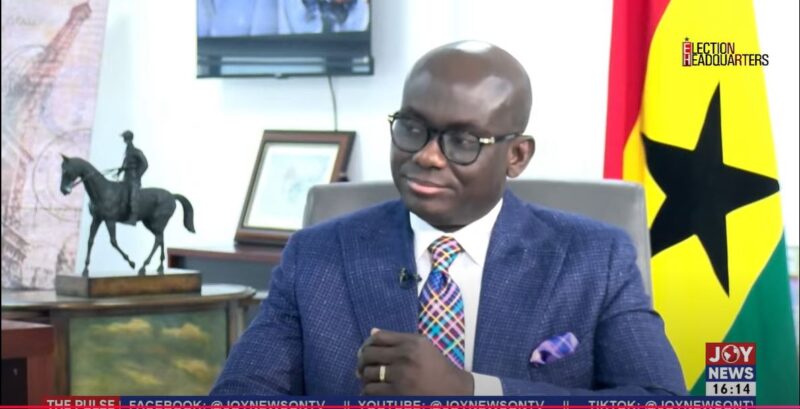
Speaking on JoyNews' Newsfile programme on Saturday, 29 August, Mr Awuah expressed concern that recent discourse surrounding the anti-corruption body had become personalised rather than focused on substantive institutional matters. He characterised such an approach as counterproductive and potentially damaging to public trust in Ghana's corruption-fighting mechanisms.
"We should avoid personalising the Office of the Special Prosecutor. I listened to the press conference, and I was sad that you came and said that all that is happening is because of hatred for the occupant of the office," he said. "Why would you want to believe or make it seem that it is a personal matter against the occupant of the office? While you take that position, it becomes very difficult for cooperation."
The OSP's recent positioning
Mr Awuah's remarks come shortly after the OSP held a press conference in which the institution declared its "rebirth" and renewed its commitment to tackling corruption across Ghana's public sector. The briefing also highlighted emerging questions about the level of coordination between the OSP and the Office of the Attorney-General, raising concerns about operational alignment between these key state agencies.
The timing of these comments suggests growing public debate about how Ghana's anti-corruption institutions function and whether they operate with sufficient independence and cooperation to be effective.
Why it matters for Ghana
The distinction Mr Awuah draws between institutional credibility and individual personalities carries significant implications for Ghana's anti-corruption efforts. The OSP was established as a constitutionally mandated body tasked with investigating and prosecuting corruption cases affecting the state. Its effectiveness depends fundamentally on public confidence, institutional independence, and seamless collaboration with other agencies such as the Attorney-General's office and law enforcement bodies.
When public discourse becomes centred on individuals rather than institutional frameworks, several risks emerge. First, it can undermine the legitimacy of the institution itself, making citizens question whether decisions are driven by legal merit or personal animus. Second, it weakens the foundation upon which the OSP operates, making it vulnerable to claims of bias or selective prosecution. Third, it can strain the inter-agency relationships necessary for effective investigation and prosecution of corruption cases.
Ghana's fight against corruption has long faced challenges related to institutional capacity, resource constraints, and political interference. Public confidence in anti-corruption bodies is essential for ensuring that investigations are perceived as fair and that prosecutions are seen as justified rather than politically motivated. By depersonalising the debate, Ghanaians can focus on whether the OSP is adequately resourced, whether it has genuine independence, and whether it coordinates effectively with sister institutions.
Mr Awuah's intervention also points to a broader governance question: how Ghana can strengthen its institutional architecture so that anti-corruption work continues regardless of who holds office. A strong institution should be able to withstand changes in personnel and remain steadfast in its mandate.
Moving forward
The MP's call for institutional focus rather than personality-driven debate offers a constructive framework for public engagement with the OSP. This approach does not preclude scrutiny of the Special Prosecutor's conduct or decisions; rather, it situates such scrutiny within an institutional context where accountability is measured against legal mandate and operational effectiveness rather than personal loyalty or animosity.
As Ghana continues to grapple with corruption challenges, the strength of institutions—not individuals—will ultimately determine whether anti-corruption efforts succeed or falter.
Source: MyJoyOnline


Comments (0)
Be the first to comment.