
Catholic Bishops warn Chief Justice against political comparisons in public statements
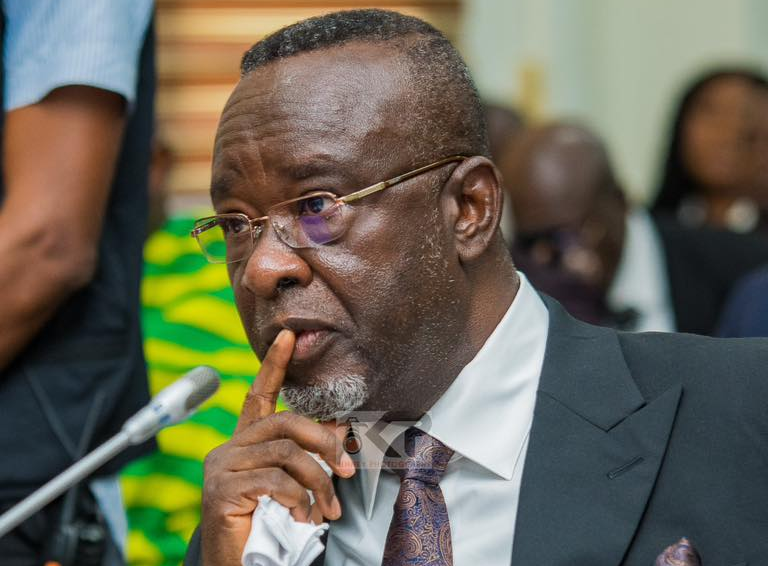

The Ghana Catholic Bishops' Conference has issued a significant warning to Chief Justice Paul Baffoe-Bonnie, urging him to refrain from making statements that could be perceived as comparing the performance records of successive governments. The intervention comes after the Chief Justice's recent visits to major state institutions, during which his references to the "past eight years" sparked concerns about potential political undertones.
The Bishops acknowledged that the Chief Justice's visits to the Social Security and National Insurance Trust (SSNIT) and the Minerals Income Investment Fund (MIIF) on 2 September were legitimate exercises of his oversight role. They recognised that assessing institutional operations and acknowledging genuine improvements are appropriate functions. However, they flagged the broader implications of how such remarks are interpreted within Ghana's politically charged environment.
The judicial impartiality concern
The Conference's core concern centres on protecting public confidence in the Judiciary's neutrality. The Bishops emphasised that whilst judicial independence requires actual impartiality, it equally depends on maintaining the visible appearance of impartiality to citizens. In Ghana's context, a reference to the "past eight years" can readily be understood as a comparison between the current administration and its predecessor, potentially compromising the courts' credibility as neutral arbiters.
The Bishops were careful to distinguish between the act of institutional oversight and its political interpretation. They noted that the difficulty does not lie in the Chief Justice visiting public institutions or commending genuine improvements, but rather in how remarks that reference specific timeframes acquire a partisan character when interpreted through the lens of Ghana's electoral cycles.
The intervention also referenced concerns raised publicly by the Ghana Centre for Democratic Development, which warned that such remarks could create an impression of political endorsement and undermine confidence in judicial impartiality. The Bishops received the Judicial Service's clarification that the Chief Justice acted in good faith with no intention to compromise judicial independence, but stressed that the episode raises broader questions about standards expected of the head of the Judiciary.
Why it matters for Ghana
This statement carries significant weight for Ghana's democratic institutions. The Judiciary serves as a crucial check on executive and legislative power, and must be perceived as independent to function effectively. During an election year or period of political tension, any suggestion that the Chief Justice favours one political era over another could undermine public trust in the courts' ability to handle politically sensitive cases fairly.
The Bishops' intervention is particularly noteworthy because it bridges a gap between institutional self-regulation and civil society oversight. By neither accusing the Chief Justice of partisanship nor calling for his resignation, the Catholic leadership has modelled measured institutional critique. They have instead offered guidance on best practice standards for judicial officers, emphasising that the office of Chief Justice differs fundamentally from that of an ordinary public commentator.
The Conference's final appeal to both governing and opposition parties to exercise restraint is equally important. They urged the ruling party not to treat criticism of the Chief Justice as an attack on its record, and the opposition not to treat his remarks as proof that courts have been captured by any administration. This call for proportionate response underscores how easily institutional missteps can become flashpoints for broader political polarisation.
The path forward
The Bishops recommended that achievements by institutions like SSNIT and MIIF be commended on their own merits, without setting one administration's record against another. This approach preserves space for legitimate institutional assessment whilst maintaining the neutral posture essential to judicial credibility. The episode serves as a reminder that in Ghana's polarised political environment, even well-intentioned remarks by senior judges require careful calibration to avoid unintended political interpretation.
Source: MyJoyOnline



Comments (0)
Be the first to comment.