
Catholic Bishops defend Chief Justice's visits but warn against political undertones in remarks
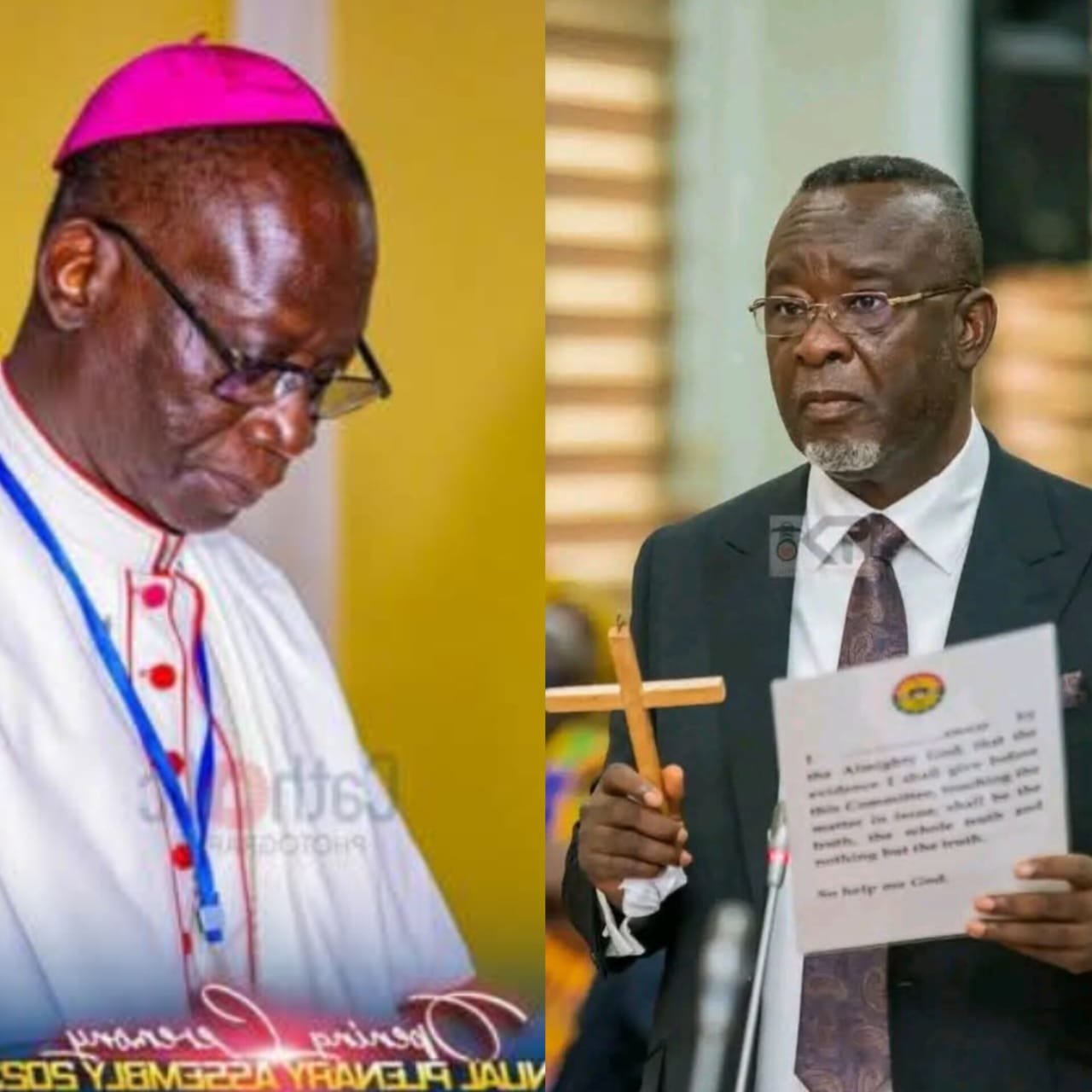

Ghana's Catholic Bishops' Conference has offered a nuanced defence of Chief Justice Paul Baffoe-Bonnie's recent visits to public institutions, whilst raising concerns about the political interpretation of his comments, particularly his references to the "past eight years."
In a statement issued on Sunday, 6 September, the Church body affirmed that there is nothing inherently inappropriate about the Chief Justice visiting state institutions and acknowledging operational improvements. The bishops reasoned that public institutions fundamentally belong to all Ghanaians, making such oversight visits a legitimate exercise of judicial leadership.
However, the Conference expressed discomfort with how the Chief Justice's remarks during visits to the Social Security and National Insurance Trust (SSNIT) and the Minerals Income Investment Fund (MIIF) could be construed as comparative assessments of different administrations' performance. The mention of "past eight years" appeared to create a contrast between the current government and its predecessor, potentially suggesting partisan alignment even if unintended.
The perception problem: why appearance matters as much as intent
The bishops stressed a critical principle: judicial independence rests not merely on actual impartiality but equally on public perception of impartiality. This distinction is crucial in Ghana's political landscape, where public trust in institutions remains fragile and contested.
The Conference noted that concerns had already been raised by the Ghana Centre for Democratic Development (CDD), a respected civil society organisation, which warned that such remarks risked creating an impression of political endorsement and could undermine confidence in the judiciary's neutrality.
The bishops acknowledged a clarification from the Judicial Service, which stated that the Chief Justice's comments were made in good faith and posed no threat to judicial independence. However, they maintained that this assurance alone could not fully address the reputational risk when courts may eventually be called upon to adjudicate cases involving governments, political parties, and public bodies.
Why it matters for Ghana's judicial independence
This intervention by the Catholic Bishops' Conference highlights a persistent tension in Ghana's governance: the delicate balance between allowing judges to engage meaningfully with the public and maintaining the strict political neutrality that courts require to function credibly.
Ghana's 1992 Constitution vests significant powers in the judiciary, making it essential that both political parties and the general public view courts as impartial arbiters rather than allies of any faction. High-profile remarks by the Chief Justice, particularly during an election cycle or periods of political tension, carry amplified weight and risk.
The bishops notably stopped short of calling for the Chief Justice's resignation, describing such calls as "disproportionate" based solely on the remarks in question. This measured approach reflects the Church's effort to balance accountability with proportionality.
The Conference also appealed to both the ruling party and opposition to refrain from weaponising the matter for political gain—a plea that underscores how easily judicial matters become entangled in partisan disputes in Ghana.
The path forward
The bishops suggested a pragmatic solution: the Chief Justice could have praised institutional achievements without making temporal comparisons that invite political interpretation. This recommendation points to a broader lesson about judicial communication in contested democracies.
For Ghana specifically, this moment reflects broader questions about how senior judges should engage with institutions and the public. As the country approaches electoral cycles and faces complex constitutional questions, maintaining unwavering public confidence in judicial impartiality remains vital to democratic stability.
Source: The Ghanaian Times



Comments (0)
Be the first to comment.