
Chief Justice's Eight-Year Remark Sparks Judicial Independence Debate in Ghana
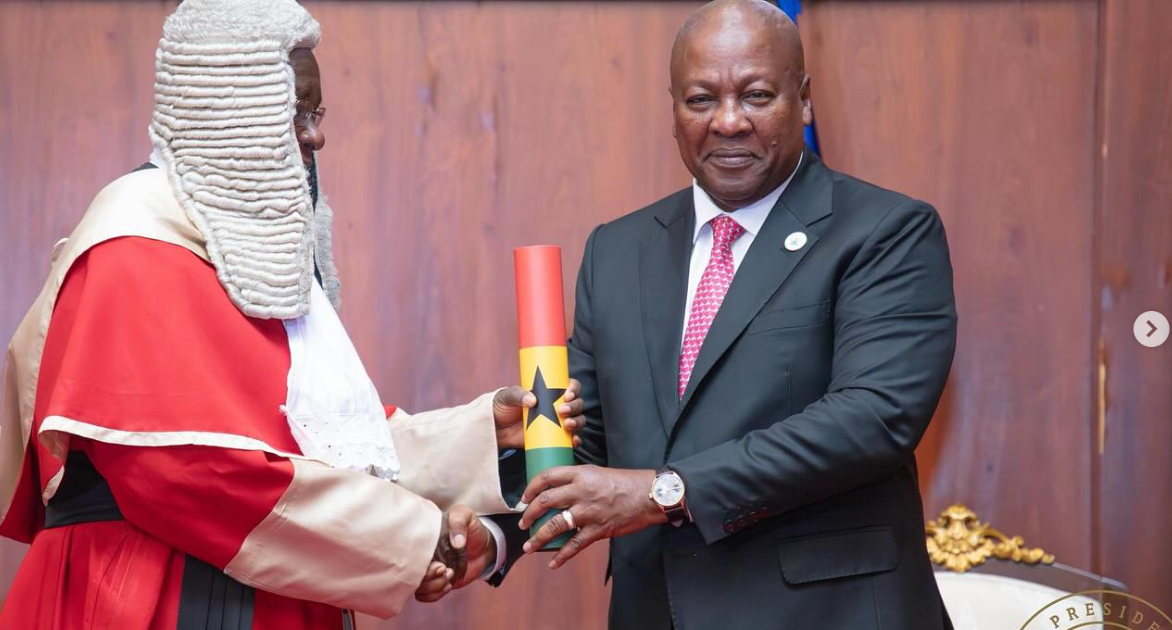

Ghana's highest judicial officer has inadvertently sparked a national conversation about the line between personal opinion and judicial impartiality. Chief Justice Paul Baffoe-Bonnie's recent remarks during institutional visits—particularly his observation about what Ghana had been doing "in the past eight years"—have reignited critical questions about how senior judges should conduct themselves in public, especially in a nation where politics and law are deeply intertwined.
During visits to the Social Security and National Insurance Trust (SSNIT) and the Minerals Income Investment Fund (MIIF), Justice Baffoe-Bonnie praised current management performance and wondered aloud about the country's trajectory during the previous administration (2017-2024). At SSNIT, he referenced past attempts to sell national assets, including the Labadi Beach Hotel, questioning how Ghana "had sunk so low." He also urged MIIF management to ensure President John Mahama's agenda succeeds.
The Political Backlash
In Ghanaian politics, the phrase "eight years" carries unmistakable weight. It immediately evokes the Akufo-Addo presidency and triggers partisan responses. The NPP opposition swiftly called for the Chief Justice to either retract his statements or resign and join the NDC—a dramatic response that reflects how vulnerable judicial neutrality has become to political interpretation.
The Centre for Democratic Development (CDD-Ghana) expressed more measured concern, warning that such statements risk creating a perception of political bias, even if unintentional. The Judicial Service later issued a statement asserting that the observations were made in good faith and were not designed to undermine judicial independence. However, the damage to public perception had already taken root.
Why It Matters for Ghana
This incident exposes a fundamental tension in Ghana's judicial system. While senior judges are citizens entitled to opinions, hold intelligence, and possess genuine patriotism, the higher their office, the fewer luxuries they enjoy in publicly expressing political views. This principle is not mere formality—it is essential to Ghana's democratic stability.
Ghana's own Judicial Code of Conduct explicitly recognises this danger. Judicial impartiality requires not only actual independence but also the avoidance of conduct that could cause a reasonable and informed person to perceive political alignment. This distinction matters profoundly because almost every major political controversy in Ghana eventually develops a legal address.
Consider the practical consequences: today MIIF receives praise from the Chief Justice; tomorrow MIIF could become involved in litigation. Today, an opposition party criticises the Chief Justice; tomorrow, an opposition figure may appear before a court in a politically sensitive case. At that critical moment, citizens watching proceedings must be able to disagree with a judgment without wondering whether the judge had already disclosed political sympathies through public remarks.
This is why Ghanaian judges traditionally conduct their most important communication through judgments rather than courtesy visits. Politicians can tour the country praising government programmes. Ministers can trumpet presidential achievements. But judges occupy a different institutional space, one where restraint is not weakness but the price of credibility.
Moving Forward
The Chief Justice's good faith is likely genuine. Nothing in his remarks definitively proves political allegiance or suggests he would decide cases based on party colours. Yet the principle remains: justice must not merely be impartial; it must visibly appear impartial. As Ghanaian tradition wisely observes, the person sharing soup must not be caught licking the ladle—even if laboratory analysis later proves they took only salt.
For a nation navigating complex political transitions and relying on courts to adjudicate increasingly contentious disputes, this incident serves as a timely reminder that judicial restraint protects not judges themselves but the entire system on which democratic governance depends.
Source: MyJoyOnline



Comments (0)
Be the first to comment.