Godfred Dame Attacks Law Enforcement Over 'Political Weaponisation' as Manhyia MP Detained
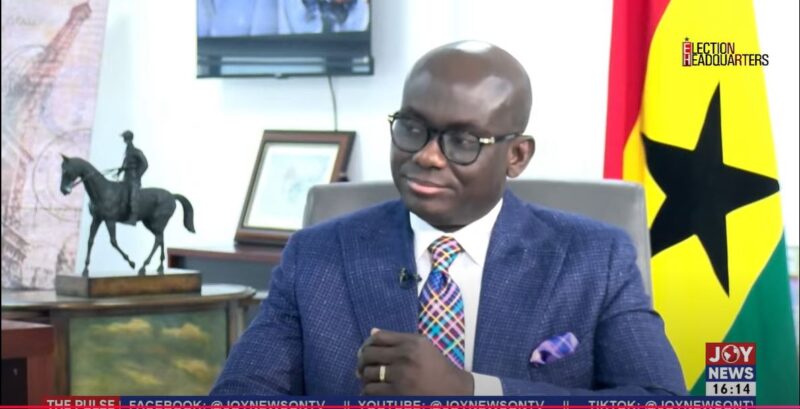
Former Attorney General Godfred Yeboah Dame has launched a scathing critique of Ghana's law enforcement agencies, accusing the Economic and Organised Crime Office (EOCO), Criminal Investigations Department (CID), and the current Attorney General of weaponising state institutions against political opponents. The accusation comes as Manhyia South MP and lawyer Nana Agyei Baffour Awuah remains in EOCO custody following his voluntary surrender on Thursday, 1 October.
In a statement released Saturday, Dame described the conduct of these institutions over the past two years as "gross and awkward exploitation" of arrest, investigative and prosecutorial powers. He characterised the alleged practice as "the lowest point of law enforcement" and criticised the selective application of justice based on political affiliation.
The Immediate Case: MP's Detention Without Bail
Baffour Awuah turned himself in after the High Court issued a warrant for his arrest in connection with an ongoing investigation into allegations including criminal conspiracy, financial loss to SIC Savings and Loans, money laundering and tax-related offences. EOCO confirmed the MP was cooperating with investigators, yet Dame questioned why he had spent two nights in custody without bail.
Dame's key complaint centres on what he views as disproportionate detention. He pointed out that Baffour Awuah earned legal fees of GH¢2.2 million from the transaction under investigation, and questioned whether such conduct even constitutes a criminal matter—a rhetorical challenge to the severity of his treatment.
The Pattern: Comparative Justice Under Different Governments
To substantiate his claims of politicised prosecution, Dame cited three high-profile cases from previous administrations. He noted that Alhaji Collins Dauda, investigated for financial loss allegedly exceeding US$198 million, was granted self-recognisance bail and never spent a day in custody. Similarly, Cassiel Ato Forson, facing trial for offences valued at approximately US€2.3 million, received bail without detention. Dr Dominic Ayine, investigated for his role in the Ameri deal in 2017, was also granted bail immediately.
Dame's comparison aims to illustrate what he characterises as a stark double standard: previous administrations granted generous bail conditions to their officials even in serious financial crime cases, whilst the current government allegedly detains opposition figures for lesser transgressions. This contrast forms the crux of his argument that law enforcement has become a tool for political punishment rather than impartial justice.
Why It Matters for Ghana
Dame's accusations speak to deeper concerns about institutional independence and the rule of law in Ghana. The conduct of law enforcement agencies is fundamental to democratic governance; their politicisation threatens public confidence in the judicial system and can undermine democratic competition.
If the former AG's characterisation is accurate, it suggests that arrests and prosecutions may be influenced by political rather than legal considerations. This would represent a erosion of institutional integrity and raise questions about whether Ghana's law enforcement serves the public interest or partisan agendas. Such dynamics can normalise the weaponisation of state power and establish dangerous precedents for future administrations.
Equally important is Dame's broader claim that whilst law enforcement pursues political opponents, serious organised crime—including the narcotic trade—remains inadequately addressed. This alleged misallocation of investigative resources represents both a failure of institutional duty and a potential public safety risk.
The case also reflects Ghana's polarised political environment, where accusations of persecution are common and trust between political actors remains fragile. Public perception of bias in law enforcement can delegitimise institutions even where prosecutions are legally sound, complicating the government's ability to pursue legitimate investigations.
As the 2024 political season develops, these tensions around prosecutorial discretion and fair treatment will likely intensify. Citizens and observers will be watching closely to assess whether the justice system operates on consistent principles or responds to political winds.
Source: MyJoyOnline


Comments (0)
Be the first to comment.