Invasive Weeds Destroy Up to 84% of Ghana's Rice Crops, Scientists Warn
Critical Threat to Ghana's Rice Production
Ghana's rice farmers face a mounting crisis as invasive weeds destroy up to 84 percent of harvests, according to research presented by the Council for Scientific and Industrial Research (CSIR-Crops Research Institute) and the Korea Partnership for Innovation of Agriculture (KOPIA). The findings, unveiled at a stakeholder workshop in Kumasi attended by over 50 farmers, extension officers and government officials, highlight an urgent threat to national food security.
Five destructive weed species have become entrenched in Ghanaian rice fields: Echinochloa spp. (locally known as "Ashaiman killer"), Leptochloa chinensis ("Black Jerry"), Urochloa humidicola ("Aguda"), Ischaemum rugosum ("Ogo") and Cyperus spp. ("Atadwe"). These invasive plants can reduce yields by 50 to 80 percent whilst also harbouring destructive rice diseases including blast, sheath blight and brown spot.
The economic burden on farmers is unsustainable. Dr Stephen Arthur, Project Coordinator at CSIR-CRI, revealed that farmers currently spend between GH₵1,600 and GH₵2,000 per acre on manual weed removal alone. He called for urgent adoption of integrated weed management practices combining timely herbicide application with improved agronomic techniques to reduce costs and boost productivity.
Researchers documented additional challenges posed by weed infestations. Pathologist Dr Atta Aidoo linked weeds to increased disease incidence, whilst entomologist Dr Kofi Frimpong-Anin identified shifts in pest dynamics. The findings underscored the interconnected nature of weed management with broader crop health and yield outcomes.
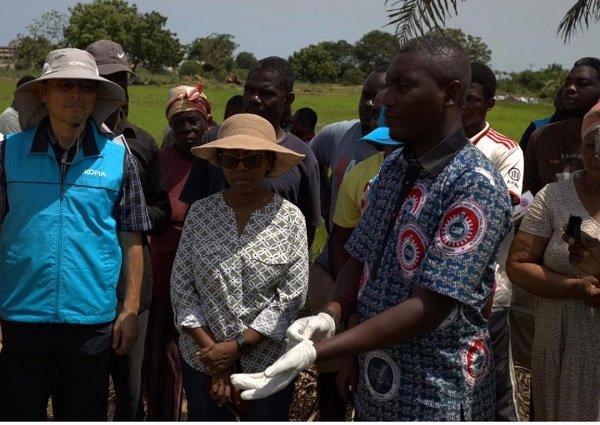
CSIR leadership emphasised the need for stronger government intervention. Prof Maxwell Darko Asante, Director of CSIR-CRI, urged the National Food Buffer Stock Company to purchase locally-produced rice seed from Dawhenya to secure progress in the sector and reduce reliance on risky imports. Field demonstrations showcased the stark difference between managed and unmanaged plots, with lead farmer Richard Affleh expressing commitment to adopting recommended strategies. The three-year KOPIA project will continue documenting farmer practices over the next two years to develop sustainable, long-term solutions.
Source: The Ghanaian Times



Comments (0)
Be the first to comment.