Ghana's Supreme Court Vetting Process Reflects Democratic Immaturity, Says Gyampo

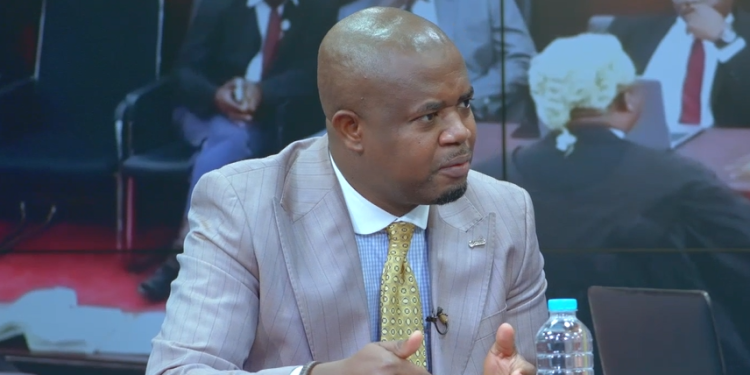
Professor Ransford Gyampo has raised serious concerns about the state of Ghana's democratic processes, pointing to the chaos surrounding the vetting of Supreme Court justice nominees as evidence that the country's institutional framework is not maturing as it should.
The University of Ghana lecturer's remarks come amid widespread confusion over the procedures and timeline for vetting judicial nominees—a process that should demonstrate Ghana's commitment to constitutional governance and institutional strength. Instead, Gyampo argues, the disarray reveals troubling gaps in how the country manages critical democratic functions.
The Core Issue: A Lack of Institutional Clarity
The vetting process for Supreme Court justices is meant to be one of Ghana's most important constitutional exercises. It involves scrutiny of nominees by parliament, ensuring that judges appointed to the nation's highest court meet rigorous standards of competence, integrity and impartiality. When this process becomes mired in confusion—whether over procedural rules, timing, or the roles of different institutions—it undermines public confidence in the judiciary itself.
Gyampo's critique suggests that Ghana's institutions have not developed the kind of institutional memory, clear protocols and mature decision-making frameworks that stable democracies rely on. Instead of executing well-established procedures smoothly, confusion reigns, pointing to deeper governance weaknesses.
What This Means for Ghana's Democratic Development
Ghana has long been celebrated as a relative bright spot for democracy in West Africa. However, Gyampo's observations highlight a paradox: the country's democratic institutions may be older and formally more robust than many peers, yet they are struggling with basic operational maturity. This is particularly concerning when it comes to the judiciary, which should operate with exceptional clarity and consistency.
The confusion around Supreme Court vetting raises several implications for Ghanaians:
- Judicial independence may be questioned if the vetting process appears arbitrary or inconsistent
- Public trust in institutions erodes when procedures seem ad hoc rather than principled
- The broader message sent is that Ghana's constitutional order lacks clear, binding rules—a foundation stone of democracy
- International observers watching Ghana's democratic performance may view such confusion as a warning sign
The Bigger Picture: Building Institutional Maturity
Gyampo's critique is not merely academic complaint—it points to a genuine challenge facing Ghana. A maturing democracy requires more than elections and formal institutions; it requires institutional cultures where procedures are clear, respected and consistently applied. When vetting a Supreme Court justice becomes confused, it suggests that even Ghana's most important processes lack the kind of institutional robustness one would expect from a nation that sees itself as a democratic leader in the region.
For Ghana to move forward, stakeholders—from parliament to the judiciary to civil society—will need to invest in clarifying, documenting and rigorously implementing procedures for all critical constitutional processes. Without this, the confusion Gyampo identifies will likely persist, undermining confidence in the very institutions meant to protect Ghana's democracy.
Source: 3News



Comments (0)
Be the first to comment.