Public Tribunals Are Constitutional, Says Supreme Court Nominee Forson
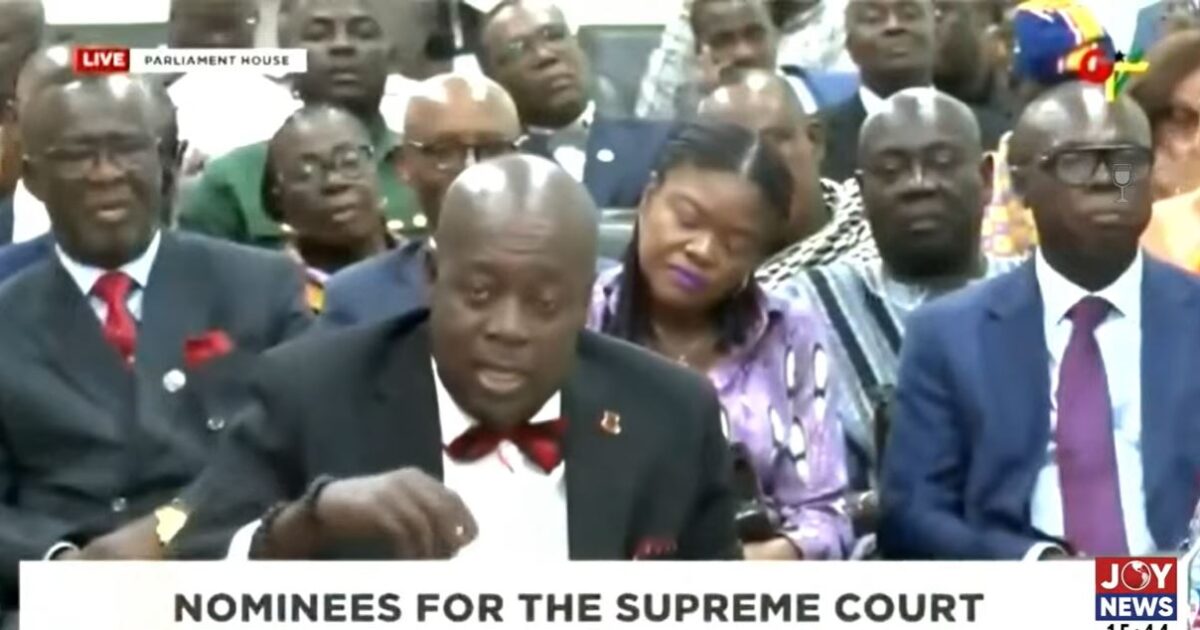
Supreme Court nominee Anthony Forson Jnr has endorsed the government's reintroduction of public tribunals, arguing that their constitutional validity cannot be questioned since Ghana's 1992 Constitution explicitly provides for them. The former Ghana Bar Association president made the remarks during his vetting before Parliament's Appointments Committee, dismissing public concerns about the tribunals as separate from their legal standing.
Forson grounded his position in Article 1(2) of the Constitution, which establishes the Constitution as the supreme law of Ghana. He argued that any institution created under constitutional provisions must be recognised as constitutionally legitimate, regardless of public opinion about their necessity or operation.
The Constitutional Framework
According to Forson, the public tribunals are not an unconstitutional innovation being imposed on Ghana's legal system. Rather, they operate within the existing constitutional structure. The nominee stressed that since Parliament is legislating within its constitutional mandate to establish these institutions, the process follows lawful procedure. He emphasised that personal reservations held by sections of the public do not negate the constitutional validity of structures already provided for in the nation's founding document.
Forson's defence is significant given that public tribunals have sparked debate among civil society organisations, legal practitioners, and citizens concerned about due process, judicial independence, and the rule of law. His testimony suggests that the next Supreme Court judge will likely uphold the constitutional legitimacy of these institutions should they face legal challenge.
Why It Matters for Ghana
This pronouncement has substantial implications for Ghana's justice system and the current administration's accountability agenda. The government has reintroduced public tribunals as a mechanism for trying cases involving alleged corruption and financial crimes, positioning them as an expedited alternative to traditional courts. However, critics have questioned whether these tribunals adequately protect defendants' rights and maintain judicial independence.
Forson's confirmation as a Supreme Court judge means Ghana's highest court will have a member who does not view public tribunals as constitutionally problematic. This could influence future rulings if the tribunals' legality or procedures are challenged. For ordinary Ghanaians, this means the tribunals are likely to remain operational and may expand, potentially affecting anyone prosecuted under them.
The nominee's position also reflects a broader jurisprudential approach: that constitutional provisions, once written, must be respected even if public sentiment shifts against them. This doctrine of constitutional fidelity has merit in maintaining legal stability, but it also means institutions that some Ghanaians view with scepticism will persist unless Parliament explicitly amends the Constitution.
Moving Forward
As Forson awaits confirmation, his testimony clarifies where at least one future Supreme Court judge stands on a contentious governance issue. Citizens and stakeholders concerned about public tribunals will likely need to pursue constitutional amendment or legislative reform rather than rely on judicial intervention to curtail them. The vetting process continues to reveal how appointees interpret Ghana's founding law and their role in preserving or reforming institutions within it.
Source: MyJoyOnline
Comments (0)
Be the first to comment.