
Forikrom women farmers demand policy action to strengthen Ghana's food security on World Food Day
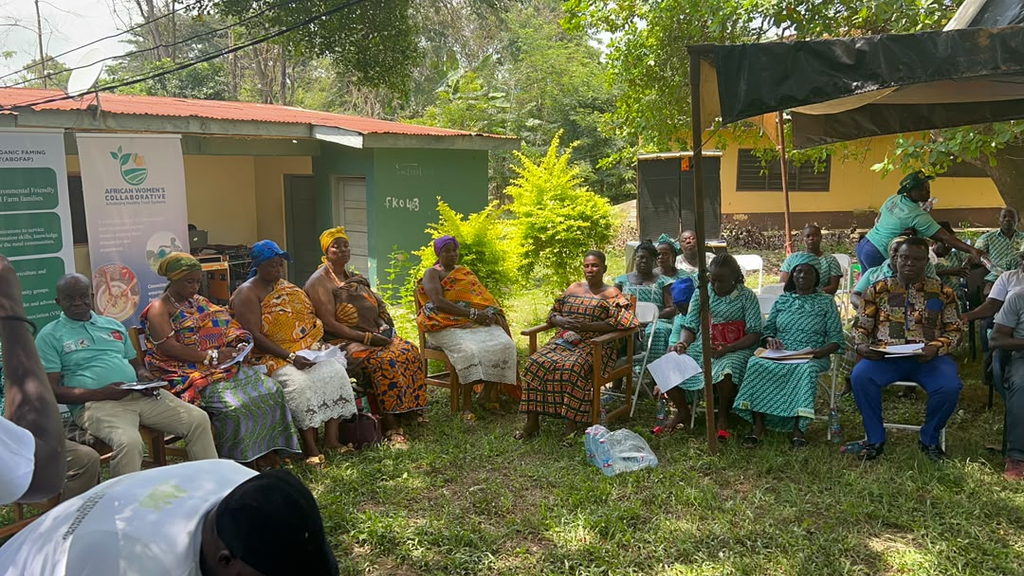

Women farmers in Forikrom, Bono East Region, have used this year's World Food Day commemoration to make a forceful case for policy reforms that would empower rural agriculture and ensure Ghana's food security. At a local gathering organised by the Abrono Organic Farming Project (ABOFAP) and the Rural Women Farmers Association of Ghana (RUWFAG), participants—including farmers, extension officers, nutrition experts, and traditional leaders—called on government to prioritise support for smallholder producers and invest in critical infrastructure like irrigation systems.
A local response to a global crisis
World Food Day 2026, marked under the theme "Innovate today. Nourish tomorrow", coincides with a stark reality: over 36 million people across West and Central Africa still lack reliable access to sufficient food. Ghana, despite its agricultural potential, is not insulated from this challenge. The Forikrom event underscored that food security is not merely an international concern but a pressing local issue requiring urgent action.
Nana Kwao Adams, Executive Director of ABOFAP, emphasised the importance of consuming domestically produced food and strengthening the policy environment for farmers. "We should eat our own food and keep working harder to produce the needed food for the country. It is time we look at policies that will empower rural farmers so that farming becomes sustainable," he stated. This message reflects a broader strategy: reducing dependence on imports while building resilience in local agrifood systems.
Women farmers at the centre of the solution
A critical theme throughout the Forikrom gathering was the role of women in agricultural production and food security. Anita Suntaa, National Coordinator for the Rural Women Farmers Association of Ghana, specifically called for policies designed to enable women farmers to increase production. She highlighted irrigation systems as a key priority, particularly in the Upper West Region where dry-season farming remains limited by water availability.
"We need policies that will help women farmers produce enough food. This includes the establishment of irrigation systems to aid all-year-round farming, particularly in the Upper West Region," Suntaa said. Her intervention points to a structural constraint: without reliable water access during the dry season, rural women farmers—who represent a significant portion of Ghana's agricultural workforce—cannot maximise productivity or generate consistent income.
Forikromhemaa Nana Sakyiwaa Abanaba, who chaired the event, reinforced the message by advocating for organic food consumption. "I urge everyone to consume organic foods. They are healthy for our bodies and good for our well-being," she stated, reflecting growing awareness among traditional leaders of the links between sustainable farming practices and public health.
Why it matters for Ghana
Ghana faces a paradox: despite possessing arable land and favourable agroclimatic conditions, significant portions of the population experience food insecurity. Agricultural extension officer Festus Addai highlighted this gap: "With available resources to produce more food, it's quite unfortunate that a lot of people still go hungry. More needs to be done to address this."
The Forikrom gathering's emphasis on local foods, organic farming, and irrigation infrastructure reflects practical solutions that policymakers should consider. Nutrition Officer Faiza Issah reinforced the health dimension, advising participants to consume local foods containing the "four-star diet"—a nutrition framework promoting balanced intake of different food groups. This connects food security to nutrition security, recognising that access to food alone does not guarantee good health.
For Ghana, these calls matter because they address vulnerabilities in both production and consumption. Rural women farmers, who produce much of the nation's food, often lack access to credit, modern inputs, and reliable markets. Irrigation infrastructure remains unevenly distributed, limiting off-season production in northern regions. And consumer preferences increasingly favour imported foods, undermining local production incentives.
The message from Forikrom is a reminder that sustainable food security requires coordinated action: government investment in rural infrastructure, supportive policies for smallholder farmers (particularly women), promotion of nutritious local foods, and a shift in consumer behaviour toward what Ghana produces. Without such efforts, food insecurity will persist despite the nation's agricultural potential.
Source: MyJoyOnline





Comments (0)
Be the first to comment.