GHANASS students win national agri-innovation prize with sustainable solar dryer for farmers
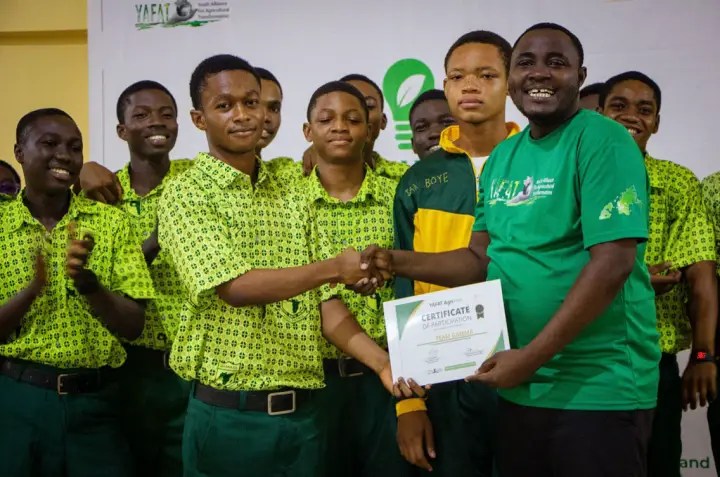
A team of students from Ghana Senior High School in Koforidua has won the 2026 Youth Agri-Innovation Challenge with an ingenious solar-powered dryer designed to tackle one of agriculture's most persistent problems: post-harvest losses. Team Gamma's victory at the grand finale during the AgriFair, organised by the Youth Alliance for Agriculture Transformation (YAFAT), underscores the critical role young innovators are playing in modernising Ghana's agricultural sector.
The challenge brought together young innovators across the country pitching practical solutions to real farming problems. Team Gamma's winning innovation emerged from careful research into how African farmers, particularly in Ghana, lose significant portions of their harvest during the drying and storage phase.
The problem the solar dryer solves
Ghana's farming communities have long relied on open-air drying for cereals, grains and other produce. Whilst traditional and low-cost, this method exposes harvested crops to pests, insects, dust and unpredictable weather conditions. The result is substantial crop damage and spoilage that reduces farmer income and wastes precious agricultural resources. The team leaders—John Smith Dogbey, Boye Adjetey Anang and Akwetey Elikem Albert—identified this gap as an opportunity for innovation.
Their solar dryer operates as an automated dehydrator that eliminates reliance on external electricity sources or fossil fuels. Instead, it harnesses Ghana's abundant solar energy to dry vegetables, cereals and grains safely and efficiently. The technology includes electronic components that automate much of the drying process, allowing farmers to move away from labour-intensive manual monitoring of produce drying stations.
Why it matters for Ghana
Post-harvest losses remain a significant constraint on agricultural productivity and farmer profitability across Ghana and sub-Saharan Africa. Estimates suggest that between 15-30 percent of harvested crops are lost to spoilage, pests and inadequate storage methods. For smallholder farmers operating on thin margins, these losses directly translate to reduced income and food insecurity.
The solar dryer addresses this challenge in several ways critical to Ghana's agricultural context. First, it provides a solution tailored for rural communities where electricity access remains unreliable or non-existent. Many farming villages in the Northern Region, Upper East and other areas lack consistent power supply, making traditional mechanical dryers impractical. A solar-powered alternative removes this barrier. Second, by reducing post-harvest losses, the technology helps farmers retain more of their harvest for sale or household consumption, improving livelihoods. Third, the renewable energy approach aligns with Ghana's sustainability goals and reduces the carbon footprint of agricultural production.
The innovation also demonstrates the untapped potential within Ghana's secondary school system. These students identified a real problem affecting their communities and engineered a practical, affordable solution—a model that could be replicated across other agricultural challenges.
Youth-led agricultural transformation
YAFAT's support for the Youth Agri-Innovation Challenge reflects a broader recognition that agriculture must evolve to attract and retain young people. Ghana's farming sector faces a demographic challenge: rural youth increasingly migrate to cities seeking better opportunities, leaving agricultural production in the hands of ageing farmers. Initiatives that empower young people to innovate, lead and profit from farming are essential to reversing this trend.
Team Gamma's victory signals that solutions to Ghana's agricultural challenges can come from within—from young Ghanaians equipped with education, curiosity and determination to improve their communities. If scaled and deployed effectively, innovations like the solar dryer could transform how Ghanaian farmers preserve their harvests, increase productivity and boost household incomes.
The question now is whether government agencies, development partners and private investors will support the transition of promising innovations like this from classroom projects to field deployment across Ghana's farming communities.
Source: Ameyaw Debrah



Comments (0)
Be the first to comment.