Ghana's Universities Face Extinction Without New Revenue Model, Sam Jonah Warns at UCC Installation
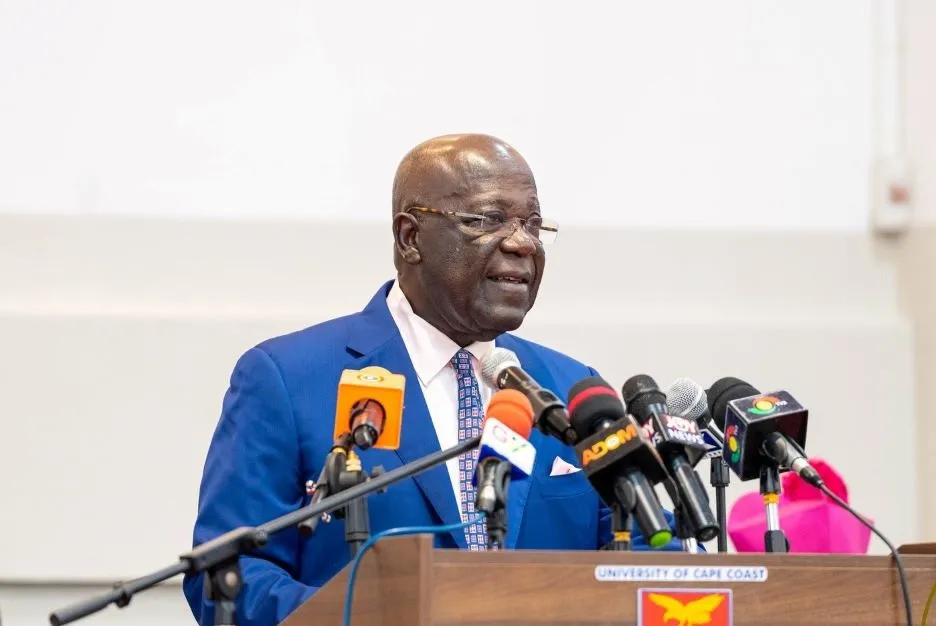
Ghana's higher education sector faces an existential crisis unless universities abandon their dependence on government subvention and become self-sustaining revenue-generating institutions, according to Sir Sam Jonah, the renowned mining magnate and philanthropist.
Delivering a forceful keynote address at the installation of Professor Denis Aheto as Vice-Chancellor of the University of Cape Coast (UCC) on Saturday, August 1, Sir Sam delivered a sobering diagnosis: "The public purse that built this University can no longer sustain it, and no government — of any party — will change that arithmetic soon." He added bluntly: "A university that waits for subvention is a university planning its own funeral, with a very fine brochure."
The message cuts to the heart of a longstanding challenge facing Ghana's public universities. Chronically underfunded by government budgets stretched across competing priorities, many institutions have struggled to maintain infrastructure, attract quality staff and deliver competitive education. Sir Sam's intervention signals growing impatience among Ghana's business elite with the status quo.
A New Blueprint for Ghana's Universities
Rather than simply criticising the problem, Sir Sam outlined a concrete alternative model. Universities must transform into institutions that create tangible value — generating revenue through student-run enterprises, commercial partnerships and research innovation. He illustrated his vision with practical examples: universities where students operate real fish farms, energy installations and genuine business ventures, creating both skills and income streams whilst establishing industry partnerships and attracting gratitude (and donations) from alumni.
Professor Aheto himself provided living proof of the model's potential. Under his leadership, one university centre mobilised over thirty million United States dollars in external funding, supported more than four hundred scholarships and trained over fifty doctoral graduates, whilst establishing itself as an Africa Centre of Excellence. Sir Sam challenged the entire UCC institution to adopt this same principle systematically across all faculties and programmes.
Amongst his specific proposals: establishment of Africa's first degree-awarding faculty dedicated to vocational education that marries academic standards with practical hands-on competence; AI-driven student innovation clubs; robust industry partnerships; mentorship from the diaspora; and project-based learning models that tie coursework directly to real-world problem-solving.
Why This Matters for Ghana
Sir Sam's intervention addresses a critical challenge for Ghana's development. Universities are supposed to produce graduates capable of solving pressing national problems — from energy security to agricultural productivity to healthcare innovation. Yet many graduates emerge with theoretical knowledge but limited practical capability. The shift he advocates aligns university output directly with Ghana's economic needs.
Equally important is the financial sustainability argument. With Ghana's public finances under strain and competing demands from healthcare, infrastructure and security, the government's capacity to fund universities adequately will remain constrained. Universities that wait passively for government cheques risk obsolescence. Those that actively generate their own revenue through intellectual property, consulting services, student enterprises and alumni donations will thrive.
There is also a deeper challenge Sir Sam highlighted: the changing nature of knowledge in the age of artificial intelligence. When machines can instantly access and synthesise information faster than any human, universities cannot justify existence merely as knowledge repositories. Instead, they must focus on developing uniquely human capacities — critical thinking, creativity, ethical reasoning and practical problem-solving — that no algorithm can replicate.
Sir Sam concluded by framing the moment as one of opportunity rather than crisis. "The old model of the university is passing. A new one is waiting to be built. Someone will build it. Let it be built here, by us," he declared, pledging personal support for UCC's transformation and warning others in the audience: "I will be knocking, without shame, on the doors of everyone in this hall."
Source: MyJoyOnline


Comments (0)
Be the first to comment.