Fact-check: Did GoldBod Really Lose GH₵22 Billion? The Truth Behind the Political Claim
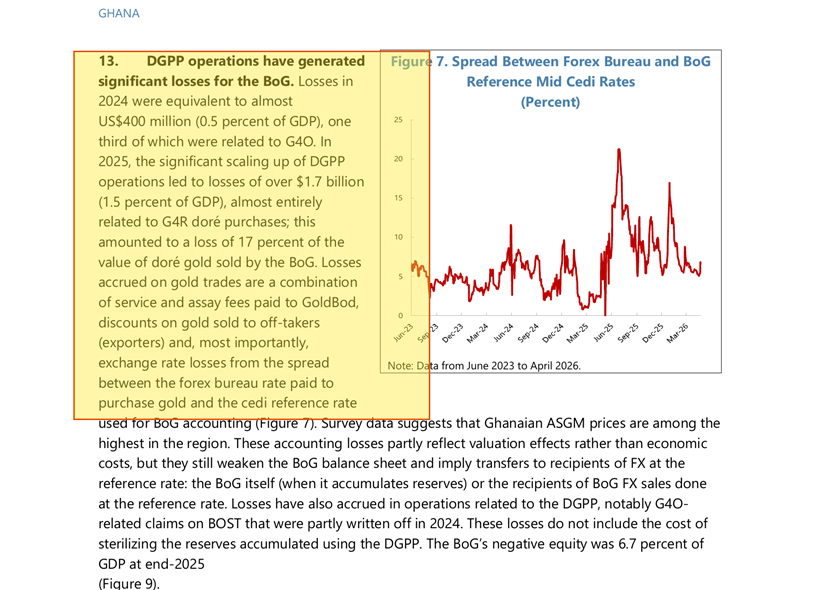
Ghana's political opposition has accused the Ghana Gold Board (GoldBod) of incurring a massive GH₵22 billion loss in 2025—a figure that would represent roughly 1.5 percent of the country's entire GDP. However, a detailed examination of financial records and International Monetary Fund (IMF) documents reveals a more nuanced picture that separates political rhetoric from accounting reality.
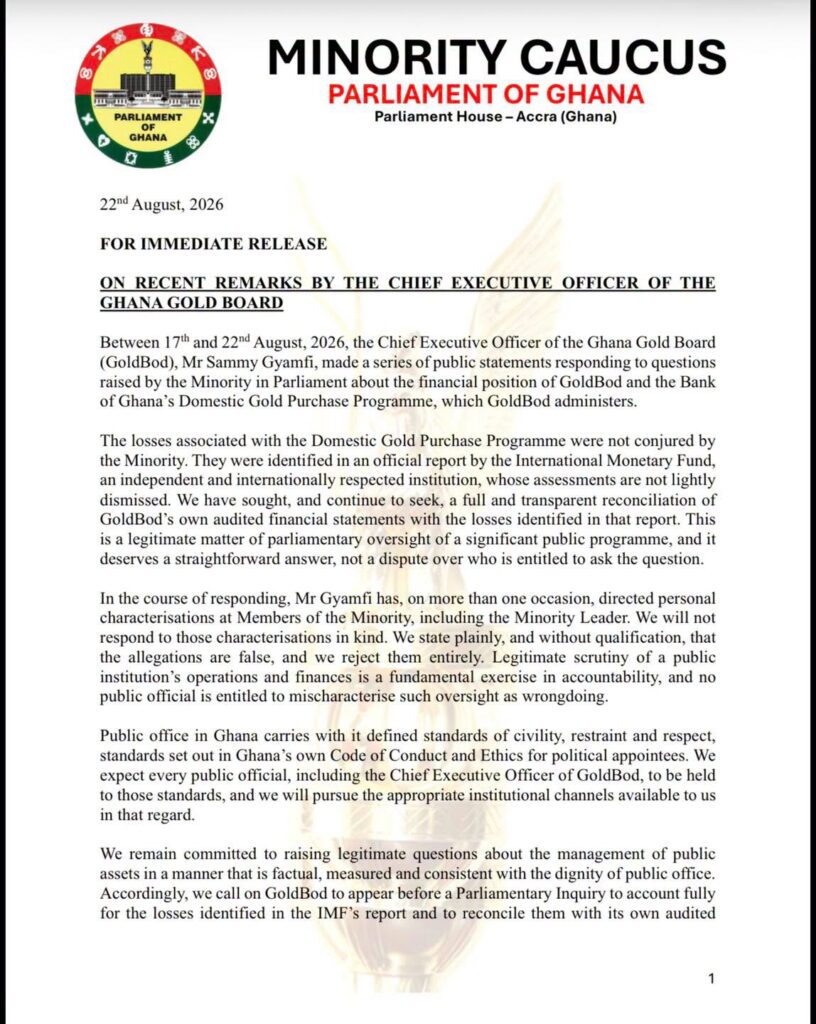
The Minority Caucus in Parliament, led by Minority Leader Alexander Afenyo-Markin, made the allegation at a press conference on 18 August, citing what it described as direct evidence from IMF reports. GoldBod's Chief Executive Officer, Sammy Gyamfi, responded the following day by flatly rejecting the claim as "a barefaced lie," pointing instead to GoldBod's own audited 2025 financial statements, which showed a surplus rather than losses.
The Numbers Are Real, But the Attribution Is Wrong
The controversy hinges on a critical distinction: the GH₵22 billion figure cited by the Minority is indeed real and accurately quoted from IMF documents. The Domestic Gold Purchase Programme (DGPP) operated by the Bank of Ghana did generate losses of over US$1.7 billion (approximately GH₵22 billion) in 2025—an increase from roughly US$400 million the previous year.
However, this loss belongs to the Bank of Ghana's books, not GoldBod's. GoldBod functioned as a paid buying agent for the central bank's gold-purchase programme, collecting service fees, assay fees, and other operational charges. The losses the Minority cited stem from three sources: the fees paid to GoldBod, discounts offered to off-takers who purchased the gold, and most significantly, exchange-rate losses from the difference between the forex bureau rate at which gold was purchased and the Central Bank's own accounting rates.
The IMF's Selected Issues Paper explicitly states: "DGPP operations have generated significant losses for the BoG"—the Bank of Ghana—not for GoldBod. Across 47 separate mentions of GoldBod in the IMF's 182-page Staff Report, nowhere does the Fund attribute the loss directly to GoldBod's own operations or suggest the loss sits on GoldBod's balance sheet.
Why This Matters for Ghana
This dispute illustrates how political actors can weaponise accurate data by misattributing it, creating misleading impressions about institutional accountability. For ordinary Ghanaians, the real concern is not GoldBod's profitability but whether the central bank's decision to pursue the Domestic Gold Purchase Programme was sound policy.
The Bank of Ghana's negative equity position—documented in the same IMF report at GH₵93.8 billion or –6.7 percent of GDP—reflects systemic challenges facing the central bank. These challenges include significant forex losses and monetary policy decisions that have strained the institution's finances. Understanding where losses actually originate is essential for assessing whether the government and central bank made prudent financial decisions during Ghana's recent IMF programme period.
GoldBod's role as an agent collecting fees is distinct from ownership of the underlying losses. The fees GoldBod charged were legitimate operational costs, but the exchange-rate losses and discounting decisions were made by the Bank of Ghana itself, not by GoldBod. This distinction matters because it determines which institution should be held accountable for the financial outcomes of the gold-purchase strategy.
What the Records Actually Show
GoldBod's audited accounts for 2025, certified by the Auditor-General, show a surplus, not a loss. The Minority's framing—that GoldBod "lost 22 billion Ghana cedis in one year"—is therefore misleading, even though the GH₵22 billion figure itself comes from a legitimate IMF source.
For Ghanaians tracking how public institutions have managed the nation's finances during a challenging period, this fact-check underscores the importance of reading beyond headlines. The real question is not whether GoldBod made losses, but whether the Bank of Ghana's gold-purchase programme was an effective policy tool, and what safeguards exist to prevent similar losses in future.
Source: MyJoyOnline



Comments (0)
Be the first to comment.