Parliament Must Examine Ghana's Billion-Dollar Gold Purchase Programme, Minority Insists
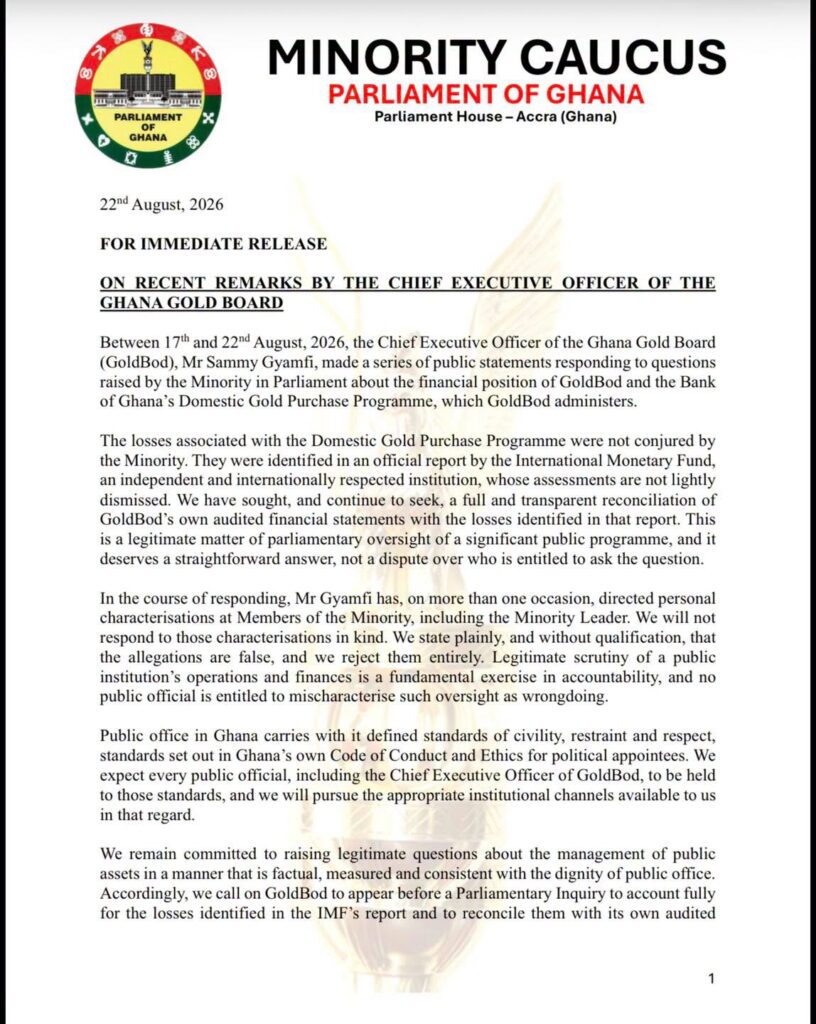
Ghana's opposition Minority Caucus has escalated calls for a parliamentary inquiry into the controversial Domestic Gold Purchase Programme (DGPP), demanding that Ghana Gold Board (GoldBod) leadership answer questions about billions of dollars in transactions that the International Monetary Fund (IMF) suggests may have generated substantial financial losses.
Deputy Minority Leader Patricia Appiagyei made the statement on Saturday, August 22, rejecting GoldBod's attempts to distance itself from scrutiny. The dispute has intensified as the Minority and GoldBod's Chief Executive Officer, Sammy Gyamfi, clash over how to interpret IMF findings on the programme's financial performance.
The Core Dispute: Who Lost What?
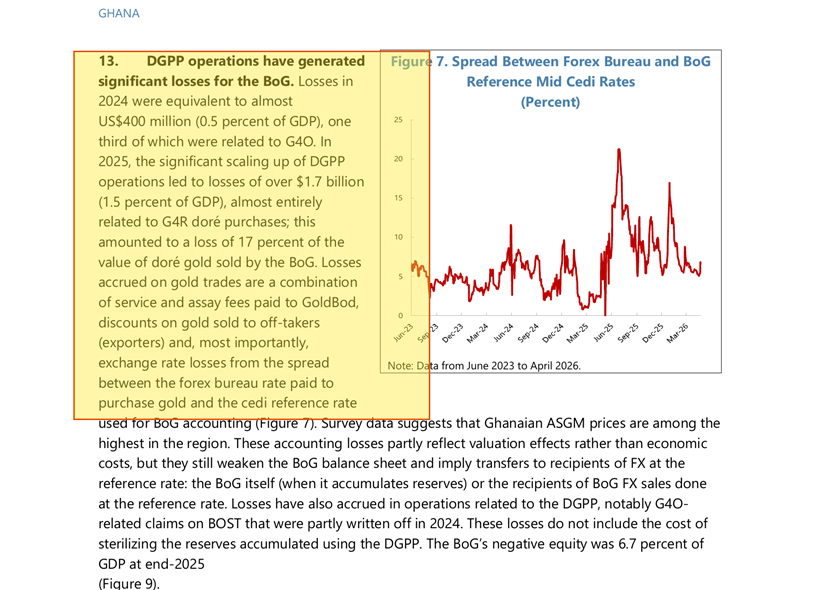
The IMF reported that the Bank of Ghana purchased US$7.6 billion worth of gold through the DGPP up to August 2025, including approximately US$5 billion in doré gold from artisanal and small-scale miners. GoldBod played a central operational role, handling purchasing, assaying, valuing and exporting activities.
The Minority interprets the IMF data as indicating roughly US$1.7 billion in under-recoveries — approximately GH¢22 billion at current exchange rates. However, Mr Gyamfi has rejected this characterisation entirely, pointing to GoldBod's audited 2025 financial statements, which show an operational surplus of GH¢907 million and an overall surplus of GH¢5.4 billion.
The CEO has argued that GoldBod functioned primarily as an agent executing purchases and logistics on behalf of the Bank of Ghana, which retained responsibility for trading and selling gold to international buyers. He has challenged the Minority to point to any passage in the IMF report explicitly blaming GoldBod for the alleged US$1.7 billion loss.
Yet the Minority counters that technical distinctions between agent and principal should not shield anyone from accountability when public resources are at stake. Mrs Appiagyei emphasised that the sheer scale of the figures — involving billions of dollars — demands far more than political exchanges and denials.
Why This Matters for Ghana
This controversy touches on fundamental questions about how Ghana manages its precious commodity reserves and public finances. The DGPP was launched as a strategic initiative to rebuild Ghana's international reserves and stabilise the cedi currency during a challenging macroeconomic period. If losses did occur, Ghanaians have a legitimate right to know how, where and why.
The Minority's demand for transparency reflects broader concerns about governance, risk management and institutional oversight. Even if GoldBod operated within its mandate, the fact remains that public gold and public money were deployed in transactions that may not have yielded expected returns. Questions about pricing mechanisms, discounts, fees and off-taker arrangements are entirely reasonable for a parliamentary body to explore.
The IMF itself, whilst noting that the DGPP helped rebuild Ghana's external buffers — raising gross international reserves to approximately US$11.9 billion by end-2025 — has urged Ghana to end quasi-fiscal activities and strengthen the institutional framework surrounding domestic gold purchases. This IMF guidance aligns with the Minority's position that systemic questions need answering.
The Road Ahead
Mrs Appiagyei said the Minority would not be distracted by what she described as personal attacks between the Caucus and Mr Gyamfi. The focus, she insisted, must remain on whether the public received value for committed resources and whether institutions exercised adequate financial discipline and oversight.
The Minority is specifically demanding greater disclosure of the commercial terms underpinning transactions, clarity on the relationship between GoldBod and the Bank of Ghana, and explanation of why the central bank should bear financial risk where GoldBod was operationally involved.
For ordinary Ghanaians, the debate underscores an essential principle: when billions of dollars in national resources are deployed, Parliament has a duty to scrutinise outcomes rigorously, irrespective of which political camp is in power. The question is not whether GoldBod or the Bank of Ghana acted in bad faith, but whether systems exist to ensure accountability and transparency in how Ghana's wealth is managed.
Source: MyJoyOnline

Comments (0)
Be the first to comment.