Budget Execution Crisis: IFS Warns of GH¢35.6 Billion Spending Shortfall Threatening Ghana's Growth
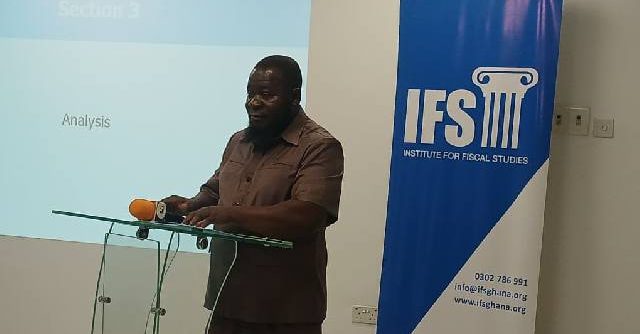
Ghana's fiscal management is facing significant headwinds, with the Institute for Fiscal Studies raising alarm over the implementation of the 2026 Mid-Year Budget. The research organisation has flagged weak budget execution, unrealistic economic projections, and inconsistencies in government fiscal data that threaten to derail the country's economic recovery.
Dr Said Boakye, Acting Executive Director of the IFS, presented a detailed review revealing stark disparities between planned and actual government spending. Whilst the government had budgeted to spend GH¢172.5 billion in the first six months of 2026—including arrears payments—actual expenditure reached only GH¢137 billion, representing a shortfall of GH¢35.6 billion or 20.6% below target. The gap is particularly alarming in capital expenditure, which fell short by GH¢40.35 billion, and arrears payments, which undershot by GH¢8.64 billion.
Dr Boakye cautioned that such significant underspending could dampen economic activity and slow growth momentum. The slippage was substantially driven by domestic financing falling 67.2% short of projections. Additionally, the IFS questioned the government's decision to allocate GH¢15.6 billion to a sinking fund that had not been included in the original budget framework, raising transparency concerns.
The Economic Paradox
Complicating the picture is the disconnect between some bright spots and broader fiscal challenges. Inflation did decline to 5.3% in June 2026, and interest rates saw significant reduction—achievements the IFS acknowledged. These improvements suggest the economy has stabilised following earlier turbulence. However, the implementation failures undermine the potential benefits of these gains.
The IFS has been equally critical of the government's forward projections. The administration's target of a 16.8% revenue-to-GDP ratio is described as difficult to achieve, particularly given that this ratio has consistently remained below 16% since 2015. This represents a seven-year track record that makes the projection appear optimistic at best.
The institute also questioned the 4.8% real GDP growth target, arguing that stronger growth registered in 2025 and early 2026 should logically have prompted an upward revision rather than a conservative target. This inconsistency suggests either overestimation of recent performance or underestimation of future capacity.
Why It Matters for Ghana
Budget execution failures directly impact ordinary Ghanaians. When government fails to spend on infrastructure, healthcare, and education as planned, public services suffer. Ghana's development agenda depends on consistent capital investment; a 20.6% shortfall in overall spending—and a much larger one in capital projects—means fewer roads, schools, and hospitals reach completion on schedule.
The revenue projection concerns are equally troubling. If Ghana targets 16.8% revenue-to-GDP but consistently achieves below 16%, the government faces persistent financing gaps that either lead to increased borrowing or reduced spending. Both scenarios constrain fiscal flexibility and burden future generations.
The IFS has called for immediate action: stronger budget execution discipline, realistic economic forecasting, rigorous data validation, and independent reviews of government projections. The institute also highlighted an underexploited revenue source—royalties from small-scale mining, which contributes substantially to gold exports but generates minimal revenue for the state. Formalising and taxing this sector could help bridge fiscal gaps.
As Ghana navigates post-pandemic recovery and debt sustainability challenges, credible budget implementation becomes crucial. The 2026 Mid-Year review suggests that execution remains a critical weakness, one that policymakers must address urgently to restore investor confidence and protect development outcomes.
Source: The Ghana Report
Comments (0)
Be the first to comment.