
Ghana's Five-Pillar Economic Blueprint: From Crisis Recovery to Long-Term Resilience
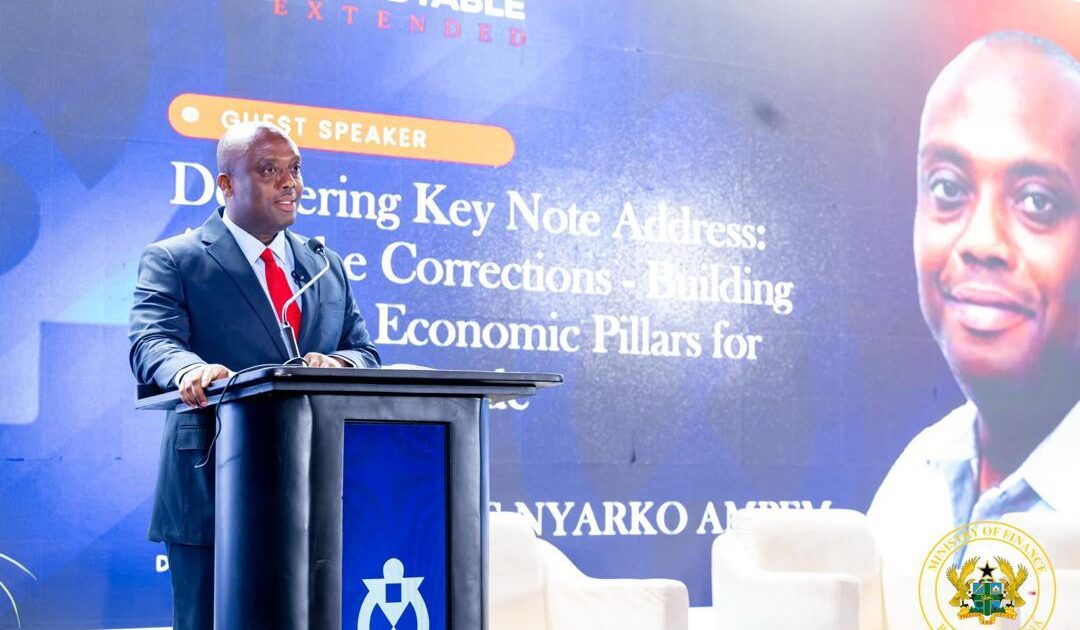

Ghana's government has unveiled an ambitious five-pillar economic strategy designed to lock in recent macroeconomic improvements and construct a durable, productive economy resilient against future crises. Deputy Finance Minister Thomas Nyarko Ampem presented the framework at the Business Roundtable Extended 2026 Executive Dialogue in Accra, signalling a shift from short-term stabilisation to decade-long structural transformation.
The announcement comes as Ghana celebrates tangible progress: real GDP growth reached 6.4 per cent year-on-year in the first quarter of 2026, inflation plummeted from 23.8 per cent in December 2024 to 4.6 per cent by July 2026, and gross international reserves climbed to approximately US$12.9 billion—equivalent to five months of import cover. Debt-to-GDP has also improved dramatically, falling from 61.8 per cent in 2024 to 45 per cent as of June 2026.
Yet Ampem cautioned that these figures alone cannot define success. "We must not become prisoners of our own good numbers," he declared, emphasising that macroeconomic stability must translate into tangible improvements in factories, farms, markets, small businesses and household incomes through productivity and job creation.
The Five Pillars: From Theory to Implementation
The government's strategy rests on five interconnected pillars. The first focuses on strengthening economic buffers through higher foreign reserves, sustainable debt management, fiscal discipline, energy security and food security. Ghana targets 15 months of import cover by the end of 2028 under the Ghana Accelerated National Reserves Accumulation Programme—a buffer intended to shield the economy from external shocks whose timing and nature remain unpredictable.
The second pillar addresses economic transformation, seeking to reduce Ghana's dangerous dependence on commodity price fluctuations. Government aims to produce more domestically and add value to exports rather than exporting raw materials. The New Economy Programme, launching in 2027, will prioritise agriculture, energy, critical minerals, textiles, tourism and pharmaceutical manufacturing.
The third pillar creates conditions for private-sector investment. Treasury bill yields and lending rates have fallen, signalling improved financing conditions, but Ampem stressed that cheaper credit must fund productive activity—manufacturing, innovation and exports—rather than consumption or speculative ventures.
The fourth pillar emphasises institutional strength independent of political cycles. "We cannot build a ten-year economy with four-year thinking," Ampem stated, calling for rigorous enforcement of fiscal rules, commitment controls and debt limits that survive changes in government.
The final pillar ensures growth benefits reach ordinary Ghanaians through infrastructure investment, enterprise development, skills training, job creation and export expansion.
Why It Matters for Ghana: Breaking the Debt Cycle
Ghana's history reveals a destructive pattern: brief periods of macroeconomic stability followed by overspending, debt accumulation, arrears, loss of stability and eventual restructuring. This five-pillar approach attempts to break that cycle permanently. The government has signalled intent to use current economic space—achieved through painful austerity and debt restructuring—to invest in productive capacity rather than repeat past mistakes.
For ordinary Ghanaians, success means that stability translates into jobs, rising real wages and improved services rather than remaining confined to balance sheets. The emphasis on value addition and domestic production could reduce import dependence and create sustainable livelihoods. However, execution will prove critical; Ghana has announced ambitious programmes before without consistent follow-through.
The strategy also signals a new compact between government and the private sector: government provides stability and infrastructure; businesses respond with investment and exports. This partnership model, if credible, could unlock private-sector confidence and foreign investment long-needed to diversify the economy beyond agriculture, gold and oil.
Ampem's final message was stark: "We have stabilised the present. Now we must secure the future." The next decade depends on whether Ghana can maintain fiscal discipline, strengthen institutions and diversify its economy—or whether it will slide back into familiar patterns of boom, bust and restructuring.
Source: MyJoyOnline


Comments (0)
Be the first to comment.