
Uganda learns from Ghana's refining expertise as it pursues own oil facility
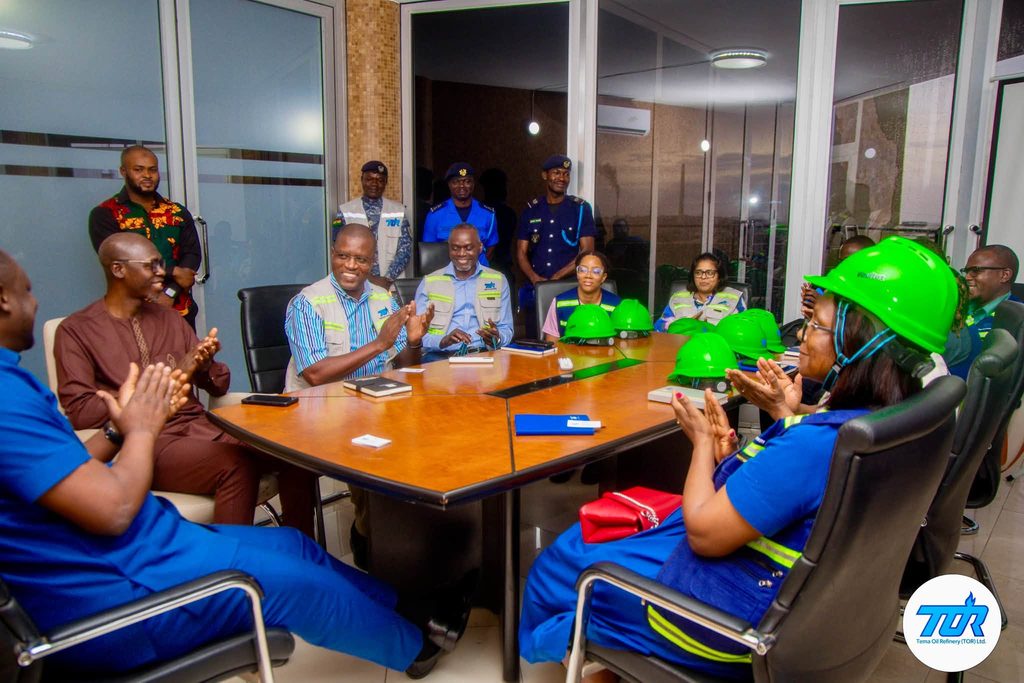

Uganda is turning to Ghana's experience in crude oil refining as it accelerates plans to establish its own petroleum refinery. A delegation from the Uganda Revenue Authority, accompanied by officials from Uganda's Petroleum Commission, visited the Tema Oil Refinery (TOR) on 21 October to study how Ghana has developed and manages its refining operations.
The visit represents a significant moment for cross-regional knowledge sharing within West Africa's oil and gas sector. Uganda, which has substantial proven crude oil reserves in the Albertine Graben, has been planning a major refining project for years as part of its strategy to add value to its petroleum resources rather than exporting crude exclusively.
What the delegation learned
During the visit, TOR's Managing Director Edmond Kombat and Deputy Managing Director Alhaji Mustapha Batalima Abubakar led discussions on the refinery's operational framework. TOR's technical teams walked the Ugandan delegation through the entire refining process, from crude oil intake through the various processing stages to the production of finished petroleum products ready for market distribution.
The briefing gave particular emphasis to the technical challenges and solutions involved in processing local crude oil. This is especially relevant to Uganda, whose crude has distinct characteristics that will require specific processing configurations at any future refinery facility.
Arthur Musinguci, the head of the Uganda delegation, stated that the visit would deepen the team's understanding of refining operations as Uganda progresses with its own facility development. He noted the delegation's keen interest in learning from TOR's practical operational experience—the kind of institutional knowledge that technical specifications alone cannot convey.
Why it matters for Ghana
This exchange underscores Ghana's evolving role as a centre of expertise within the West African oil and gas ecosystem. Since TOR became operational in 1982 and underwent significant rehabilitation in recent years, it has become a benchmark for refining operations on the continent. The facility's technical capacity and management track record make it a natural knowledge partner for neighbouring countries developing their petroleum sectors.
For Ghana, hosting such delegations strengthens diplomatic ties and positions Ghanaian companies and professionals as regional leaders in energy infrastructure. It also opens potential avenues for technical partnerships and consultancy opportunities as African nations invest heavily in downstream oil and gas development.
The visit reflects a broader trend in East and West African petroleum development: nations are increasingly looking inward and to neighbours for expertise rather than relying solely on international consultants. This approach can accelerate learning curves and ensure solutions are tailored to regional contexts.
The broader context
Uganda's refinery project has been in development stages for over a decade. The planned facility, expected to process crude from Uganda's oil fields, is designed to reduce the country's dependence on imported refined products and create employment. However, such mega-projects require careful planning around technical specifications, environmental safeguards and financing—areas where Ghana's experience provides valuable practical insights.
TOR's journey, including challenges overcome and solutions implemented, offers Uganda a realistic roadmap of what establishing and operating a modern refinery entails. As both nations navigate similar energy development trajectories, these kinds of direct institutional exchanges will likely become more frequent, benefiting both countries and strengthening ECOWAS energy cooperation broadly.
Source: MyJoyOnline




Comments (0)
Be the first to comment.