
Small-scale miners accuse government of driving them to illegal galamsey operations


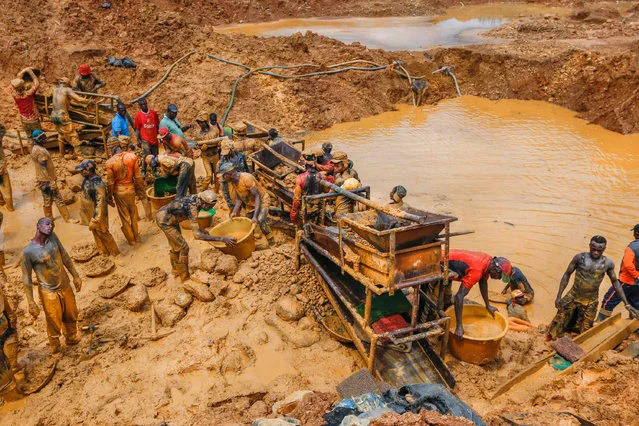
Small-scale miners in Ghana are pointing fingers at government inaction, claiming that a prolonged freeze on mining permits has left legitimate operators with no choice but to turn to illegal galamsey operations. The Ghana National Association of Small Scale Miners (GNASSM) has levelled the accusation directly at the Ministry of Lands and Natural Resources, arguing that bureaucratic gridlock is pushing licensed miners into the shadows.
The association contends that administrative bottlenecks and the three-year halt on new permits have created a vacuum that galamsey operators have readily filled. Rather than simply enforcing stricter rules, GNASSM argues the government has effectively abandoned legitimate small-scale mining, leaving workers without formal channels and forcing operators to choose between starvation and illegality.
The permit freeze and its fallout
The prolonged suspension of mining permits has created uncertainty in Ghana's small-scale mining sector. Operators say they cannot renew, transfer, or obtain new authorisations, leaving many businesses frozen. This bureaucratic stasis has been particularly damaging in communities dependent on mining activity, where job losses ripple through local economies. GNASSM's complaint reflects frustration that government policy, intended to curb illegal mining, may instead be accelerating it by eliminating legitimate alternatives.
The association's pushback raises awkward questions about enforcement strategy. If authorities cannot process permits or support lawful operators, they weaken incentives for miners to stay above board. GNASSM argues this creates a perverse outcome: the crackdown on galamsey inadvertently expands it.
Why it matters for Ghana
Illegal galamsey mining has become one of Ghana's most pressing environmental and social crises. Unregulated operations devastate waterways, poison soil, and poison communities—particularly in mining regions like the Ashanti and Eastern regions. Mercury and cyanide contamination from galamsey has rendered water sources unusable and raised health alarms across affected districts.
However, this dispute between GNASSM and government highlights a central tension: how to regulate mining without destroying livelihoods. If the association's claim holds weight, the government's approach may be counterproductive. Thousands of workers depend on small-scale mining; without formal permits and pathways, they have limited options. The accusation that bureaucratic paralysis is driving miners toward galamsey suggests that enforcement alone, without functional licensing systems, cannot solve the problem.
For policymakers, this raises a critical challenge. Galamsey is rightly condemned—its environmental toll is undeniable. But sustainable solutions require more than a permit freeze. They demand a functioning regulatory framework that allows legitimate operators to work legally, earn income, and comply with environmental standards. Until that framework exists, Ghana risks a perpetual cycle where miners abandon legality simply because legality offers no viable path forward.
The government will need to demonstrate either that the permit freeze is temporary and justified, or that it is actively developing an alternative licensing system. Without clear communication and a credible roadmap, the accusation that state policy is inadvertently fuelling galamsey will likely intensify—and the illegal mining crisis may worsen.
Source: 3News




Comments (0)
Be the first to comment.