
Rising Shipping Costs Force Global Oil Producers to Slash Prices, Reshaping Supply Routes

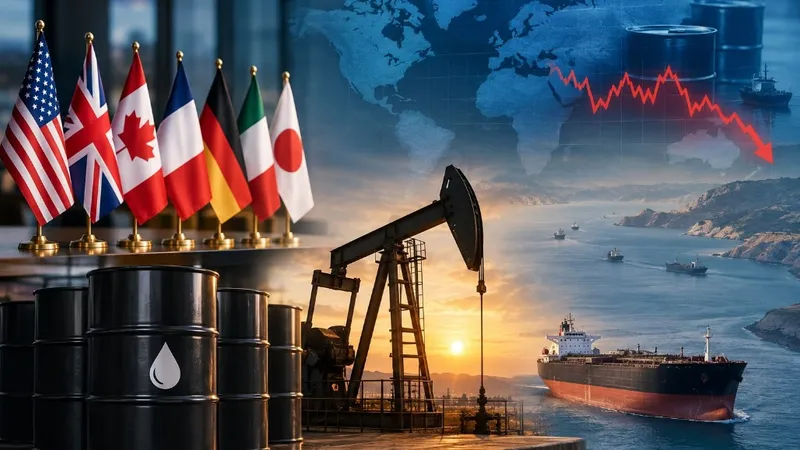
Surging shipping costs are fundamentally reshaping global oil trade, compelling producers from the Middle East to West Africa to slash their prices and redirect cargoes to alternative buyers. What was once a straightforward business of extracting and selling crude has become an intricate game of navigating freight surges that can wipe out profit margins entirely.
The crisis intensified dramatically following geopolitical tensions in key shipping zones. Very Large Crude Carrier (VLCC) rates from the Persian Gulf to China skyrocketed from approximately $4 per barrel to $17 per barrel after March, with further spikes reaching $33 per barrel by late September. These freight costs are now pushing the delivered price of Middle Eastern crude to around $140 per barrel in China—a level that Chinese refiners simply refuse to pay.
Saudi Arabia has felt the pressure most acutely. With Houthi restrictions in the Red Sea forcing Saudi exports away from the Yanbu terminal, Saudi Aramco has been forced to route more oil through the Strait of Hormuz. The company's November official selling price for Arab Light crude now carries a $5 per barrel discount to benchmark, yet even this steep reduction barely offsets the $10–15 per barrel shipping cost. In desperation, Saudi producers are now booking cargoes two months in advance at fixed differentials, gambling that shipping costs will fall before the oil actually ships—a strategy that could leave them with little or no profit if freight rates remain elevated.
The disruption extends far beyond the Middle East. Brazilian producers selling to China face VLCC freight charges around $36 per barrel, making their crude uncompetitive despite single-digit discounts to benchmark prices. West African producers confronting similar mathematics are redirecting shipments eastward: Angola's exports to India are projected to surge from 35,000 barrels per day in September to 315,000 barrels per day in October, with additional supplies from Gabon and Congo also heading to Indian refiners instead of Chinese buyers.
Why it matters for Ghana
Ghana's role as a West African oil producer makes these shipping dynamics directly relevant. Ghanaian crude from fields like Jubilee and TEN operates within the same competitive framework as other West African grades. As freight costs make shipping to traditional Asian markets uneconomical, producers are forced to seek alternative buyers—typically in India and closer regional markets. This reshuffling could affect Ghana's ability to secure premium prices and the volume of sales it can execute in preferred markets. Additionally, if global oil prices weaken due to oversupply from redirected cargoes, Ghana's revenue from petroleum exports faces downward pressure, affecting government budget planning and economic stability.
The broader lesson is that Ghana, like other African oil producers, must diversify its buyer base and monitor freight costs as carefully as crude prices themselves. Shipping costs have become as strategically important as production volumes.
How Producers Are Adapting
Faced with unsustainable economics, oil companies are deploying multiple survival strategies. Some are using forward-booking contracts that defer the freight risk to the future, betting on cost declines. Others are leveraging affiliated shipping companies—Saudi Aramco owns a stake in national shipper Bahri—to capture some shipping revenue to offset crude sales losses. A few are simply writing off certain markets: Brazilian and West African producers are deliberately abandoning Chinese destinations in favour of India, where shorter distances reduce freight bills by $8–9 per barrel.
The pricing dynamics have also grown complex. Benchmarks like Dated Brent, which reflects North Sea crude, now sit almost $20 per barrel above ICE Brent due to supply tightness. Producers pricing against Dated Brent must adjust their FOB differentials downward to account for this divergence, complicating negotiations and creating opportunities for arbitrage.
The Outlook
Until shipping costs normalise—a development unlikely in the near term given Red Sea instability—oil producers will remain under intense margin pressure. Chinese refiners, holding the advantage, can afford to wait for prices to fall further. The winners in this environment will be those with flexible supply chains, lower production costs, and access to premium markets less sensitive to freight premiums. For Ghana and similar mid-tier producers, the lesson is clear: geopolitical risks to shipping routes now carry as much weight as traditional supply and demand dynamics.
Source: The Ghana Report



Comments (0)
Be the first to comment.