
Presidential reshuffle looms: State institution chiefs set for changes, signals indicate


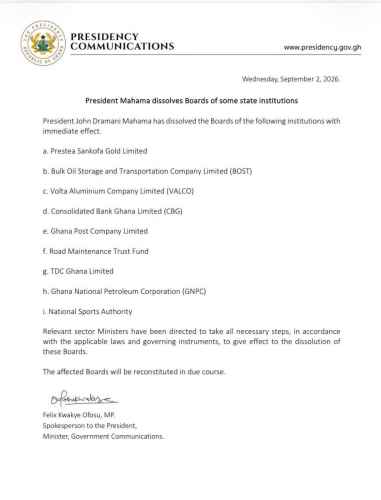
Ghana appears poised for significant changes in the leadership of state institutions, with the Office of the President hinting at an impending reshuffle of chief executives across government bodies. The indication came through an official notice distributed to all Ministers on 2 September, marking a formal signal of anticipated changes in institutional management.
While specific names and timelines remain undisclosed, the directive suggests the administration is preparing for a broad review of executive positions across state-owned enterprises and government agencies. Such reshuffles typically impact key positions in areas including revenue collection, utilities, transport, health facilities and financial institutions that fall under state oversight.
What triggers institutional reshuffles in Ghana?
Presidential reshuffles of chief executives are standard administrative tools in Ghana's governance framework. Incoming or mid-term administrations often restructure leadership at state institutions to align management with policy priorities, improve performance in underperforming entities, or respond to public pressure on institutional accountability.
Previous reshuffles under different administrations have targeted agencies where performance concerns were raised, where leadership transitions became necessary, or where the presidency sought to strengthen implementation of flagship programmes. The notice to ministers suggests planning is underway for a systematic review rather than isolated changes.
Why it matters for Ghana
Leadership changes at state institutions directly affect service delivery across critical sectors Ghanaians depend on daily. Chief executives at organisations managing water supply, electricity distribution, tax collection, ports operations and public healthcare shape how efficiently these services function and how accessible they remain to ordinary Ghanaians.
A reshuffle carries both opportunities and risks. New leadership can bring fresh approaches to persistent problems—whether tackling revenue leakage, improving customer service or accelerating digital transformation. However, transitions also risk disrupting ongoing initiatives if not managed carefully, and appointments must be based on competence rather than patronage for public confidence in state institutions to strengthen.
For businesses and citizens, timing and approach matter significantly. Uncertainty about leadership can slow decision-making at key agencies during transition periods. Conversely, effective new appointments can unlock progress on stalled projects or improve the regulatory environment.
What happens next
The notice distributed to Ministers likely sets parameters for the reshuffle process, potentially including timelines, criteria for selection, and transition procedures. Formal announcements of individual appointments typically follow such preparatory directives, though the presidency may stagger announcements across affected institutions.
Citizens and civil society organisations often scrutinise such appointments, particularly regarding whether selections prioritise merit and track record over political connections. Parliament may also engage in oversight depending on whether appointments require legislative confirmation.
The reshuffle reflects ongoing efforts to optimise how state institutions perform—a recurring theme across Ghana's administrations as leaders attempt to improve public service delivery and institutional efficiency.
Source: 3News




Comments (0)
Be the first to comment.