
NPP Candidate Akosua Manu Demands Equal Justice for Child Abuse Victims Regardless of Status
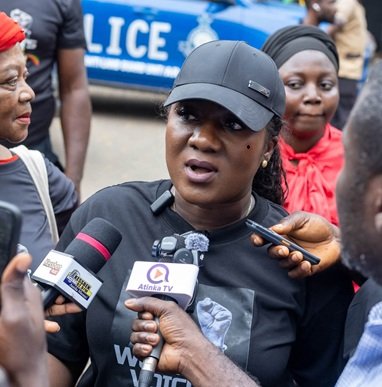

Akosua Manu, the 2024 NPP parliamentary candidate for Adentan and former Deputy Chief Executive Officer of the National Youth Authority, has raised serious questions about inconsistent government responses to child sexual abuse allegations, arguing that protection should not depend on a victim's social status or public prominence.
In a Facebook statement on Friday 16 October 2026, Manu criticised the Ministers for Gender and Education, suggesting they have responded with different levels of urgency to comparable cases. She specifically highlighted what she described as the Gender Minister's swift action following allegations involving a popular influencer's family, contrasted with an allegedly slower response to other documented abuse cases.
The Obuasi School Case at Centre of Criticism
Manu's comments reference recent allegations of sexual abuse at Obuasi Senior High Technical School, where the headmaster, Zakaria Abdulai, was accused of rape. Following a Joy News investigation into the matter, the headmaster was interdicted and another housemaster suspended, whilst police commenced investigations.
Manu questioned what concrete steps the Gender Minister has taken in response to these allegations and pressed the Education Minister to explain the actions undertaken. She also raised concerns about the psychological impact on the children of Salomey Awiti following her arrest and detention in Accra, arguing that the government should show equal concern for all affected families regardless of their public visibility or the political nature of their cases.
Why This Matters for Ghana
Manu's intervention touches on a critical governance issue in Ghana: the perception that accountability and ministerial responsiveness may be influenced by social standing, media attention, or political connections. Her challenge to government officials reflects broader public concerns about equal protection under the law and the impartiality of public institutions.
The case highlights tensions between high-profile cases that attract national media coverage and less visible allegations involving ordinary Ghanaians. For a nation striving to strengthen child protection frameworks and gender-based violence responses, consistency in government action is essential to public trust. When ministerial responses appear unequal, it can undermine confidence in institutions meant to safeguard vulnerable populations.
Ghana has ratified the Convention on the Rights of the Child and the African Charter on the Rights and Welfare of the Child, committing to protect all children from abuse. Manu's statement implicitly questions whether these commitments are being applied uniformly across society.
The Call for Principled Leadership
Manu argued that true leadership is measured not by speed in responding to high-profile cases, but by commitment to protecting those with neither influence nor powerful advocates. She called for consistent empathy and accountability from public officials, emphasising that every child and woman deserves equal protection and treatment regardless of their circumstances.
Her statement warns that perceived disparities in official responses can create the impression that some victims matter more than others—a narrative that undermines public confidence in government institutions tasked with protecting society's most vulnerable members.
Source: The Ghanaian Times


Comments (0)
Be the first to comment.