MTN's Ambitious Push Into Banking: What It Means for Ghana's Financial Landscape
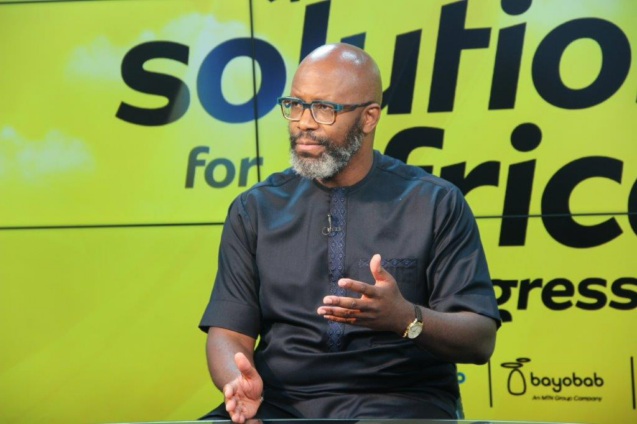
MTN Group, Africa's largest telecommunications operator and a dominant player in Ghana's mobile money sector, is making a significant strategic pivot toward formal banking services. The company is actively exploring banking licences in select African markets as part of a broader expansion into lending and financial services, CEO Ralph Mupita announced this week.
The move represents a critical evolution in how telecoms companies across the continent are reshaping their business models. Rather than simply processing payments and transfers through existing bank partnerships, MTN is now considering lending directly from its own balance sheet—a shift that could reshape Ghana's already competitive financial services sector.
From Partnerships to Direct Lending
Currently, MTN provides loans to customers through partnerships with established banks. However, the company has identified lending as one of its fastest-growing segments within its mobile money operations, prompting leadership to rethink its strategy. Mupita explained that where customer bases are large and significant mobile money floats exist, obtaining a banking licence would enable MTN to take deposits and manage lending operations independently over time.
This approach would not abandon partnership lending entirely, but rather complement it with MTN's own financial capacity. The expansion will be selective rather than universal across all MTN markets, and will proceed gradually given the regulatory and operational risks involved in becoming a licensed financial institution.
Why It Matters for Ghana
Ghana's financial sector is already highly competitive, with multiple mobile money operators (MTN Mobile Money, Vodafone Cash, AirtelTigo Money) competing alongside traditional banks and microfinance institutions. MTN's push toward formal banking could intensify competition and potentially improve access to credit for unbanked and underbanked Ghanaians who rely heavily on mobile money platforms.
However, it also raises regulatory questions. The Bank of Ghana would need to evaluate any formal banking licence application carefully, considering capital requirements, governance standards, and systemic risks. Ghanaian regulators have shown increasing interest in managing fintech growth carefully—as evidenced by recent actions around digital asset trading and payment system oversight.
For consumers, MTN's potential move could offer faster loan approvals and lower interest rates if competition intensifies. For traditional banks already struggling with margin pressure, a well-capitalised telecoms operator entering formal banking represents a significant competitive threat. Ghana's financial inclusion agenda could benefit, but so too must consumer protection and systemic stability.
Expanding Digital Infrastructure Across Africa
Beyond banking, MTN is also investing heavily in African digital infrastructure. The company is partnering with a UAE-backed investor through Africa Data Hub Holding to develop artificial intelligence-enabled data centres in South Africa and Nigeria. MTN will hold a minority stake while its partner provides most capital and technical expertise from their Gulf region experience.
The initial phase targets approximately 150 megawatts of capacity across those two markets, with future expansion following demand patterns. While Ghana is not mentioned as part of this initial infrastructure rollout, the broader continental strategy signals MTN's confidence in Africa's digital economy and its own position as a cornerstone infrastructure player across the region.
MTN's dual strategy—combining financial services expansion with digital infrastructure investment—positions the company well for the next phase of African economic growth, even as it navigates complex regulatory environments and competitive pressures from both traditional banks and emerging fintech rivals.
Source: The Ghana Report


Comments (0)
Be the first to comment.