
KNUST Professor Pushes Prevention Over Treatment at Global Health Summit
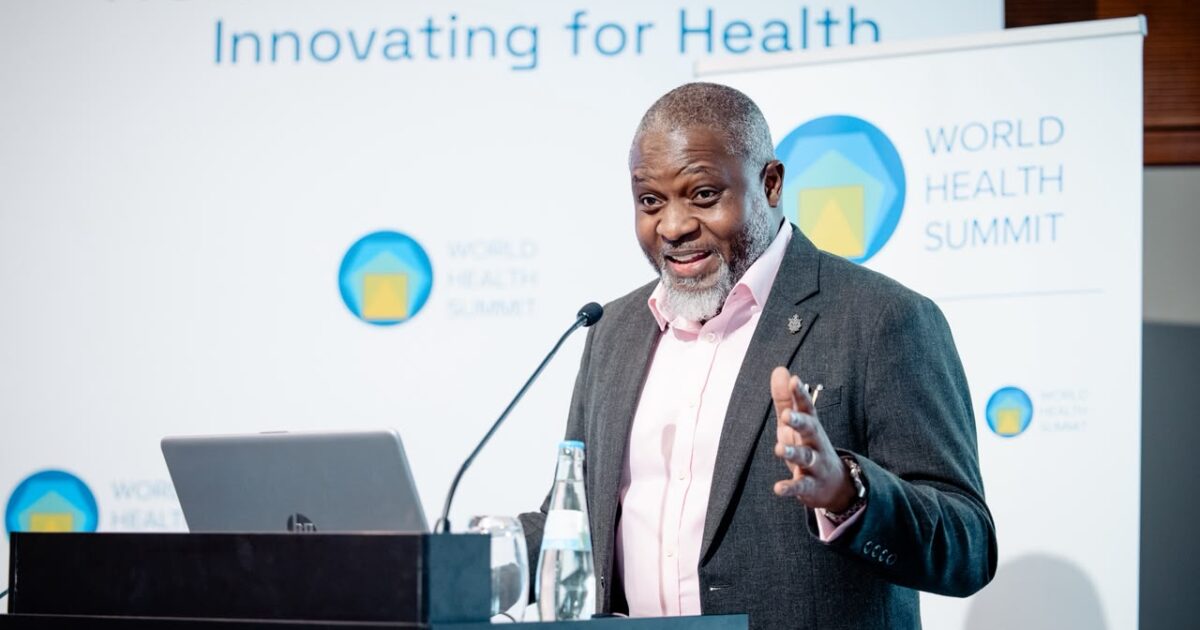
A Ghanaian academic has challenged the global health establishment to fundamentally rethink how countries protect their populations, arguing that resources must shift from treating diseases to preventing them in the first place. Speaking at the World Health Summit 2026 in Berlin, Professor John H. Amuasi of Kwame Nkrumah University of Science and Technology (KNUST) in Kumasi presented a compelling case for what health experts call "upstream prevention"—addressing the environmental, social and economic factors that make people sick before illness strikes.
The presentation, delivered as Co-Chair of The Lancet One Health Commission, used a simple but powerful metaphor: conventional healthcare is like rescuing people already drowning in a river, when the real solution is to stop them falling in the water in the first place. For Ghana and other developing nations struggling with limited health budgets, the implication is stark—prevention could ultimately save more lives and money than emergency care alone.
Why it matters for Ghana
Prof. Amuasi grounded his argument in challenges distinctly familiar to Ghanaians. He cited illegal mining, food safety failures and environmental pollution as concrete examples of how prevention must begin outside hospitals. These issues hit close to home: illegal mining operations across Ghana have contaminated water sources, poisoned soil and degraded air quality in affected communities, creating cascading health consequences that clinics and drugs cannot fully address.
The professor's message carries particular weight for a nation already burdened by disease but constrained by health spending. Ghana's healthcare system faces constant pressure to treat preventable conditions—waterborne illnesses from unsafe water supplies, respiratory diseases from air pollution, and food poisoning from inadequate hygiene standards. If the country could tackle these root causes—strengthening water systems, enforcing environmental regulations, improving agricultural and food handling practices—the strain on hospitals could ease significantly, freeing resources for other critical care.
However, Prof. Amuasi's upstream prevention approach requires coordination across multiple sectors: environment, agriculture, industry, education and local government. In Ghana's context, this means illegal miners must be stopped, not just treated for mercury exposure; food standards must be enforced, not just left to market forces; and pollution from industrial activity and plastic waste must be regulated at source.
The One Health Framework
At the heart of Prof. Amuasi's argument is the One Health approach, which recognises that human health, animal health and environmental health are inseparably linked. Climate change, biodiversity loss and human activities in one place can trigger disease outbreaks thousands of kilometres away. This interconnectedness means Ghana cannot solve its health challenges in isolation—what happens in neighbouring countries or global supply chains affects Ghanaian populations.
The framework calls for solutions beyond the health sector. It requires environmental authorities to enforce regulations, agriculture to improve farming practices, education to teach future generations about these connections, and media to communicate risks clearly to the public. For Ghana, this is both opportunity and challenge: opportunity to design health policies that are truly preventive; challenge because it demands coordination among institutions that often operate in silos.
Education as Long-term Investment
Prof. Amuasi emphasised that lasting change requires shifting how people think about health from primary school onwards. By teaching children early that their health depends on animal welfare, environmental care and social responsibility, future generations would naturally make choices that prevent illness. Over a decade or more, such educational investment could reshape behaviour and values across society, he argued.
For Ghana's education system, this suggests integrating One Health principles into the curriculum—not as an optional topic but as a foundational concept that cuts across sciences, social studies and citizenship education. Combined with better science communication from media and trusted voices, this could gradually build a culture where prevention is as valued as cure.
Prof. Amuasi's message ultimately offers Ghana a roadmap: continue building hospitals and improving treatment, but invest equally in the conditions that keep people healthy in the first place.
Source: MyJoyOnline




Comments (0)
Be the first to comment.