Asogli State Demands Accountability as Ghana Medical Trust Fund Launched
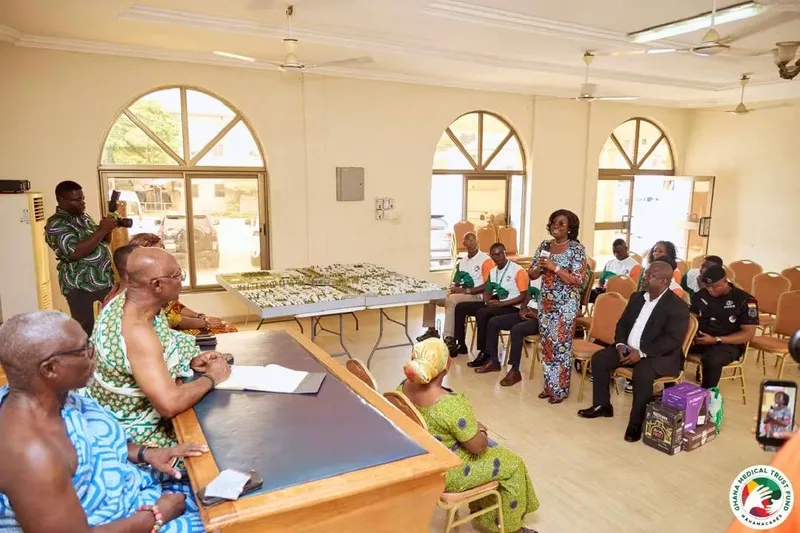
The Asogli State has thrown its weight behind the newly launched Ghana Medical Trust Fund, popularly known as Mahama Cares, while simultaneously issuing a pointed warning against potential mismanagement and corrupt practices that could undermine the scheme's core health objectives.
In a statement that reflects growing concerns among Ghana's traditional leadership about government health initiatives, the Asogli State emphasised that the trust fund must be deployed strictly to address genuine healthcare challenges facing Ghanaian communities rather than serving as a vehicle for elite enrichment or political patronage.
A Call for Transparent Implementation
The traditional authorities acknowledged the positive intent behind the Ghana Medical Trust Fund, recognising that improved healthcare access remains a pressing national need. However, the Asogli State's cautionary tone underscores a critical challenge facing major government programmes in Ghana: the need for credible oversight mechanisms and transparent financial management.
The statement appears to reflect broader public anxiety about how public health funds are allocated and spent. Ghana's healthcare system, whilst anchored by institutions like the National Health Insurance Authority (NHIA), has historically faced challenges related to resource distribution, equipment availability, and service quality across rural and urban areas.
By publicly calling for accountability before implementation reaches a critical phase, the Asogli State is signalling that traditional leaders intend to play a monitoring role in how the initiative unfolds within their jurisdictions.
Why It Matters for Ghana
Ghana's healthcare system serves over 34 million people but operates under significant budgetary constraints. Any new trust fund mechanism could potentially redirect critical resources to underserved communities, but only if management remains insulated from political interference and corruption. The Asogli State's intervention is significant because traditional authorities command considerable legitimacy in rural and semi-urban areas where healthcare gaps are often widest.
The warning also reflects a broader pattern: Ghanaians increasingly expect transparency from government programmes, particularly those involving public funds. Previous health initiatives and welfare schemes have faced scrutiny over implementation efficiency and benefit distribution, making public trust fragile.
For the Mahama Cares initiative to succeed, clear metrics for performance, independent auditing, and community-level accountability mechanisms will be essential. The Asogli State's statement may prompt policymakers to strengthen governance frameworks before the fund becomes operational.
Next Steps and Public Scrutiny
As the Ghana Medical Trust Fund moves forward, civil society organisations, media outlets, and traditional leaders are likely to maintain close observation. The challenge for government will be demonstrating—through early disbursements and measurable health outcomes—that the fund genuinely prioritises healthcare delivery over bureaucratic capture.
The Asogli State's stance also sends a message to other regional and traditional authorities: proactive engagement with government initiatives, coupled with accountability demands, remains a viable strategy for protecting community interests.
Source: 3News



Comments (0)
Be the first to comment.