
Guiding Ghana's children through the digital maze: A parent's roadmap to online safety
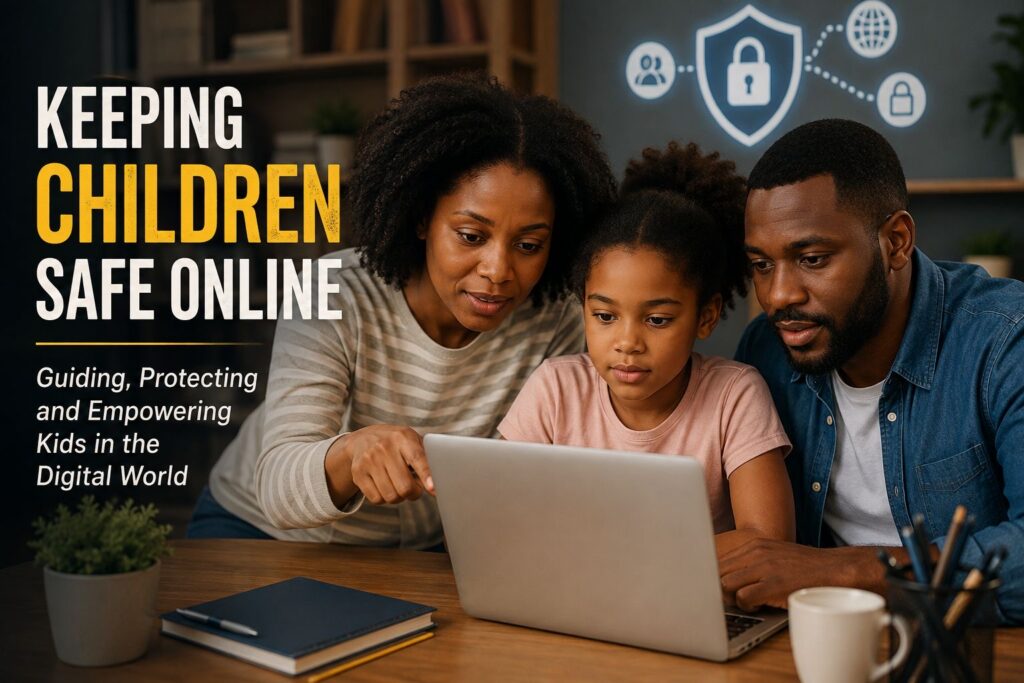

The smartphone sitting in your child's hand is a gateway to limitless learning—and equally limitless risk. For Ghanaian families, digital safety is no longer a distant concern but an urgent everyday reality. As children across Ghana access educational content, connect with peers and explore the internet through tablets and phones, parents face a critical challenge: how to keep them safe without cutting them off entirely.
The Hidden dangers of everyday oversharing
Many Ghanaian parents assume that a child with "just a basic phone" or supervised tablet access is protected. This assumption is dangerously incomplete. A child does not need their own smartphone to encounter online risks. They can access content through a friend's device, a family tablet, or even a relative's phone, often without adult supervision or warning.
The real threat lies in information leakage. A casual photo of a child in school uniform can identify their school. A picture taken inside a home reveals its layout and contents. A location tag on social media pinpoints exactly where a child is at any given moment. Parents, grandparents and even children themselves often fail to recognise how much sensitive information a single post can expose. Details that seem innocent—a new haircut, a birthday celebration, a weekend outing—can piece together a troubling picture for someone with ill intent.
Beyond visual content, children routinely share personal details online: home addresses, phone numbers, passwords and family financial information. In Ghana's growing digital economy, where many households are establishing their first serious online presence, this carelessness can have real consequences.
Why it matters for Ghanaian families
Ghana's internet penetration has grown rapidly, with more children than ever accessing online learning platforms, especially following periods of school disruption. This digital shift is positive—it opens doors to educational resources previously unavailable—but it also exposes vulnerabilities unique to the Ghanaian context. Limited digital literacy among some parents, mixed supervision across extended family households, and the widespread sharing culture on local social media platforms all amplify risks.
The solution is not to forbid technology. Educational videos, coding platforms, digital libraries and online learning tools are transforming how Ghanaian children acquire skills. Rather, the answer is intentional guidance. Parents must create an environment where technology use is monitored, discussed and bounded by clear family rules—not through fear, but through trust and understanding.
Building a practical digital safety framework at home
Start with basics. Establish straightforward family internet rules: no devices during meals, homework or bedtime. Review privacy settings on every app your child uses, disable unnecessary location sharing and ensure children understand which information is off-limits. But technical controls are only half the battle.
The other half is conversation. Create a safe space where children can discuss what they encounter online without fear of immediate punishment or losing their device. Ask open-ended questions: What new app did you discover? Who did you meet online? Did anything make you uncomfortable? These conversations serve a dual purpose—they help you understand your child's digital world while building their critical thinking about online interactions.
The goal is not to keep children away from technology indefinitely. It is to equip them with the knowledge, boundaries and judgment to use it safely. In a Ghana where digital skills are increasingly essential for education and employment, this balance is not optional—it is foundational.
Source: MyJoyOnline




Comments (0)
Be the first to comment.