
GIS sweeps 1,055 West Africans from Accra and Kumasi streets in anti-trafficking operation
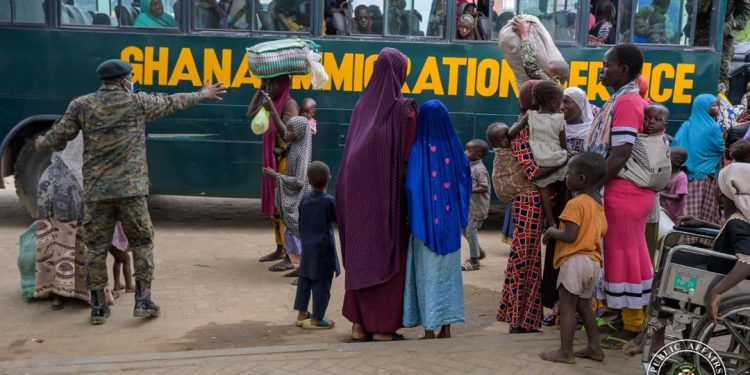
The Ghana Immigration Service has conducted a major operation across Accra and Kumasi, removing 1,055 West African nationals from streets in what officials describe as a targeted response to organised begging rings and suspected human trafficking. The early morning sweep on Saturday, August 29, prioritised identification and protection of vulnerable persons, particularly children and women allegedly exploited by trafficking networks.
Among those apprehended, the majority were children—662 in total—alongside 248 women and 145 men. The GIS also arrested several Ghanaian nationals suspected of operating as local agents within these networks, suggesting the begging operations involve coordination between foreign trafficking groups and domestic facilitators.
Operation scope and targeted locations
The operation was not a one-off enforcement exercise but a coordinated crackdown across multiple identified hotspots. In the Greater Accra Region, GIS officers targeted areas including Abossey Okai, Sabon Zongo, Madina Zongo Junction, Madina, Ashaiman and Tema. In Kumasi, the Ashanti Region focus covered Asawase, Alabar, Akwatia Line, Dagomba Line, Sabon Zongo, Airport Junction and Aboabo.
According to the GIS, this intelligence-led approach differs from random street sweeps. The Service specifically designed the operation to dismantle the organised networks behind street begging rather than simply removing individual beggars. This strategic focus reflects growing evidence that begging in major urban centres is controlled by trafficking syndicates rather than representing isolated cases of poverty-driven solicitation.
Why it matters for Ghana
Ghana faces increasing pressure from regional human trafficking networks that exploit West African migrants and their own citizens. Street begging involving children is widely recognised as a symptom of trafficking—children are deliberately placed on streets by handlers who collect proceeds. This operation signals government concern about the scale of the problem and suggests trafficking networks have established significant footholds in Ghana's major commercial hubs.
The involvement of Ghanaian nationals as local agents underscores how trafficking operations blend external criminal networks with domestic complicity. This complicates efforts to combat the problem and suggests awareness campaigns and law enforcement training must address both foreign traffickers and local enablers.
For civil society and protection agencies, the operation presents immediate challenges: processing over 1,000 individuals, determining trafficking victims among detainees, accessing rehabilitation services, and managing repatriation of foreign nationals. The GIS has framed the exercise as protective—identifying victims entitled to support under Ghana's anti-trafficking framework—but implementation will depend on coordinated work with social services, justice agencies and international partners.
Next steps and broader implications
The operation highlights systemic vulnerabilities in Ghana's urban centres where transnational organised crime flourishes. Beyond enforcement, addressing organised begging requires sustained investigation of trafficking networks, improved border monitoring, victim support capacity, and public awareness. The presence of trafficking networks large enough to field over 1,000 exploited persons suggests resources allocated to counter-trafficking work require review.
Officials indicated the operation represents a shift toward disrupting criminal infrastructure rather than cycling individual beggars through enforcement cycles. Whether this sustained focus and intelligence-sharing continues will determine whether the August 29 sweep represents a turning point or a temporary crackdown.
Source: The Ghana Report




Comments (0)
Be the first to comment.