
Ghana's Mining Sector Must Embrace Continuous Learning to Stay Competitive, Telecel CEO Warns
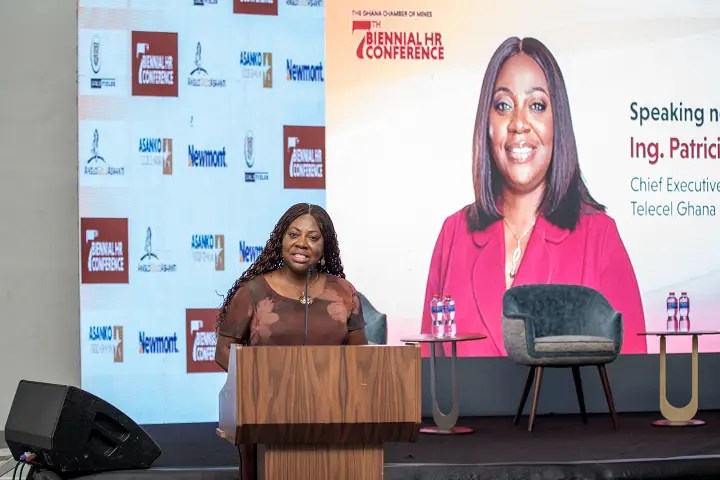
Ghana's mining industry faces a critical challenge: without a fundamental shift in how it develops its workforce, the sector risks falling behind as artificial intelligence and digital technologies reshape operations across the globe. That stark message came from Telecel Ghana's Chief Executive, Ing. Patricia Obo-Nai, during the Ghana Chamber of Mines' 7th Biennial Human Resource Conference in Accra this week.
Speaking as keynote guest of honour, Obo-Nai emphasised that technology alone cannot drive organisational transformation. Instead, she argued, success depends entirely on whether employees possess the learning agility, curiosity and adaptability needed to harness new tools effectively. "Technology has never transformed an organisation on its own. It is people who transform organisations using technology," she said, urging mining companies to hire for potential rather than simply filling today's vacancies.
Three Pillars for Future-Ready Mining Workforces
Obo-Nai identified three strategic priorities that Ghana's mining sector must pursue immediately. First, organisations must invest in training programmes that build agile capabilities—not just technical skills, but the mental flexibility to adapt as industries evolve. Second, continuous learning must become embedded in daily work rather than treated as an occasional training event. Third, mining companies must actively strengthen diversity, particularly in technical and engineering roles, to unlock innovation and prevent the loss of valuable talent.
Her warning about the pace of change carries particular weight. Drawing from the telecommunications sector, where customer expectations and technology have shifted dramatically over the past decade, Obo-Nai cautioned that companies that fail to learn faster than change itself will inevitably lose competitive ground. For mining—an industry increasingly dependent on automation, data analytics and AI-driven decision-making—this means preparing workers before their skills become obsolete, not after.
"We can no longer afford to wait until employees become digitally obsolete before investing in their development," she said. "When automation changes operational processes, employees cannot simply attend a workshop once every year. They require continuous access to new knowledge."
Why It Matters for Ghana's Mining Future
Ghana's extractive sector is a cornerstone of the national economy, contributing significantly to government revenue, employment and foreign exchange. However, the global mining industry is undergoing rapid technological transformation. Automation, real-time data monitoring, remote operations and AI-powered predictive maintenance are becoming standard across major mining operations worldwide. Without a workforce capable of operating, maintaining and innovating around these systems, Ghanaian mining companies risk losing efficiency, profitability and market competitiveness.
More broadly, the skills gap threatens Ghana's ability to capture higher-value roles and investment. International mining firms increasingly locate advanced operations and research centres in regions with technically proficient, adaptable workforces. If Ghana's mining sector cannot demonstrate workforce capability at scale, investment and expertise may flow elsewhere across West Africa.
Obo-Nai also highlighted a critical equity issue: the underrepresentation of women in technical and engineering roles within mining. She pointed to Telecel's Female Engineering Students Scholarship Programme—which provides financial support, laptops, data, mentorship and internships to female students—as a model other mining employers should emulate. Excluding women from technical careers means the sector loses talent, diversity of thought and fresh perspectives essential for innovation.
Industry Response and Next Steps
Ghana Chamber of Mines CEO Ing. Dr. Kenneth Ashigbey echoed these concerns, arguing that while Ghana possesses significant human potential, the sector must become far more deliberate about capability development. He called for stronger collaboration between academia and industry, enabling knowledge, research and talent to flow more freely between universities and mining operations. He also advocated for creating workplace cultures where employees have psychological safety to experiment, fail and learn—describing the mine of the future as "a classroom."
For Ghana's mining sector, the message is clear: investing in people is no longer optional—it is existential. Companies that act now to embed continuous learning, recruit for adaptability and champion diversity will thrive. Those that delay risk obsolescence.
Source: Ameyaw Debrah


Comments (0)
Be the first to comment.