
Ghana's Fisheries Future Hinges on Stronger Transport Links, Deputy Minister Warns
-1200x610.webp)

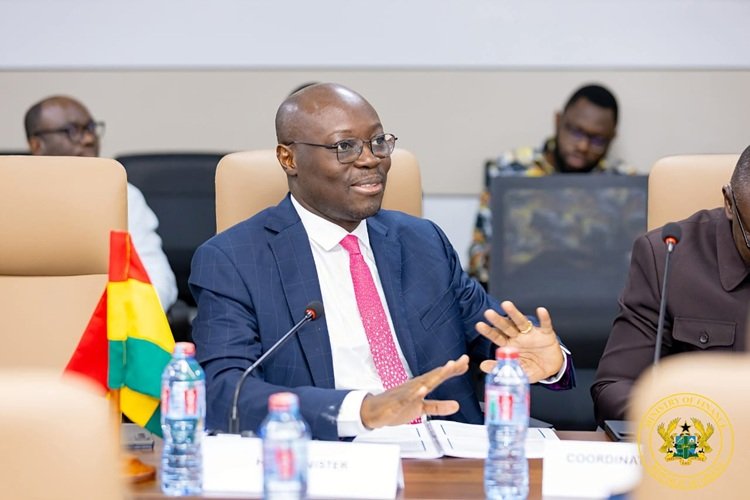
Ghana cannot achieve its full fisheries potential or guarantee long-term food security without a significantly stronger and more integrated transport network, Deputy Minister Affo-Toffey has warned. Speaking at a sector conference, the Deputy Minister made a compelling case for treating transport infrastructure not as a peripheral concern but as a central pillar of the entire fisheries value chain.
Transport as the Backbone of the Fisheries Value Chain
The fisheries sector in Ghana is one of the most important contributors to both nutrition and livelihoods, particularly in coastal communities stretching from the Western Region through the Greater Accra Region to the Volta Region. However, the industry has long faced a stubborn challenge: fish caught by local fishermen often spoils before it reaches consumers in inland markets, simply because the roads, vehicles and logistics systems needed to move perishable produce quickly and efficiently are inadequate.
Deputy Minister Affo-Toffey's remarks at the conference directly confronted this reality. He underscored that every link in the fisheries value chain — from landing beaches and processing centres to cold storage facilities and final retail markets — depends on a functioning transport system. Without reliable roads and vehicles, even a bumper harvest can translate into losses for fisherfolk and higher prices for consumers.
The Deputy Minister's intervention signals a growing recognition within government that sectoral development cannot be treated in isolation. Fisheries policy, food security strategy and transport infrastructure planning must be coordinated if Ghana is to make meaningful progress.
Why It Matters for Ghana
Ghana's fishing industry supports the livelihoods of an estimated two million people, including fishermen, fish processors — the majority of whom are women — traders and support workers. Fish is also a primary source of animal protein for millions of Ghanaian households, making the health of the sector directly relevant to national nutrition and food security goals.
Yet post-harvest losses remain one of the sector's most persistent problems. Poor feeder roads connecting fishing communities to main highways, limited refrigerated transport options and unreliable fuel supplies for fishing vessels all contribute to a situation where a significant proportion of the catch never reaches the consumer in good condition. This not only hurts the incomes of fishing communities but also drives up the cost of fish for ordinary Ghanaians.
At a time when the cost of living remains a pressing concern for many households, improving the efficiency of the fisheries supply chain through better transport could help stabilise fish prices and reduce dependence on imported frozen fish, which has grown substantially in recent years.
The Broader Context: Fisheries Under Pressure
Ghana's fisheries sector is navigating a difficult period. Fish stocks in the country's coastal waters have been under severe pressure from overfishing, illegal, unreported and unregulated fishing — commonly referred to as IUU fishing — and the activities of foreign industrial trawlers. These challenges have made it even more critical that the fish which is caught reaches markets efficiently, maximising value for local fishers and processors.
The government has in recent years introduced measures including closed fishing seasons and efforts to curb illegal trawling, but experts consistently point out that such interventions must be paired with improvements in infrastructure and logistics if fishing communities are to remain economically viable.
- Better-maintained feeder roads and cold chain logistics could dramatically cut post-harvest fish losses across Ghana.
- Women fish processors, a critical group in the value chain, stand to benefit significantly from improved transport links to urban markets.
- Reducing dependence on imported frozen fish is a key food security and foreign exchange consideration for Ghana.
Deputy Minister Affo-Toffey's remarks are a timely reminder that solving Ghana's food security challenges requires joined-up thinking across ministries and sectors — and that the road to a food-secure Ghana may quite literally run through its transport network.
Source: 3News


Comments (0)
Be the first to comment.