
Ghana's 2025 Budget Commits $3 Billion to Transform Agriculture — From Rice Hubs to 100% Cocoa Processing
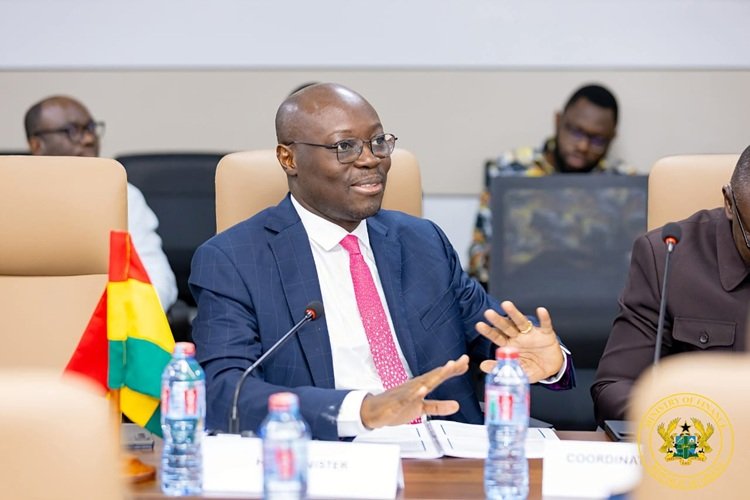

Ghana's government has announced one of the most ambitious agricultural investment plans in the country's history, committing US$3 billion under Pillar Two of the New Economy Programme to overhaul how the country produces, processes and trades food. Finance Minister Dr. Cassiel Ato Forson laid out the strategy while presenting the 2025 Budget, positioning agriculture as the central engine of employment, food security and industrial transformation over the next several years.
The Pwalugu Dam and the Push for Year-Round Food Production
At the heart of the plan is the long-discussed Pwalugu Multipurpose Dam in the Upper East Region, to which government has assigned a dedicated budget of US$1 billion. The dam has been in and out of national planning conversations for decades, but the new budget commits to a first phase ready by early 2029, with full completion in 2030.
Once built, the dam is designed to irrigate 25,000 hectares of farmland, generate 70 megawatts of hydropower, support 1,000 fish cages within its reservoir and enable year-round vegetable production — all while providing flood protection and water security for communities in the north. The surrounding vegetable industry is expected to benefit directly from the dam's infrastructure.
Alongside the dam, government plans to establish Rice Development Hubs across the Afram Plains, Volta Basin, Western Ghana and Northern Ghana. These hubs will come equipped with irrigation systems, mechanised equipment, silos, modern mills, packaging facilities and logistics networks. The target is to bring an additional 100,000 hectares under rice cultivation, achieving yields of five to six metric tonnes per hectare and generating approximately 125,000 jobs. Crucially, public procurement laws will be amended to require all public institutions to purchase only Ghana-grown rice and other staple foods — a policy shift that could dramatically expand the domestic market for local farmers overnight.
Poultry, Fish, Sugar, Oil Palm and Cocoa: A Sector-by-Sector Overhaul
The plan's breadth is striking. For the poultry industry, government intends to develop the entire value chain from breeder farms and hatcheries through to cold storage and retail distribution. Feed costs — which currently consume between 60 and 70 percent of poultry production expenses — are to be reduced through expanded commercial maize and soya bean cultivation.
On fisheries, government acknowledged an estimated annual fish supply gap of 500,000 metric tonnes and pledged to make aquaculture the primary source of new fish supply, while simultaneously restoring marine and inland fisheries. Support will reach both commercial operators and smallholder fish farmers through access to quality fingerlings, fish feed, cages, ponds and disease surveillance systems.
Sugar self-sufficiency is targeted by 2030, with locally grown sugarcane, irrigated production zones, nucleus estates and commercially viable sugar mills all part of the blueprint. Import permits and quotas will gradually restrict sugar imports as local production scales up.
For oil palm, 100,000 hectares of new plantations are planned across the Western, Central, Eastern, Volta and Ashanti regions. A US$500 million World Bank financing arrangement has already been secured for parliamentary consideration, with potential to create more than 250,000 jobs and position Ghana as a net exporter by 2032.
Perhaps the most headline-grabbing commitment is on cocoa. Ghana, the world's second-largest cocoa producer, currently exports a large share of its beans raw — leaving enormous value on the table. The new plan targets local processing of at least 50 percent of Ghana's cocoa by 2028, rising to 100 percent by 2030. Processing will expand well beyond primary grinding into cocoa liquor, cocoa butter, cocoa powder, chocolate and cosmetics.
Why It Matters for Ghana
Ghana imports significant quantities of rice, sugar, poultry and fish every year — a drain on foreign exchange that weakens the cedi and leaves the country exposed to global commodity price swings. If even a substantial portion of this plan is executed on schedule, it could meaningfully reduce the import bill, stabilise food prices and create hundreds of thousands of jobs in rural communities where youth unemployment is acutely high.
The cocoa processing ambition is particularly significant. Ghana has long complained about losing value by exporting raw beans, and successive governments have set processing targets that were never fully met. A credible, funded pathway to 100 percent local processing by 2030 — if backed by consistent policy and private sector partnerships — would represent a structural shift in Ghana's economic model and boost export revenues considerably.
Sceptics will rightly note that large agricultural announcements have a mixed track record in Ghana. Delivery will depend on consistent financing, effective land acquisition, private sector confidence and protection from political interference between now and 2030. Parliament's scrutiny of the World Bank arrangement and the proposed procurement law amendments will be early tests of how serious government is about turning this blueprint into reality.
Source: The Ghanaian Times



Comments (0)
Be the first to comment.