
Ghana to Fund $13bn New Economy Programme Without Taking on New Debt, Says Ato Forson
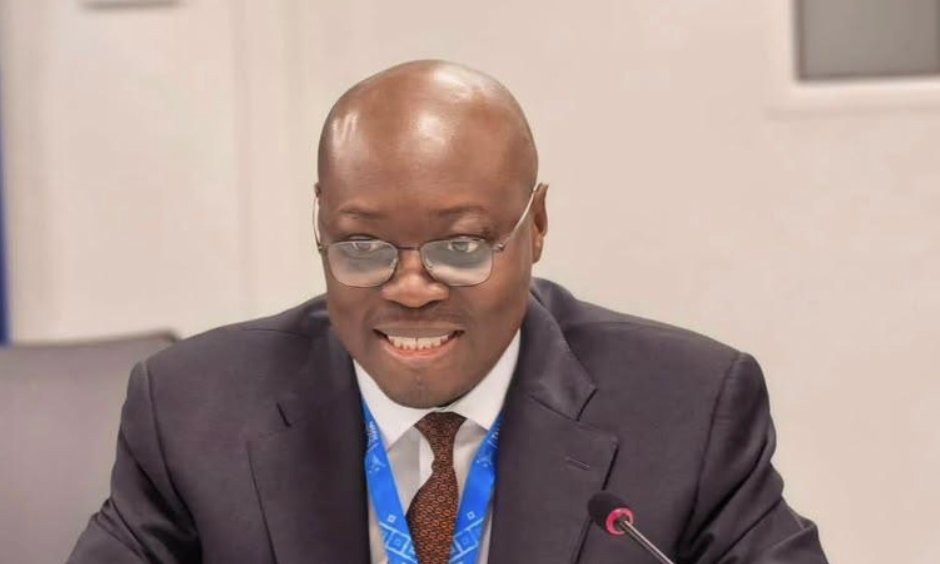

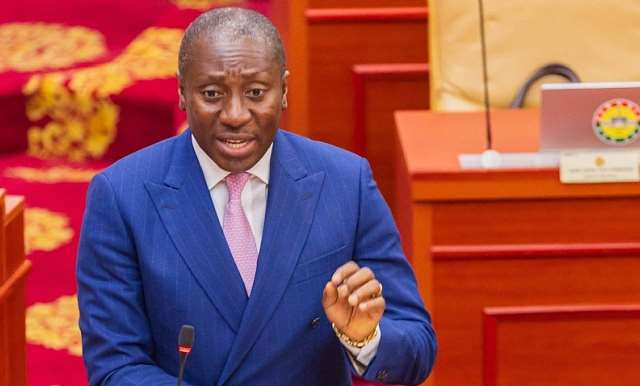
Ghana's Finance Minister, Dr Cassiel Ato Forson, has told the public that the government's planned New Economy Programme — valued at a minimum of US$13 billion — will be funded without contracting a single new loan. Speaking at the Kwame Nkrumah University of Science and Technology (KNUST), he outlined a financing strategy built entirely on domestic revenue mobilisation and deliberate adjustments to the country's fiscal targets.
How the government plans to raise $13 billion
The New Economy Programme is scheduled to run from 2027 to 2030, and Dr Ato Forson broke down the two main pillars that will generate the required fiscal space. First, the equivalent of 0.5 per cent of GDP will be drawn directly from government revenue streams. Second, an additional 1 per cent of GDP will be unlocked by lowering the primary surplus target — the amount by which government revenue exceeds spending, excluding interest payments — from 1.5 per cent to 0.5 per cent of GDP.
Together, these two levers are designed to free up an estimated 1.5 per cent of GDP annually for investment in the programme, without the government going back to international creditors or domestic bond markets for new financing. The minister stressed that the approach is deliberate, aimed at breaking Ghana's long-standing cycle of borrowing to fund development initiatives.
Dr Ato Forson also addressed a common misconception about the Ghana Gold Board, known as GoldBod. He clarified that GoldBod does not generate revenue for the Finance Ministry or for government coffers more broadly, noting that the state's primary revenue sources remain direct taxes, indirect taxes, and non-tax revenue.
Why it matters for Ghana
Ghana is currently implementing a post-debt restructuring economic recovery plan under an IMF programme, following one of the most severe fiscal crises in the country's recent history. The decision to pursue a major investment drive without additional borrowing is therefore significant — it signals a government attempting to balance economic ambition with the kind of fiscal discipline demanded by both the IMF and Ghana's own debt sustainability goals.
The minister reiterated the government's target of reducing public debt to 45 per cent of GDP by 2028. He pointed to a primary surplus of 2.5 per cent of GDP achieved in 2025 and projected a 1.5 per cent surplus for 2026, arguing that these combined outcomes would help reduce the debt burden by approximately 4 per cent of GDP over that period. From 2027 onwards, the annual pace of debt reduction would slow to 0.5 per cent of GDP — deliberately — to create headroom for New Economy Programme spending.
For ordinary Ghanaians, the credibility of this plan hinges on whether domestic revenue collection can be sustainably improved. Ghana has historically struggled with a narrow tax base and significant gaps in revenue collection, issues that any strategy relying on domestic mobilisation must squarely address.
Reactions and broader context
The minister's engagement at KNUST reflects a broader effort by the government to communicate its economic plans directly to younger Ghanaians and academic communities, who have often been critical of opaque policy announcements. By taking questions from students in a university setting, Dr Ato Forson appeared to be making the case that this programme is grounded in sound fiscal logic rather than political expediency.
The New Economy Programme has been positioned as a transformational agenda for Ghana's economy, though detailed sector-by-sector spending plans are yet to be made fully public. As the country continues its recovery path, the coming months will be critical in determining whether the revenue mobilisation assumptions underpinning this strategy hold up — and whether Ghanaians will begin to see the tangible benefits of a development push funded, for once, from within.
Source: MyJoyOnline


Comments (0)
Be the first to comment.