
Ghana's $10bn 'New Economy' Plan: What the 2027 Budget Means for Jobs, Food and Industry
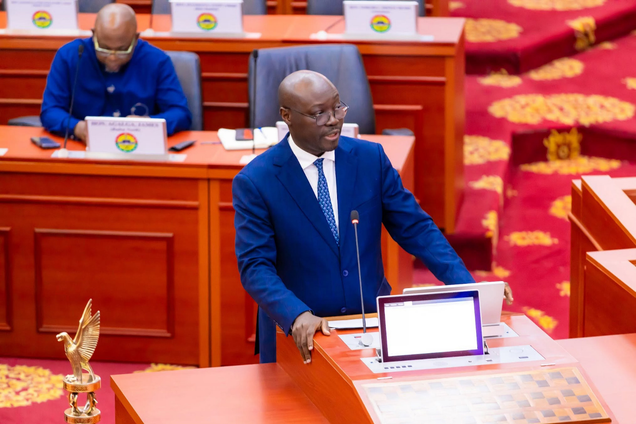

Finance Minister Dr Cassiel Ato Forson has laid before Parliament one of the most ambitious economic blueprints in Ghana's recent history — a US$10 billion investment programme designed to reshape how the country produces, processes and exports goods between 2027 and 2030. Presenting the 2027 Budget Statement on Thursday, 12 November, Dr Forson described the initiative as The New Economy: New Ghana, Jobs and Prosperity, a plan built on eight pillars spanning agriculture, energy, minerals, tourism, textiles, pharmaceuticals and technology.
The eight pillars at a glance
The largest share of investment — US$3 billion — goes to commercial agriculture, targeting rice, poultry, maize, soya, oil palm and cocoa. The government wants to develop 100,000 additional hectares for rice cultivation and phase out commercial rice imports entirely by 2030, while also processing all of Ghana's cocoa locally rather than exporting raw beans. The US$1 billion Pwalugu Dam project is expected to underpin irrigation and aquaculture in the north.
Energy infrastructure receives US$2.2 billion, with plans for a 1,450-megawatt thermal plant in the Central Region and a 600-megawatt solar facility. A key goal is slashing electricity generation costs from roughly 16 US cents to 8 US cents per kilowatt-hour — a move that could significantly ease the burden on businesses and households. An additional US$200 million is earmarked to advance Ghana's long-discussed nuclear power programme.
The critical minerals pillar, worth US$1.5 billion, targets gold, manganese, bauxite and lithium. Rather than exporting raw ore, the government wants full local refining of small-scale gold by December 2028 and complete local processing of manganese and bauxite by 2030. A new railway linking mining areas to processing centres and ports forms part of the plan.
Each of the remaining pillars — tourism, textiles, pharmaceuticals and technology — receives US$1 billion, US$1 billion, US$1 billion and US$300 million respectively. Notable among them is the pharmaceuticals target: reducing Ghana's reliance on imported medicines, which currently account for an estimated 70 to 75 per cent of national requirements, down to between 20 and 40 per cent by 2030. The technology pillar includes a National Artificial Intelligence Centre and expanded rural 4G connectivity.
Why it matters for Ghana
Ghana has long grappled with structural economic vulnerabilities — importing finished goods while exporting raw materials at low prices, running persistent trade deficits and suffering from high energy costs that stifle industrial growth. If delivered as outlined, this programme would represent a decisive shift toward value-added production across multiple sectors simultaneously.
The jobs dimension is particularly significant. Youth unemployment and underemployment remain pressing concerns, and the plan explicitly frames job creation as a core measure of success. The pharmaceutical hub alone is projected to generate around 20,000 direct and indirect jobs, while the agriculture pillar targets approximately 125,000 new positions in rice farming alone.
Macroeconomic credibility is also central to the plan. The government has set targets of single-digit inflation, public debt at around 45 per cent of GDP and economic growth of roughly 8 per cent by 2030. Ghana only recently concluded an IMF-supported debt restructuring programme following its 2022 debt crisis, so maintaining fiscal discipline while executing a programme of this scale will be closely watched by investors and creditors alike.
Crucially, the government expects the private sector to lead actual investment and production, with the state providing infrastructure, credit guarantees and a stable business environment. An initial GH¢30 billion in government funds is planned for 2027, supplemented by revenue measures expected to yield an additional 0.5 per cent of GDP.
What comes next
Parliament must approve the budget before implementation can begin. The scale and ambition of the plan will invite scrutiny from legislators, civil society and the business community — particularly around financing arrangements, procurement processes and how progress will be independently verified. Dr Forson said success would ultimately be judged by jobs created, improvements in household incomes and the value Ghana retains from its natural resources rather than exporting away.
- The programme runs across eight pillars from 2027 to 2030, led by agriculture.
- Ghana aims to phase out commercial rice imports and process all cocoa locally by 2030.
- Pharmaceutical hubs will target producing 60–80 per cent of essential medicines locally.
Source: The Ghana Report


Comments (0)
Be the first to comment.