
Ato Forson draws clear line between New Economy Programme and 24-Hour Economy policy


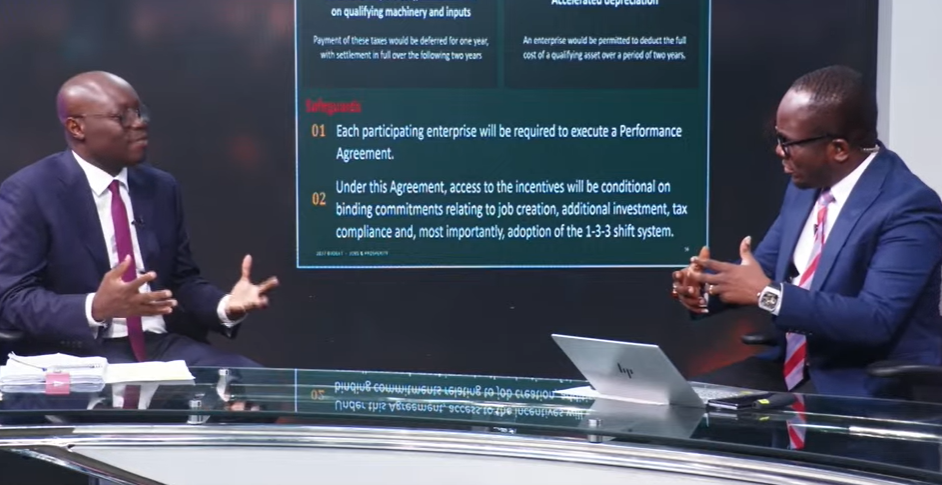
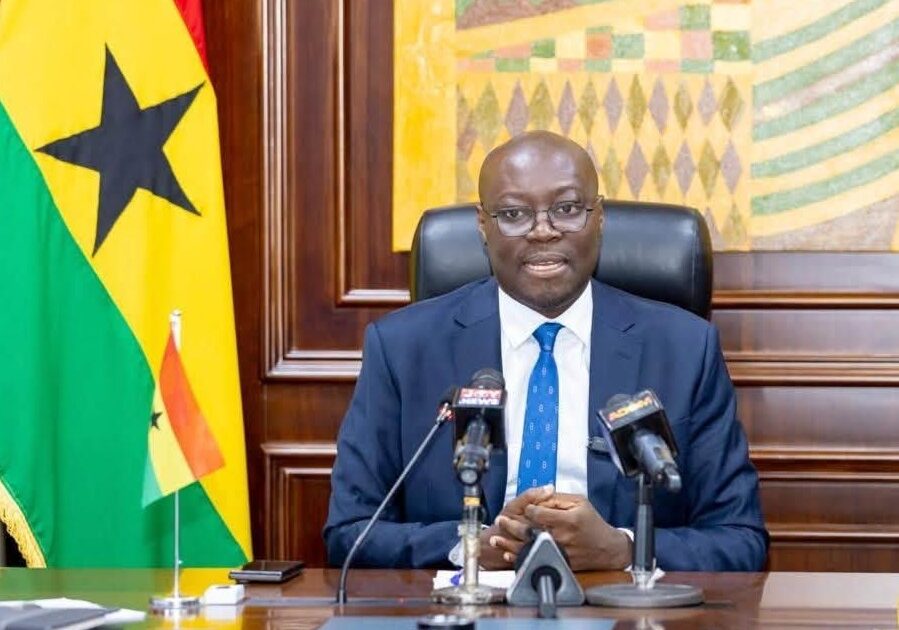
Finance Minister Dr Cassiel Ato Forson has moved to clear up growing public confusion between two of the government's flagship economic initiatives, spelling out that the New Economy Programme and the 24-Hour Economy policy are fundamentally different in both design and execution.
Speaking on the distinction, Dr Forson explained that the New Economy Programme is a public sector-led initiative, meaning government institutions and state resources are the primary drivers behind its implementation. The 24-Hour Economy, on the other hand, is designed to be driven by private sector actors — businesses, entrepreneurs and industry players — with the state playing more of a facilitative role.
What each initiative actually means
The 24-Hour Economy concept, which gained significant attention during Ghana's recent electoral cycle, envisions extending business and commercial activity beyond the traditional working day. The idea is to unlock productivity by encouraging industries, factories and service providers to operate in multiple shifts around the clock, thereby creating more jobs and boosting output. Because this model depends on businesses making operational decisions to extend their hours, it is naturally a private sector undertaking that government policy can incentivise but not directly control.
The New Economy Programme, by contrast, represents a more direct government intervention in reshaping Ghana's economic structure. As a public sector-led initiative, it involves the state taking an active hand in steering resources, investments and policy frameworks towards building new economic capacities — whether in manufacturing, technology, agriculture or other strategic sectors identified as growth areas for Ghana's development agenda.
Why it matters for Ghana
The clarification from the Finance Minister is significant for several reasons. Ghana is currently navigating a complex economic recovery, with the country engaged in an IMF-supported programme aimed at restoring fiscal stability after years of debt distress. In that context, clearly defining which economic initiatives are funded and driven by the public purse — and which rely on private capital — is crucial for fiscal planning, investor confidence and public accountability.
Confusion between the two programmes risks misallocating expectations. If Ghanaians or investors assume the 24-Hour Economy will be delivered through government spending, they may hold the state responsible for outcomes that depend on private sector behaviour. Equally, if the New Economy Programme is mistaken for a purely market-driven effort, the public may not scrutinise government expenditure and implementation as rigorously as they should.
For ordinary Ghanaians, the practical implications are also worth noting. A privately-driven 24-Hour Economy could mean more jobs across different shifts for workers in manufacturing, hospitality, logistics and retail — but only if businesses actually adopt the model. A publicly-led New Economy Programme, meanwhile, would involve government decisions about where to channel national resources, making transparency and parliamentary oversight essential.
The broader economic picture
Dr Forson's remarks come at a time when the John Mahama administration is under pressure to demonstrate tangible economic progress. With inflation having taken a heavy toll on household incomes and the cedi facing persistent depreciation pressures in recent years, Ghanaians are keenly watching whether these programmes will translate into real relief and long-term growth.
- The Finance Minister's clarification is expected to help align stakeholder expectations around both programmes as implementation details continue to emerge.
- Business associations and trade bodies are likely to play a central role in shaping how the 24-Hour Economy rolls out on the ground.
- Parliamentary committees will be key watchdogs over how public funds are deployed under the New Economy Programme.
As government communicates more details in the weeks ahead, Ghanaians will be watching closely to see whether these two distinct but complementary initiatives can work together to deliver the economic transformation the country urgently needs.
Source: 3News


Comments (0)
Be the first to comment.