
Mahama Warns Ghana's Foreign Food Addiction Is Costing the Nation $3bn a Year


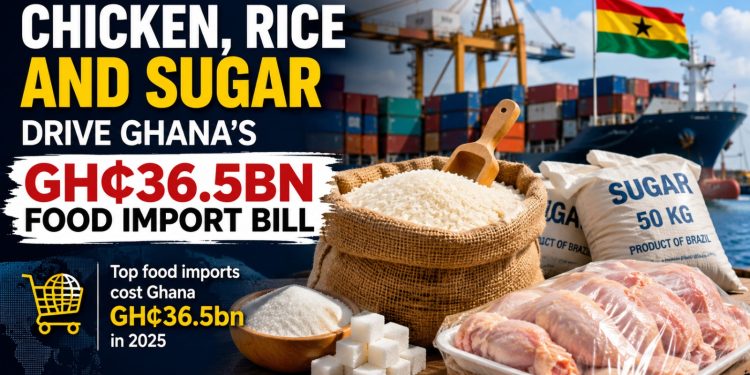
President John Mahama has issued a stark warning to Ghanaians about the economic consequences of their growing appetite for imported food, stating that choosing foreign rice and chicken over locally produced alternatives is effectively exporting Ghana's wealth while importing poverty. The remarks underscore a long-standing concern about the country's ballooning food import bill, which currently stands at an estimated US$3 billion annually.
A $3 Billion Drain on the Ghanaian Economy
Ghana's annual food import expenditure of US$3 billion is a figure that economists and policymakers have flagged with increasing alarm. The bulk of this spending goes towards imported rice — much of it from Asia — as well as frozen poultry products, largely from Europe and Brazil, which are sold at prices that undercut Ghanaian farmers who cannot match the subsidised production costs of foreign competitors.
Mahama's framing of the issue is pointed: every cedi spent on a bag of imported rice or a tray of frozen chicken is money that leaves the Ghanaian economy entirely, rather than circulating through local farms, processors, transporters and markets. He argued that this pattern of consumption actively undermines the livelihoods of millions of Ghanaian farmers and agribusiness workers who could otherwise benefit from stronger domestic demand.
The President's comments reflect a broader philosophy his administration has championed — that food security and economic self-sufficiency are inseparable. Ghana, with its fertile agricultural land, varied climate zones and large rural workforce, has the natural capacity to feed itself, yet continues to rely heavily on imports to meet urban consumer demand.
Why It Matters for Ghana
The implications of Ghana's food import dependency stretch well beyond the dinner table. At a macroeconomic level, spending US$3 billion annually on foreign food places sustained pressure on the country's foreign exchange reserves and contributes to the persistent depreciation of the cedi. When Ghana imports more than it exports, demand for foreign currencies rises while demand for the cedi falls — a cycle that makes everyday goods more expensive for ordinary Ghanaians.
Local rice production in particular has been a subject of government policy for years. Initiatives such as the Planting for Food and Jobs programme have attempted to boost yields and encourage farmers, yet imported rice continues to dominate urban markets due to its perceived quality, consistent supply and, crucially, its price. Breaking that cycle requires not just production incentives but a genuine cultural shift in consumer preference.
The frozen poultry trade presents a similar challenge. Ghanaian poultry farmers have repeatedly called on government to enforce and strengthen import restrictions on frozen chicken, arguing that cheap foreign imports — often the by-products of foreign processing industries — make it nearly impossible for local producers to compete on price alone.
The Case for Eating Local
Beyond economics, advocates for local food consumption point to nutritional and environmental advantages. Locally grown rice varieties, fresh farm eggs and domestically reared poultry are often fresher and free of the preservatives associated with long-distance cold-chain imports. Supporting local agriculture also reduces Ghana's carbon footprint by cutting the emissions tied to international freight and refrigeration.
Mahama's call is not a new one — successive Ghanaian governments have made similar appeals — but the urgency appears sharper given the economic pressures Ghanaians have faced in recent years, including high inflation and a currency that has lost significant value. For a country still navigating a difficult post-IMF recovery path, reducing a US$3 billion import bill through deliberate consumer choices and smarter agricultural policy could make a meaningful difference to the nation's finances.
The message, ultimately, is simple: what Ghanaians choose to eat is not merely a personal preference — it is an economic and patriotic decision.
Source: 3News




Comments (0)
Be the first to comment.