
Ghana's Energy Transition: Why Skills Matter More Than Megawatts

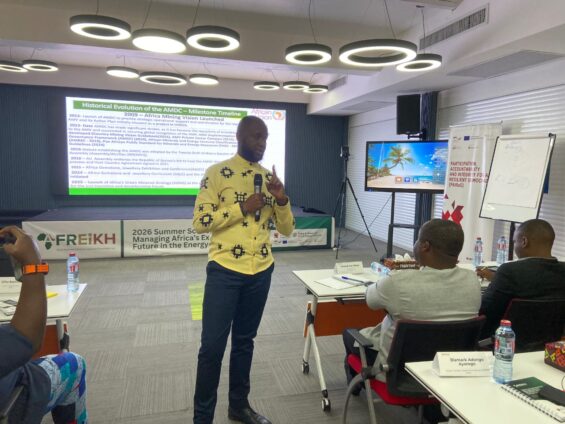
Ghana's energy future depends less on solar panels and transmission cables than on the people who will install, operate, maintain and innovate them. That was the key takeaway from the Anglophone Africa Extractive Industries Knowledge Hub Summer School, which concluded in Accra last month, bringing together energy professionals from twelve African nations to examine the continent's renewable energy transition.
While billions of dollars flow into African energy projects and cutting-edge renewable technologies arrive on the continent each year, a fundamental gap remains largely unaddressed: the absence of a robust local workforce capable of sustaining these investments. Without this human infrastructure, Ghana and its neighbours risk becoming hosts to energy projects rather than architects of their own energy futures.
The Missing Piece: Why Workforce Matters More Than Money
Money and technology alone cannot build a functioning energy system. Someone must install solar equipment, operate power plants, maintain transmission lines, regulate markets and troubleshoot problems when systems fail. More critically, local professionals must eventually improve, adapt and manufacture these technologies domestically.
Currently, Ghana faces a significant gap in this area. When an energy project is completed and handed over, questions arise: Can Ghanaian engineers maintain it? Are local technicians trained to operate it? Do Ghanaian companies have the expertise to service it? If the answer is no to these questions, Ghana has essentially built infrastructure dependent on foreign expertise and imported solutions.
The AFREIKH Summer School highlighted that a successful energy project is not measured solely by megawatts generated or dollars invested. True success means creating lasting local technical expertise, enabling local companies to participate meaningfully and ensuring knowledge transfer that builds Ghana's industrial capacity.
Building an Entire Capability Ecosystem
Ghana does not simply need to train more engineers. The country requires a comprehensive capability ecosystem spanning multiple interconnected areas:
- Skilled engineers and technicians capable of installing and maintaining renewable energy systems
- Effective regulators who understand modern energy markets and can manage grid complexity
- Universities and technical institutions that can adapt curricula as technology evolves
- Competitive local companies ready to compete for energy sector contracts
- Research institutions driving innovation in energy solutions relevant to Ghana's context
- Cross-sector professionals who understand how energy connects with agriculture, manufacturing, transport and digital infrastructure
The energy transition is interconnected. Solar skills connect to energy storage; storage connects to grid management; grids increasingly depend on digitalisation. Ghana needs professionals capable of navigating these connections, not workers trained narrowly for a single technology.
Why This Matters for Ghana: From Raw Materials to Value Creation
Ghana possesses significant renewable energy potential and mineral resources essential for clean energy technologies, including lithium and rare earth elements. However, the country faces a critical choice: continue exporting raw materials and importing finished technologies, or use the energy transition to build African value chains with local expertise at the centre.
If Ghana develops the skills, institutions and industrial policies needed to process its minerals and manufacture energy components locally, the energy transition becomes an industrialisation opportunity. If not, Ghana risks repeating its historical pattern of exporting value and importing finished goods.
This shift requires investment in education and training institutions, partnerships between government and private sector, and deliberate policies that require technology transfer and local workforce development in energy projects. It also means breaking down fragmented national approaches—Ghana cannot build this capability in isolation. Regional cooperation across West Africa would strengthen the entire ecosystem.
The energy transition is coming to Ghana regardless. The question is whether it will create a generation of Ghanaian energy professionals who lead the continent's transformation, or whether it will remain primarily a project of imported solutions and foreign expertise.
Source: MyJoyOnline

Comments (0)
Be the first to comment.