
Bagbin warns Africa must fix governance before seeking more loans to pay old debts
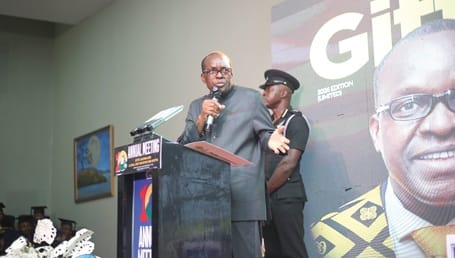
Parliament Speaker Alban Bagbin has sounded a stark warning: Africa's debt crisis cannot be solved by borrowing more money, but only through fundamental reforms to how African governments manage finances and make economic decisions.
Speaking at the 10th GITFiC Annual Conference focused on the Global Debt Initiative, Bagbin posed a pointed question that captures the continent's predicament: "How long can Africa continue to borrow from the future to pay for the past?" His intervention suggests that African leaders are increasingly frustrated with a cycle in which new loans simply cover interest and repayments on old debts, leaving little room for actual development investment.
Governance, not just debt figures, is the real issue
Bagbin's central argument challenges how the world typically discusses Africa's debt problem. Rather than focusing solely on the total amount owed, countries' capacity to repay, or what creditors might forgive, he insisted the continent must confront deeper systemic failures. These include what he termed "indiscipline"—poor budget management, corruption, misallocation of resources, and weak institutional oversight that have left African economies financially exposed and dependent on external borrowing.
He acknowledged historical context, recognising slavery and colonial exploitation as contributing factors to Africa's current economic vulnerability. However, he firmly rejected the notion that history alone explains the present crisis. "If you behave well, if you are disciplined, my brothers and sisters in the IMF will not come at you," he said, implying that disciplined governance reduces external pressure and intervention.
Why it matters for Ghana
Bagbin's comments carry particular weight for Ghana, which has navigated multiple debt crises and recently concluded an IMF bailout programme. Ghana's experience under the Heavily Indebted Poor Countries (HIPC) initiative—which Bagbin specifically referenced—offers a cautionary tale. The country benefited from debt relief in the early 2000s but later accumulated new debts, partly due to fiscal mismanagement and governance lapses. Bagbin's call for stronger domestic financial governance speaks directly to Ghana's ongoing challenge of maintaining fiscal discipline while meeting development needs.
His emphasis on coordinated action also reflects Ghana's interests as an ECOWAS member and a voice within African regional bodies. A united African position in international debt negotiations would give Ghana and other nations greater bargaining power with multilateral creditors and developed economies.
The path forward: domestic accountability and international unity
Bagbin outlined a two-pronged approach. First, African countries must strengthen domestic financial governance—building robust institutions, enforcing transparency, and ensuring that borrowed funds are invested productively rather than lost to waste or corruption. Second, the continent must present a united front in international negotiations, collectively advocating for fair debt frameworks and equitable terms.
"We need a coordinated global framework. But before that, we need it domestically," Bagbin stated, signalling that internal reform must precede external demands. This sequencing is crucial: without domestic accountability, debt relief or new international agreements will likely prove temporary solutions.
His intervention at the Global Debt Initiative adds momentum to growing African demands for a reckoning with how the continent finances its development. Whether African governments can translate Bagbin's rhetoric into concrete policy change—and whether wealthy nations will engage in genuinely equitable negotiations—remains to be seen.
Source: MyJoyOnline
Comments (0)
Be the first to comment.