Ghana's Role in Africa's $9 Trillion Lithium Revolution: From Raw Export to Industrial Power
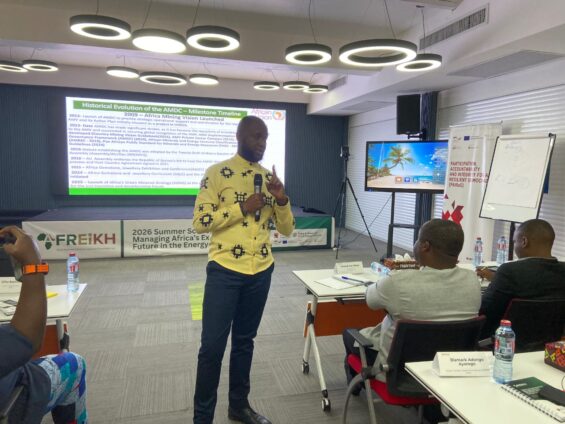
Ghana is hosting a crucial conversation about Africa's economic future as regional leaders and experts gather at the Summer School on Managing Africa's Extractive Future in the Energy Green Transition, organised by the Africa Centre for Energy Policy (ACEP) in Accra. The message is clear: Africa's estimated US$9 trillion in lithium reserves could transform the continent—but only if African nations fundamentally reshape how they approach mineral wealth.
Currently, most African countries extract lithium and other critical minerals in raw form, exporting them to be processed and refined into batteries and energy-storage technologies elsewhere. This model leaves the vast majority of profits, jobs and technological advancement in foreign hands. Speakers at the ACEP Summer School are challenging this approach, arguing that Africa must take control of the entire lithium value chain—from extraction through to finished products—to capture real economic benefits.
Building a Continent-Wide Lithium Ecosystem
According to Nkuli Ncobe of Zimbabwe, speaking at the programme, the solution lies in strategic regional integration. Rather than each country competing independently, African nations should specialise in different segments of lithium production and services. Some could focus on mining equipment and capital goods, whilst others develop industries producing consumables like explosives, drilling steel and spare parts. A third tier could emerge around financial services, analytical support, security and information technology—all sectors the lithium industry requires.
This coordinated approach would create what Ncobe describes as a massive internal African market around lithium, keeping wealth and opportunity on the continent. More critically, it would generate jobs at every level—from miners to engineers, logistics specialists to financial analysts—rather than concentrating employment in a handful of extraction sites.
Ghana's Opportunity and Responsibility
Ghana occupies a unique position in this emerging African strategy. As host to ACEP and an established financial hub in West Africa, the country is already signalling its potential role in supporting lithium sector development. The ACEP Summer School, bringing together civil society, journalists and extractive-sector experts from 15 African countries, is effectively being hosted as a platform for reimagining Africa's mineral future.
Ncobe specifically highlighted the potential of the Nigerian and Ghanaian stock exchanges in mobilising capital for lithium development. This recognition positions Accra as a financial gateway for African lithium investment, suggesting Ghana could develop expertise in mining finance, capital raising and investor relations—high-value services that keep wealth circulating within Africa rather than flowing outward.
The Critical Question for African Leaders
The challenge facing Africa is no longer simply quantifying underground lithium reserves. Instead, it requires a fundamental shift in how African governments think about resource extraction. The continent must choose between two futures: remaining a supplier of raw materials that benefit foreign industries, or building African-owned factories, processing plants, technology centres and skilled workforces that capture the full value of the lithium economy.
This requires unprecedented continental coordination—something ECOWAS and the African Union could facilitate through policy frameworks encouraging value-chain integration. It also demands that African leaders prioritise long-term industrial capacity building over short-term revenue from raw exports.
For Ghana specifically, the ACEP Summer School represents both a hosting honour and an implicit call to action. Whether the country positions itself as a financial centre, a manufacturing hub, or a knowledge centre for African lithium development will shape not only Ghana's prosperity but also demonstrate to other African nations what coordinated action around mineral wealth can achieve.
Source: The Ghana Report

Comments (0)
Be the first to comment.