Ghana and UK Deepen Trade Partnership with New Customs Reform Agreement
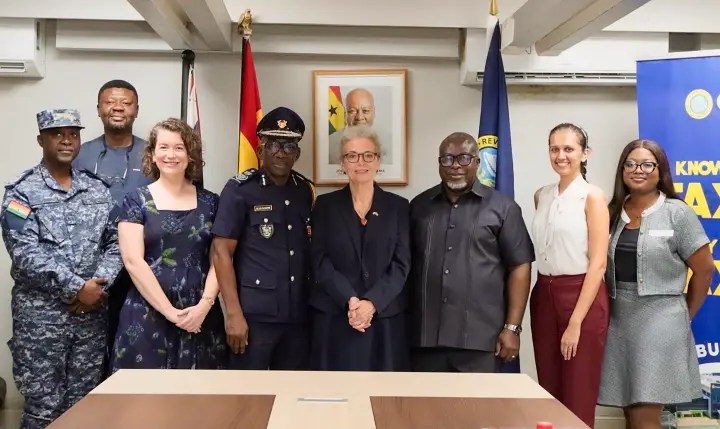
Ghana has taken a significant step in modernising its customs administration following the signing of a new Memorandum of Understanding between the UK's Her Majesty's Revenue and Customs (HMRC) and the Ghana Revenue Authority (GRA). The agreement, part of the broader UK-Ghana Growth Partnership, aims to facilitate legitimate trade, strengthen compliance mechanisms and support Ghana's economic development through enhanced border management and customs reform.
The partnership represents the latest chapter in over a decade of technical cooperation between the two organisations. Since the early 2010s, HMRC has supported GRA's efforts to strengthen tax administration and improve revenue mobilisation—critical tools for funding Ghana's public services and infrastructure development. This new MoU formalises a deeper engagement, moving beyond general tax support to focus specifically on customs modernisation and border efficiency.
What the MoU Covers
The agreement establishes a framework for capacity building and technical assistance, with an immediate priority on strengthening GRA's Post Clearance Audit (PCA) function. This focus is particularly relevant for Ghana's business environment; effective PCA systems allow customs authorities to assess goods after they have cleared the border, reducing congestion at ports whilst maintaining compliance standards. This dual benefit—smoother trade flows and stronger revenue protection—directly supports both traders and government revenues.
The cooperation will be delivered through HMRC's Accelerate Trade Facilitation Programme, which emphasises peer-to-peer learning and knowledge sharing based on international best practice in risk-based customs compliance. Rather than imposing external solutions, the programme encourages Ghanaian customs officials to learn from UK experience and adapt approaches to local conditions. Future collaboration may extend to other priority areas of customs modernisation beyond the initial PCA focus.
Why It Matters for Ghana
Effective customs administration is foundational to Ghana's economic ambitions. Weak customs systems increase transaction costs for businesses, deter investment and limit government revenue—resources needed for healthcare, education and infrastructure. By modernising its customs processes, Ghana can create a more predictable trading environment that attracts both foreign and domestic investment.
The timing is significant. Ghana's economy has faced pressures in recent years, including inflation and debt servicing challenges. Strengthening revenue mobilisation through better customs administration helps government address fiscal constraints without raising tax rates, which could further burden businesses. For exporters and importers, improved efficiency at borders reduces delays and costs, making Ghana's ports more competitive regionally.
The partnership also signals Ghana's commitment to international standards and best practice. As West Africa's gateway for regional trade, Ghana's customs reforms can have spillover effects across ECOWAS, particularly if other countries adopt similar approaches to border management and compliance.
Broader Context
This customs agreement sits within the wider UK-Ghana Growth Partnership, which encompasses trade, investment and development cooperation. The UK has positioned itself as a key economic partner for Ghana post-Brexit, seeking to deepen bilateral ties. For Ghana, partnerships with developed economies that emphasise technical capacity—rather than just aid—support long-term institutional strengthening.
GRA Commissioner-General Anthony Sarpong emphasised that the partnership responds to Ghana's own modernisation priorities and will enhance efficiency and risk management for traders. This locally-led approach is crucial; customs reform that reflects Ghana's specific challenges and opportunities is more likely to be sustainable than externally-imposed change.
The agreement builds on HMRC's track record in tax administration support and extends into customs—a natural progression given the interconnected nature of revenue administration. As Ghana continues to diversify its economy and expand trade relationships, a modern customs system becomes increasingly vital to competitiveness and revenue generation.
Source: Ameyaw Debrah


Comments (0)
Be the first to comment.