
Germany's Far-Right AfD Surges to Record State Victory, Raising Questions About Europe's Political Shift
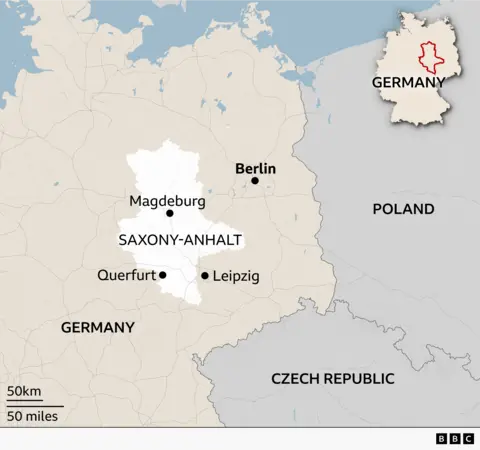

Germany's far-right Alternative for Germany (AfD) has secured a historic victory in the eastern state of Saxony-Anhalt, winning over 44% of the vote—more than double its 2021 result—in an election that has sent shockwaves through mainstream European politics and captured global attention, including endorsements from US President Donald Trump and Russia's presidential envoy.
With 97% of votes counted, the AfD fell just short of an outright majority in the 83-seat state parliament, securing approximately 39 seats. However, state leader Ulrich Siegmund has declared the result a clear mandate to govern and signalled confidence that a majority is within reach. His statements suggesting potential future election victories with even higher vote shares underscore the party's momentum and growing influence across Germany's eastern regions.
What This Means for Europe's Political Landscape
This election result carries implications far beyond Saxony-Anhalt's 2.1 million residents. No far-right party has controlled a German state since World War Two, making this a watershed moment in post-war German politics. The AfD's success has reignited debate across Europe about the rise of nationalist and anti-immigration movements in democracies grappling with economic uncertainty, migration pressures, and concerns about national identity.
The party's pro-Russia stance and anti-migration platform have resonated particularly strongly in eastern Germany, where supporters express anxiety about economic decline, safety, and the pace of social change. High turnout of 78% suggests these voters are mobilised and engaged, viewing the AfD as offering genuine alternatives to established parties.
International observers have noted that Russia and the United States appear to be signalling approval of the result. Russian envoy Kirill Dmitriev praised the AfD as "the party of hope and reason," while Trump's amplification of the election projection underscores how far-right movements now operate within global networks of political sympathy and support.
Ghana and Africa Should Pay Attention
For Ghanaian audiences and African observers, this development warrants scrutiny for several reasons. First, the rise of nationalist and anti-migration movements in Europe directly affects African migration to Germany and the broader EU. If the AfD gains greater influence at the national level—polls show it leading nationally—immigration policies will likely tighten, potentially affecting Ghanaian professionals, students, and asylum seekers seeking opportunities in Europe.
Second, the AfD's Russia-friendly positioning signals a shift in global alliances. A weakening of traditional European unity and growing sympathy for authoritarian governments has ripple effects on international institutions, foreign policy, and development aid that African nations depend upon. Germany's role as a leading European economy and diplomatic voice matters for global stability and international cooperation frameworks that affect Africa.
Third, this election demonstrates how economic anxiety and migration concerns are reshaping democratic politics globally. Ghana, as a source of both economic migrants and a destination for regional migrants, should recognise these patterns as relevant to understanding global trends that influence Ghanaian citizens abroad and regional dynamics within Africa.
The Political Deadlock Ahead
Despite its record result, the AfD faces a significant hurdle: all mainstream German parties have implemented a "Brandmauer" (firewall) refusing to coalition with the far-right party. This means that even with 44% of the vote, the AfD cannot easily form a government without cooperation from other parties willing to break ranks.
The newly arrived BSW party narrowly exceeded the 5% threshold needed for parliamentary representation, denying the AfD a clearer path to majority control. Siegmund has suggested he might accept minority government status or work with individual MPs, but negotiations remain uncertain. Germany's centre-left SPD and conservative CDU have acknowledged the result as "a signal to Berlin," suggesting the election outcome may force broader policy recalibrations at the national level regardless of Saxony-Anhalt's immediate governance arrangements.
Source: MyJoyOnline





Comments (0)
Be the first to comment.