
CEMSE pushes government to suspend LPG taxes as price spike threatens Ghanaian households

A leading Ghanaian environmental organisation has urgently appealed to government to temporarily suspend taxes and levies on liquefied petroleum gas (LPG) as prices continue to climb, threatening millions of households' ability to afford cooking fuel.
The Centre for Environmental Management and Sustainable Energy (CEMSE), represented by Executive Director Benjamin Nsiah, is warning that an 18.5 per cent price increase in LPG poses a serious risk to household consumption across the country. The organisation argues that government intervention through tax and levy suspensions could provide immediate relief to Ghanaian families already grappling with rising cost of living pressures.
The current crisis and household impact
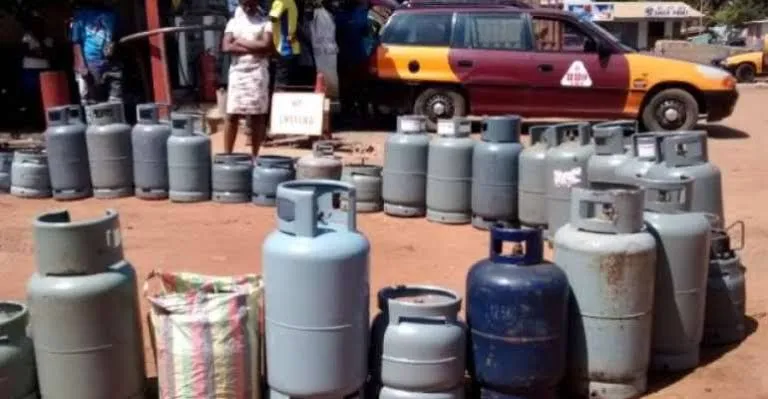
LPG remains a critical energy source for many Ghanaian households, particularly in urban and peri-urban areas where it is the primary cooking fuel. A spike of this magnitude translates to significantly higher monthly expenses for families, forcing difficult choices between cooking fuel and other essentials like food, healthcare and education. For low-income households, the impact is particularly acute, as energy costs consume a larger proportion of their already-stretched budgets.
The price surge comes amid broader global energy market volatility and local supply chain challenges. CEMSE's call for intervention reflects growing concern that without government action, vulnerable populations may be driven to use cheaper but more dangerous alternatives, including charcoal and firewood, which carry both health and environmental risks.
Why it matters for Ghana
Energy affordability is deeply connected to Ghana's development priorities. When cooking fuel becomes too expensive, it affects household nutrition, indoor air quality and time spent on fuel collection rather than productive activities—particularly for women and children. The World Health Organisation identifies indoor air pollution from solid fuels as a major public health threat, linked to respiratory disease and premature deaths.
Beyond households, LPG price stability matters for Ghana's industrial and commercial sectors, including hospitality, food processing and small businesses that depend on reliable, affordable gas supply. Any sustained price shock ripples through the economy.
CEMSE's proposal to suspend or reduce taxes and levies represents a policy choice: government must weigh revenue losses against immediate social welfare gains. Similar interventions have been implemented during crisis periods in other African countries. The timing is significant, as Ghana navigates post-pandemic recovery whilst managing inflation and currency pressures that have already eroded household purchasing power.
Next steps and broader context
The call from CEMSE adds to growing pressure on policymakers to address energy affordability. Government's response will likely balance fiscal constraints with social protection commitments. Options being discussed include temporary tax holidays, targeted subsidies for vulnerable groups, or negotiated pricing agreements with suppliers.
Environmental advocates like CEMSE also point out that affordable LPG actually supports Ghana's climate and sustainability goals—it is cleaner than biomass alternatives and reducing its cost could accelerate transitions away from harmful indoor cooking fuels. This positions the issue not merely as a short-term relief question, but as part of Ghana's longer-term energy transition strategy.
Stakeholders including consumer groups, energy suppliers and policymakers are expected to engage on this matter in coming weeks as the price increase begins to bite harder into household budgets.
Source: 3News
-1-752x622.webp)

Comments (0)
Be the first to comment.