
Catholic Bishops warn Chief Justice against political remarks that may undermine judicial credibility
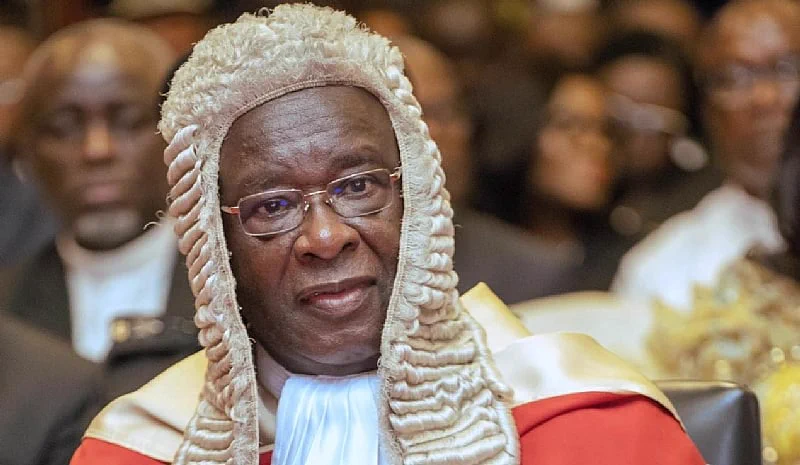

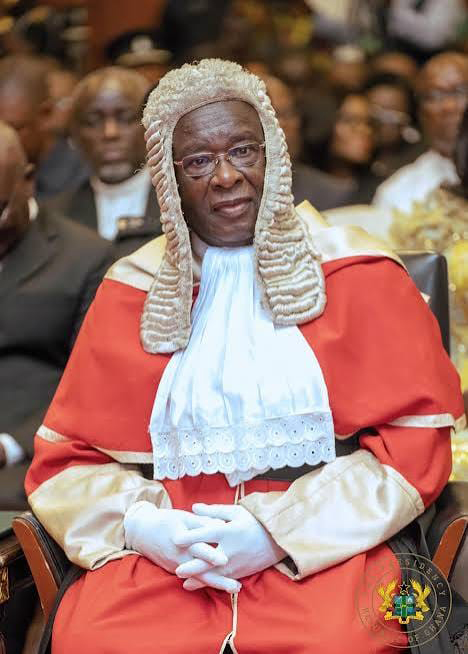
Ghana's Catholic Bishops' Conference has issued a carefully calibrated warning to Chief Justice Paul Baffoe-Bonnie, cautioning that public remarks comparing institutional performance across different political administrations risk eroding public confidence in the independence of the courts. The intervention reflects growing concern among civil society actors about how the nation's top judicial officer communicates, particularly when such statements could be perceived as endorsing one political era over another.
The controversy centres on comments made by the Chief Justice during visits to the Social Security and National Insurance Trust (SSNIT) and the Minerals Income Investment Fund (MIIF) on 2 September. While praising improvements at these institutions, his reference to the "past eight years" was interpreted by observers, including the Ghana Centre for Democratic Development, as an implicit comparison between the current administration and its predecessor. In Ghana's politically charged environment, such phrasing carries obvious partisan undertones.
The Bishops' measured stance
In a statement signed by Conference President Most Rev. Matthew Kwasi Gyamfi, the Catholic leadership stopped short of accusing the Chief Justice of actual bias or demanding his resignation—rejections that demonstrated a commitment to proportionate critique. Instead, the Bishops framed their concern around a fundamental principle: the appearance of impartiality matters as much as its reality. They acknowledged that the Chief Justice likely made his comments in good faith and accepted the Judicial Service's clarification that no compromise to independence was intended.
However, the Bishops emphasised that "judicial independence is not only a matter of actual impartiality; it also depends on the visible, unmistakable appearance of impartiality." This distinction is crucial. A Chief Justice who is genuinely neutral but perceived as partisan undermines public faith in the courts just as effectively as one who is actually compromised. The office, they argued, is not that of "an ordinary public commentator" and demands a higher standard of restraint.
Why it matters for Ghana
This controversy touches on a core challenge facing Ghana's democracy: the need for an independent judiciary capable of adjudicating disputes involving the government, political parties and public institutions. Citizens must approach courts confident that judges have not predetermined cases based on political allegiance. When the Chief Justice's words create reasonable doubt—even if unfounded—that confidence erodes.
The timing of this intervention is significant. Ghana has experienced judicial independence concerns in the past, and maintaining public trust in the courts is essential as the nation navigates elections and political transitions. The Bishops' statement serves as a reminder that institutional health depends not just on formal independence but on the deliberate cultivation of its appearance through careful communication and restraint.
The Bishops also used their platform to call for political maturity from all actors. They urged the governing party not to treat judicial criticism as an attack on its record, and the opposition not to weaponise the Chief Justice's remarks as evidence of institutional capture. Such polarised reactions, they suggested, only deepen divisions and obscure the genuine issue: whether judicial leadership communicates in ways that reinforce, rather than undermine, public confidence.
The Chief Justice, they concluded, could have achieved his objective—commending institutional improvements—without comparisons that invite political interpretation. For Ghana's courts to function as a neutral arbiter in a democracy, its leadership must navigate the fine line between engaging constructively with public institutions and appearing to endorse particular political administrations.
Source: MyJoyOnline



Comments (0)
Be the first to comment.